


Description
Seven Seas – the mosaic that brings water to life
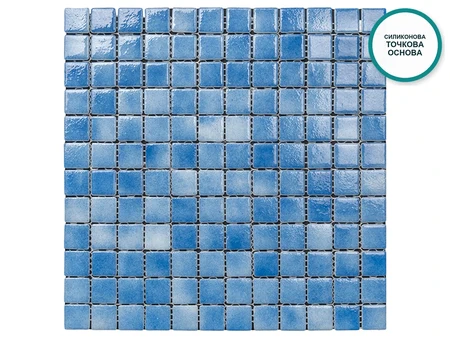
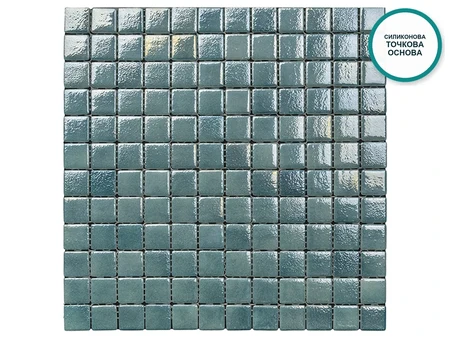
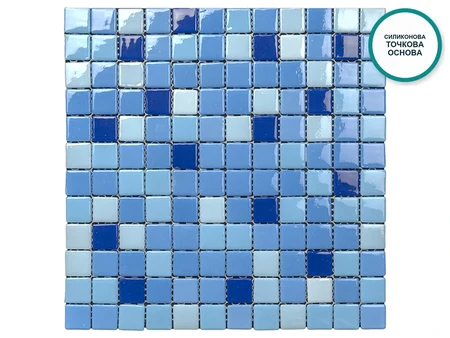
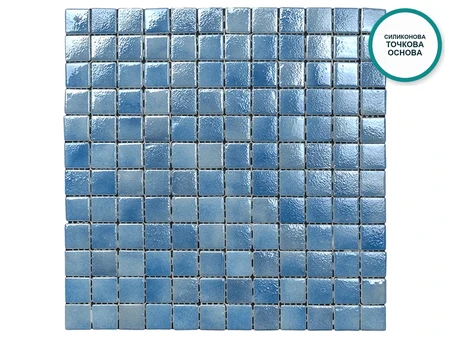
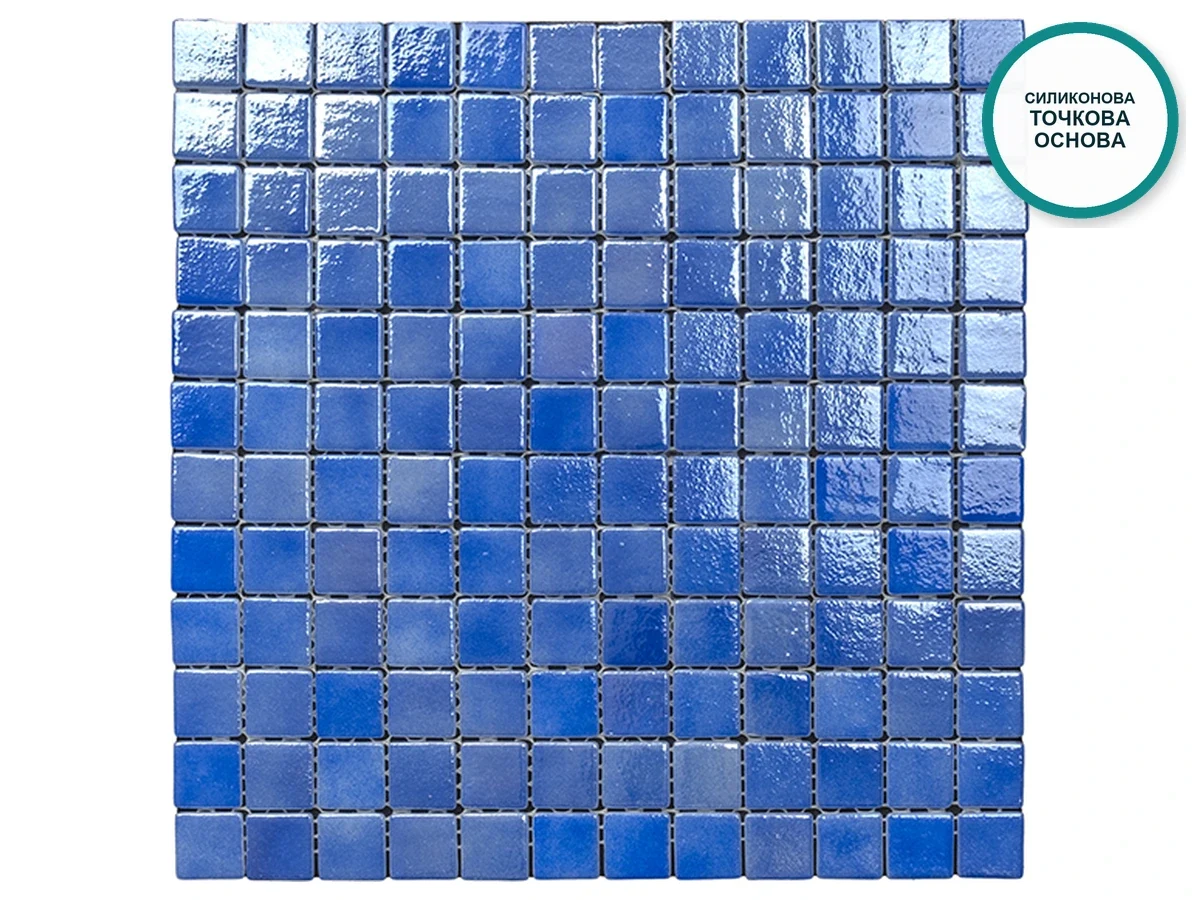
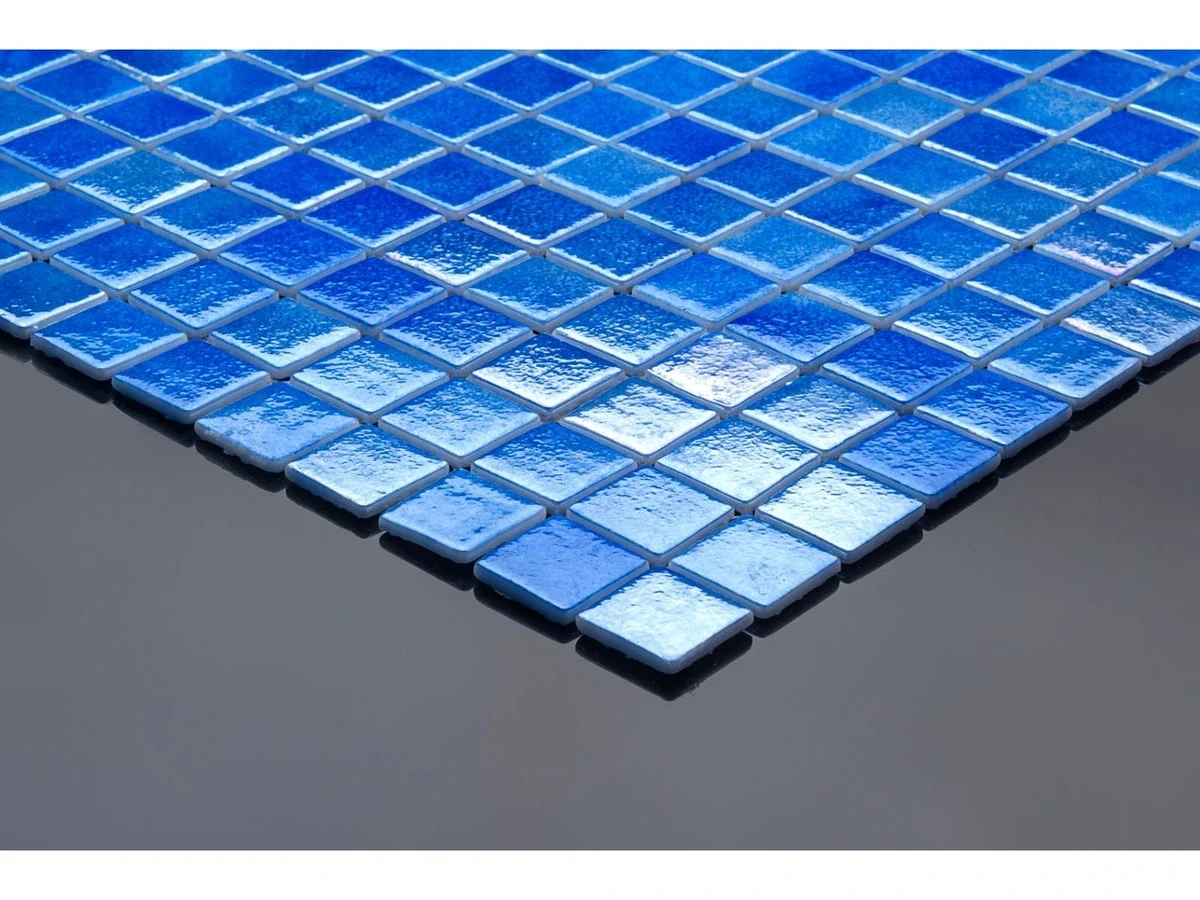
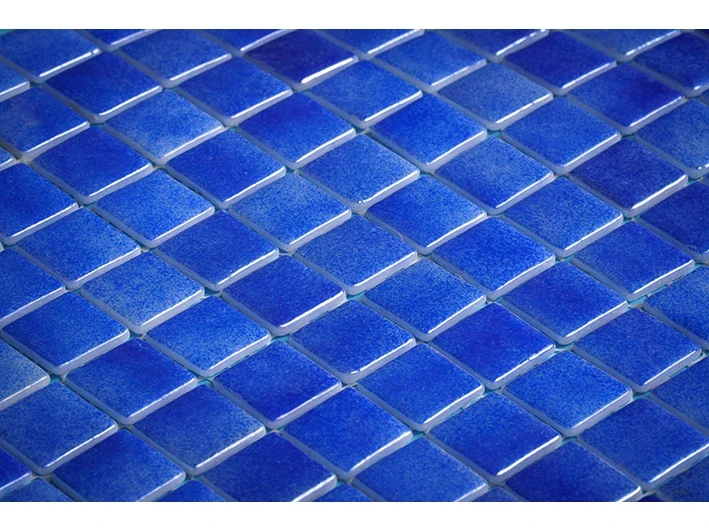
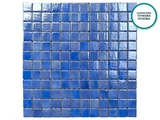
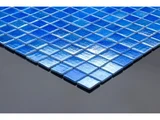
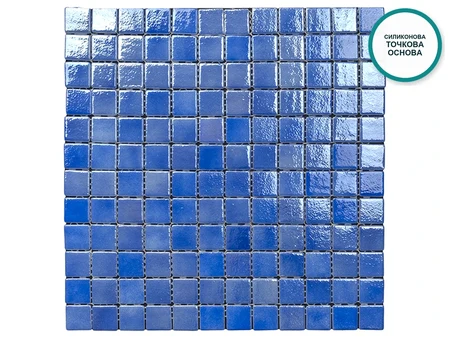
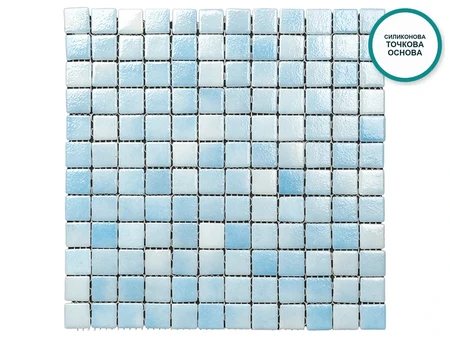
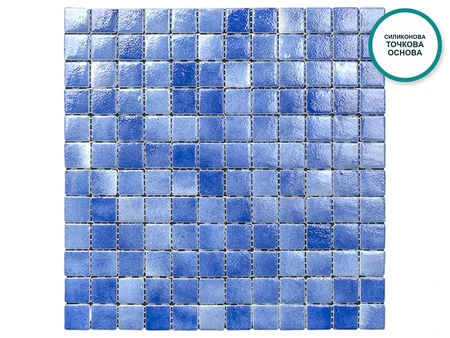
Seven Seas is a blue glass-ceramic mosaic with square 25 × 25 mm chips and a glossy finish. Its colour does not lose saturation over the years.
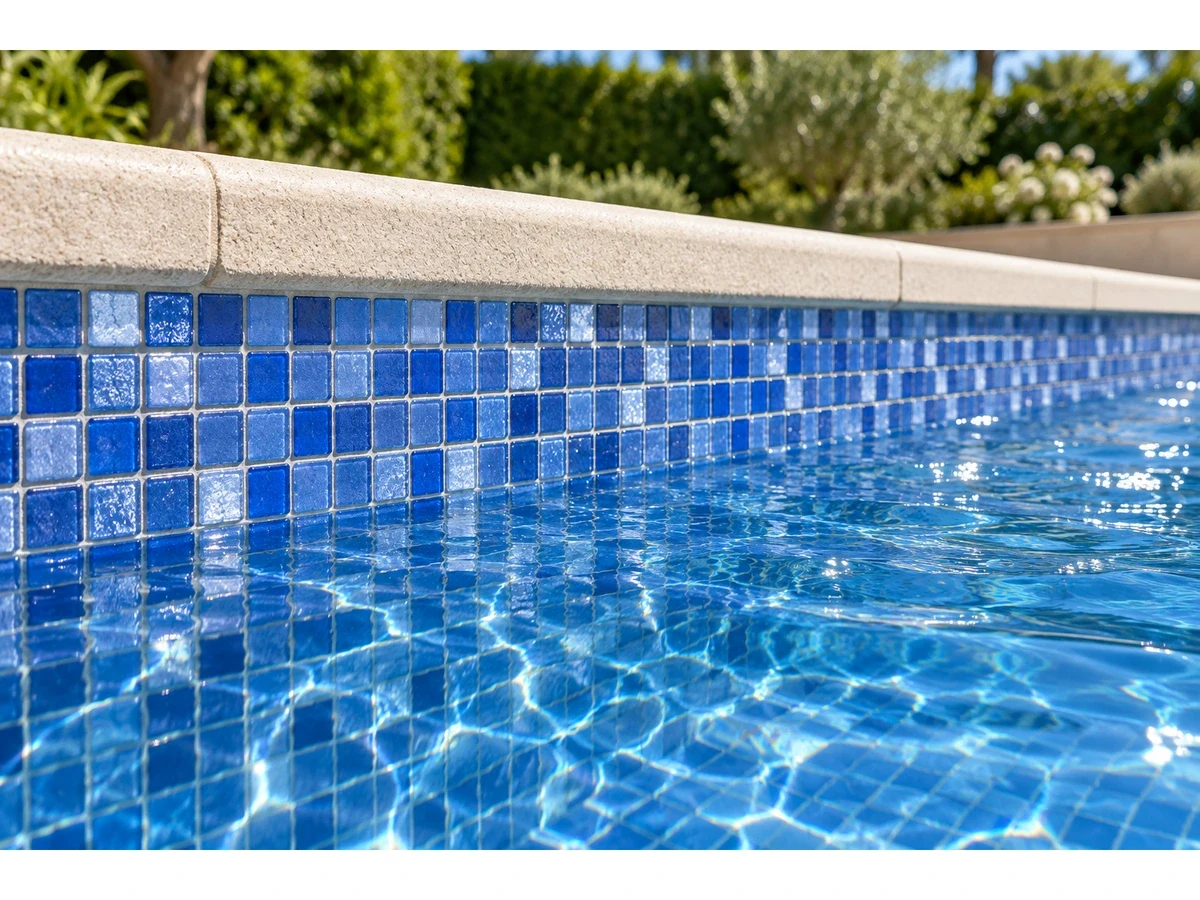
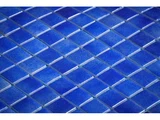
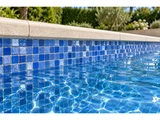
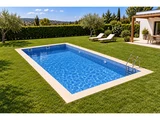
Closely related blue shades form a lively yet calm surface with a rich glazed shine. In the sun under water the colour is saturated, with clear glints. A versatile option when the pool should look classic and fresh.
Why it is worth it
- Non-porous: water absorption is no more than 0.04%, so mould, stains and odours have no chance.
- Made for permanent immersion: the material copes with pools, whirlpool tubs, fountains and overflow channels.
- Lasting colour: sunlight (ISO 4892) and chemical agents (class A under ASTM C650) do not change it.
- Frost-resistant: withstands freezing and thawing (ASTM C1026), so it also suits outdoor use.
- Strong: flexural strength of 55 N/mm² and a defect-free surface.
- Eco-friendly: made from 100% recycled glass, free of lead, cadmium and other heavy metals.
Figures and specifications
| Article no. | MOSFBZM205 |
|---|---|
| Composition | glass ceramic, 100% recycled glass |
| Chip shape | square |
| Chip thickness | 4 mm |
| Chip size | 25 × 25 mm |
| Colour | blue mix, glossy |
| Sheet | 317 × 317 mm, 10 sheets per m² |
| Chip fixing | silicone (polyurethane) dots |
| Grout joint width | 2 mm |
| Water absorption | max. 0.04% (EN ISO 10545-3) |
| UV ageing resistance | no change (ISO 4892) |
| Freeze–thaw cycles | withstands (ASTM C1026) |
| Chemical resistance | class A (ASTM C650) |
| Flexural strength | 55 N/mm² (EN ISO 10545-4) |
| Surface | defect-free in 100% of chips (EN ISO 10545-2) |
| Thermal expansion | withstands (EN ISO 10545) |
| Full water immersion | permitted |
| Intended use | pools, whirlpool tubs, spa, bathrooms, showers |
| Packaging | 1 m² carton |
The silicone backing
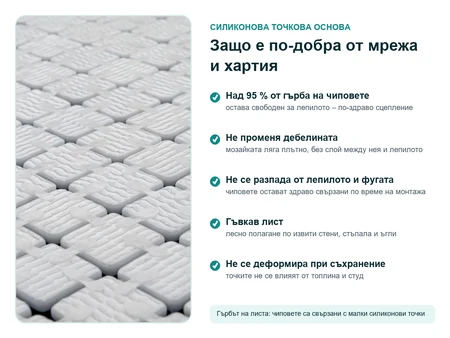
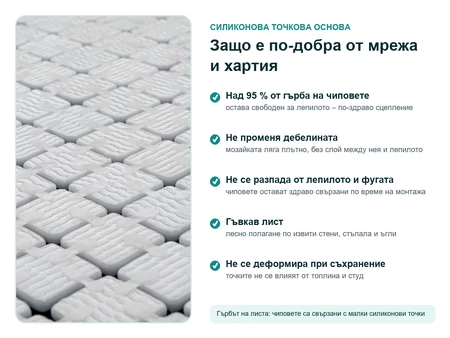
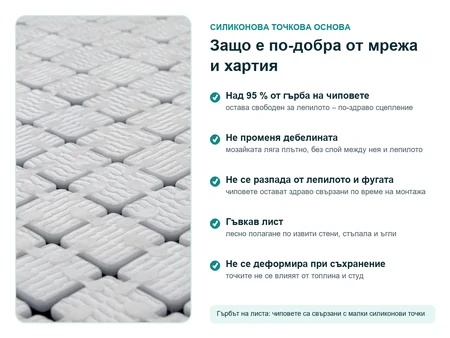
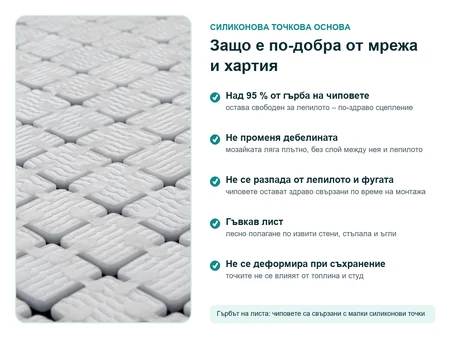
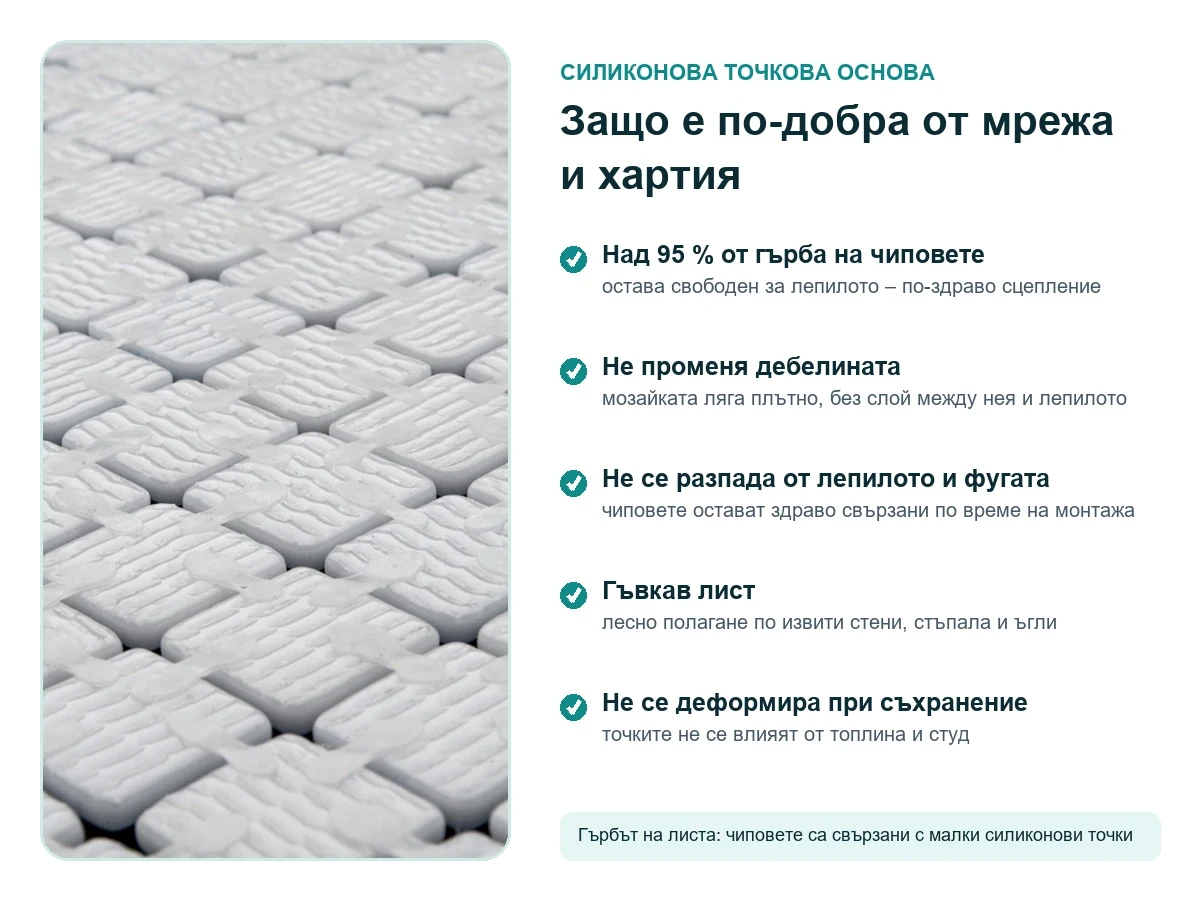
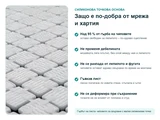
The chips are joined at the back by small silicone (polyurethane) dots. They do not cover the back, so over 95% of each piece comes into contact with the adhesive and the bond is secure. The backing adds no thickness, is not damaged by adhesive or grout and does not deform in storage. The flexible sheet bends around rounded walls, steps and corners.
| Backing | Free area for the adhesive | Laying on curves | After installation |
|---|---|---|---|
| Silicone dots | over 95% of the back | very easy | nothing to remove |
| Mesh | less, part of the back is covered | easy | nothing to remove |
| Paper | the entire back, but the chips are hidden | difficult, the paper tears | the paper is soaked and removed |
How it behaves in water
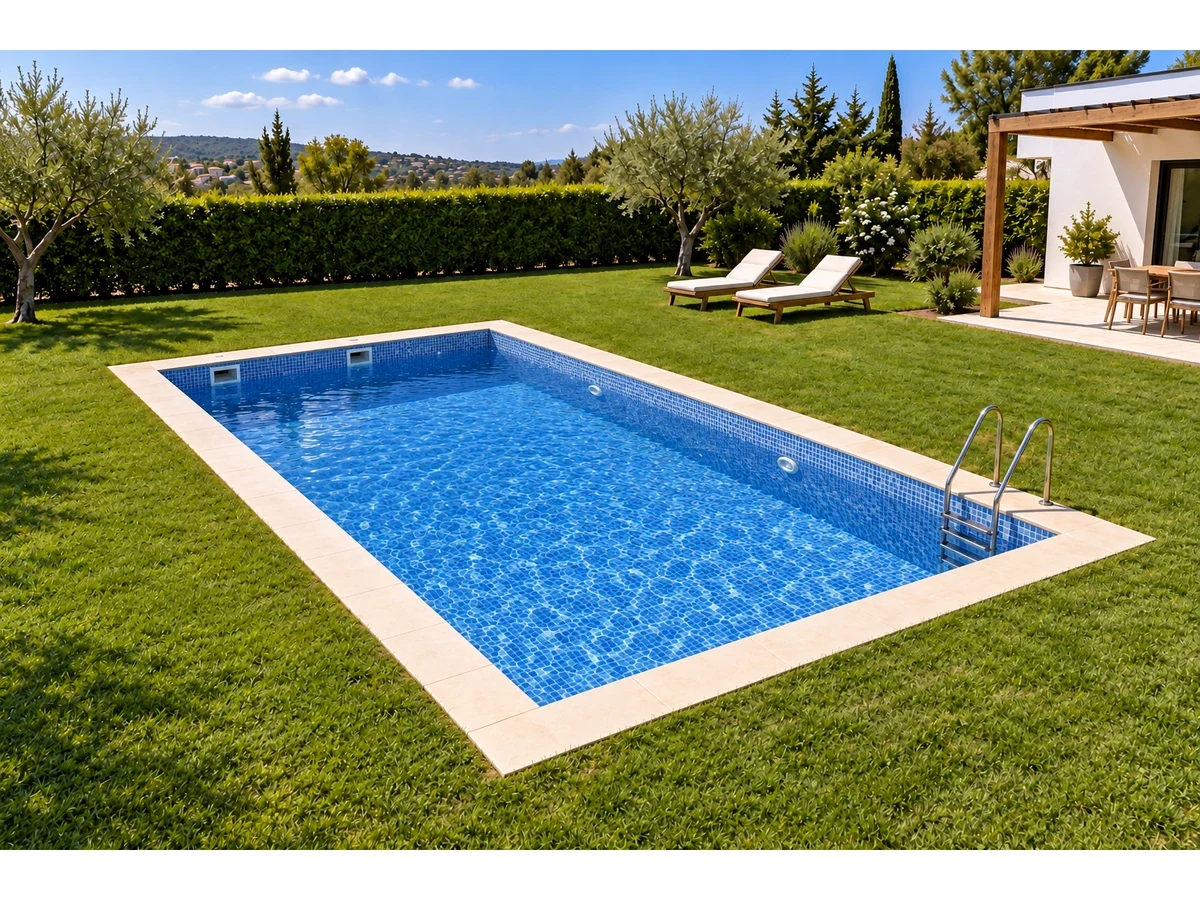
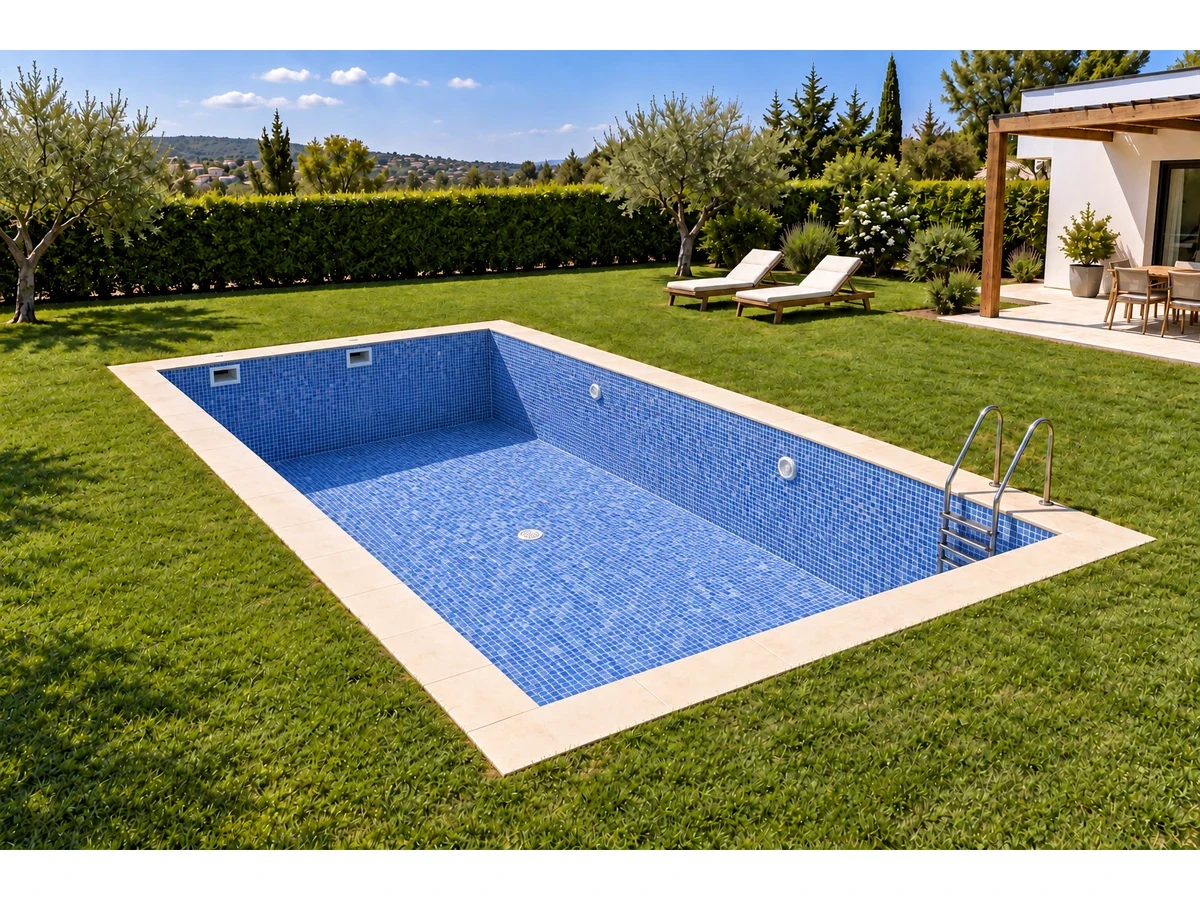
The part above the water reveals the actual colours of the sheet, while at depth the blue thickens and shines.
A light grey grout keeps the balance between the colours, while a white one highlights the purity of the blue. In a pool, epoxy grout is used: water cannot get through it, chlorine does not affect it and its colour stays.
Where to use it
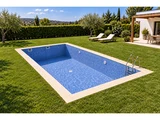
- Full pool liner – walls and floor
- Steps, seats and beach areas
- Whirlpool tubs, spa centres and steam rooms
- Bathrooms, showers and decorative walls
Preparation and installation
- Substrate. It must be level (deviation of up to 2 mm over 2 m), dry, sound and dust-free. In a pool, an elastic cementitious waterproofing is applied first.
- Adhesive. White elastic cementitious adhesive C2TE S1. Glass is slightly translucent, and a grey adhesive would spoil the colour.
- Spreading. Using a 3–4 mm notched trowel, cover an area for 2–3 sheets.
- Laying. Press the sheet on evenly with a rubber float and keep the same 2 mm gap between the sheets.
- Cutting. The silicone dots at corners and around pool jets are cut with a utility knife, and individual chips with glass mosaic nippers.
- Grouting. Starts after 24 hours. Residues of cementitious grout are wiped off with a damp sponge while still fresh; epoxy residues are cleaned off immediately with a special cleaner.
- Filling. The pool is filled only when the grout has fully hardened – as a rule, after about a week.
Also prepare tools and materials: elastic waterproofing, C2TE S1 adhesive in white, grout (epoxy or waterproof), two trowels – a notched one and a rubber one, a utility knife, nippers designed for glass mosaic, as well as a sponge, a bucket and clean water.
How much material to set aside
As a guide, adhesive consumption is about 2 kg/m² for chips up to 25 mm. The exact consumption varies with how level and absorbent the substrate is, which adhesive and grout you have chosen, the shape of the site and the installer’s experience, so check against the technical data sheets of the materials.
Caring for the lining
- Clean with a soft cloth or sponge and a neutral cleaner.
- Avoid coarse abrasives, wire brushes and acidic cleaners on the grout joints.
- Keep the water pH between 7.0 and 7.4 and a suitable hardness, so that limescale does not form on the joints.
- Clean the waterline regularly with a sponge and a special cleaner.
Before you order
- The mosaic is sold in multiples of a 1 m² carton.
- Order everything at once and add 5–10% for cutting: that way everything comes from one batch with the same shade.
- The colour of the finished lining depends on the lighting, the viewing angle, the water in the pool, the colour of the grout and adhesive, the surrounding materials and the production batch. Photos and visualisations are indicative, and there is a natural variation between the chips in a mix.
See also: Wellness, Pools and Equipment, Cladding and Paving, Pools, Pool Chemicals, Pool Accessories.