


Description
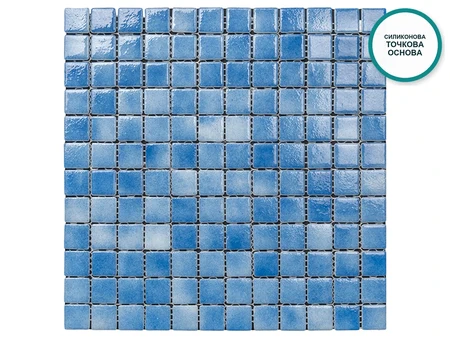
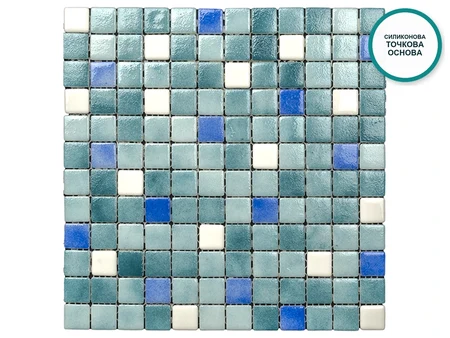
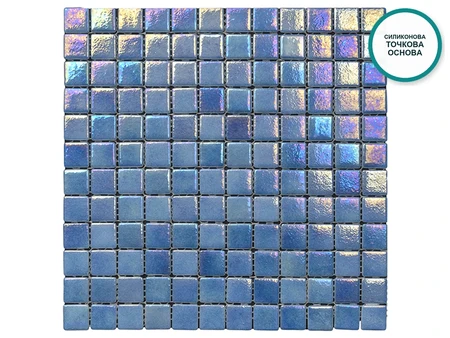
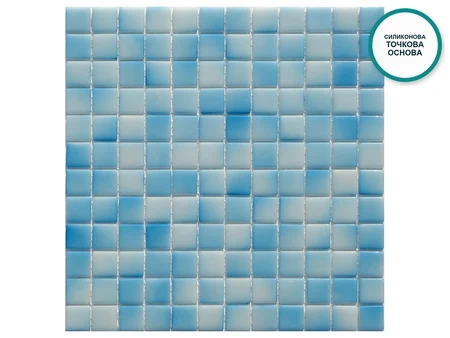
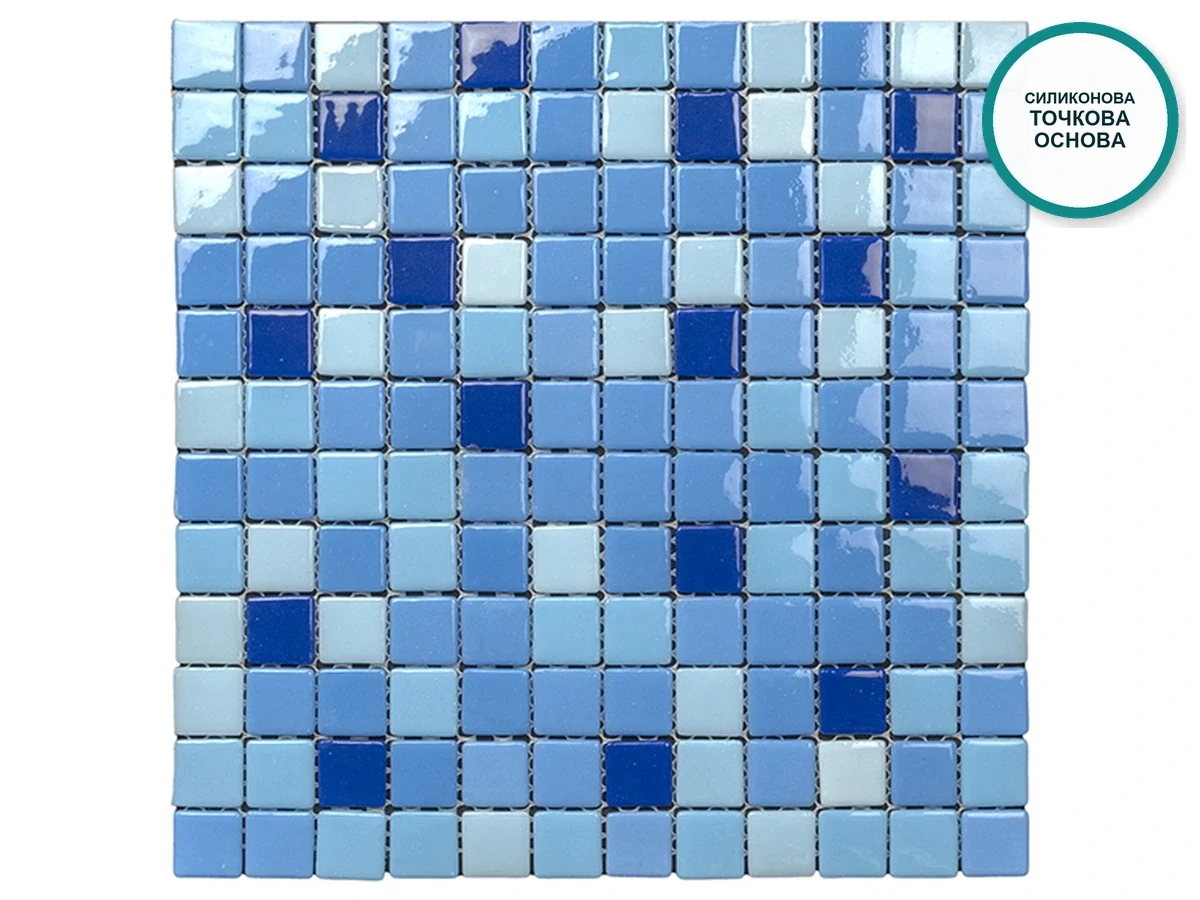
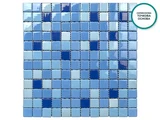
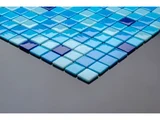
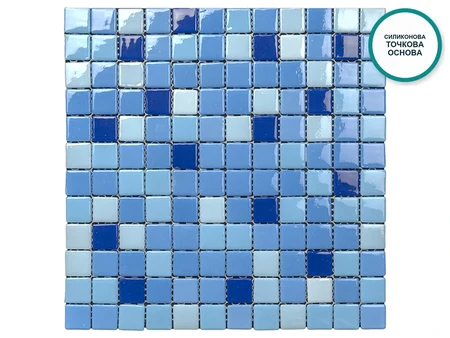
The Bali cladding is a glass-ceramic mosaic with square 25 × 25 mm chips in the shade “light blue mix with dark blue chips”. The sheets measure 317 × 317 mm, the chips are 4 mm thick and are fixed on a silicone dot backing. Item code: MOSFBZM302.
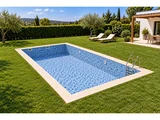
What Bali looks like
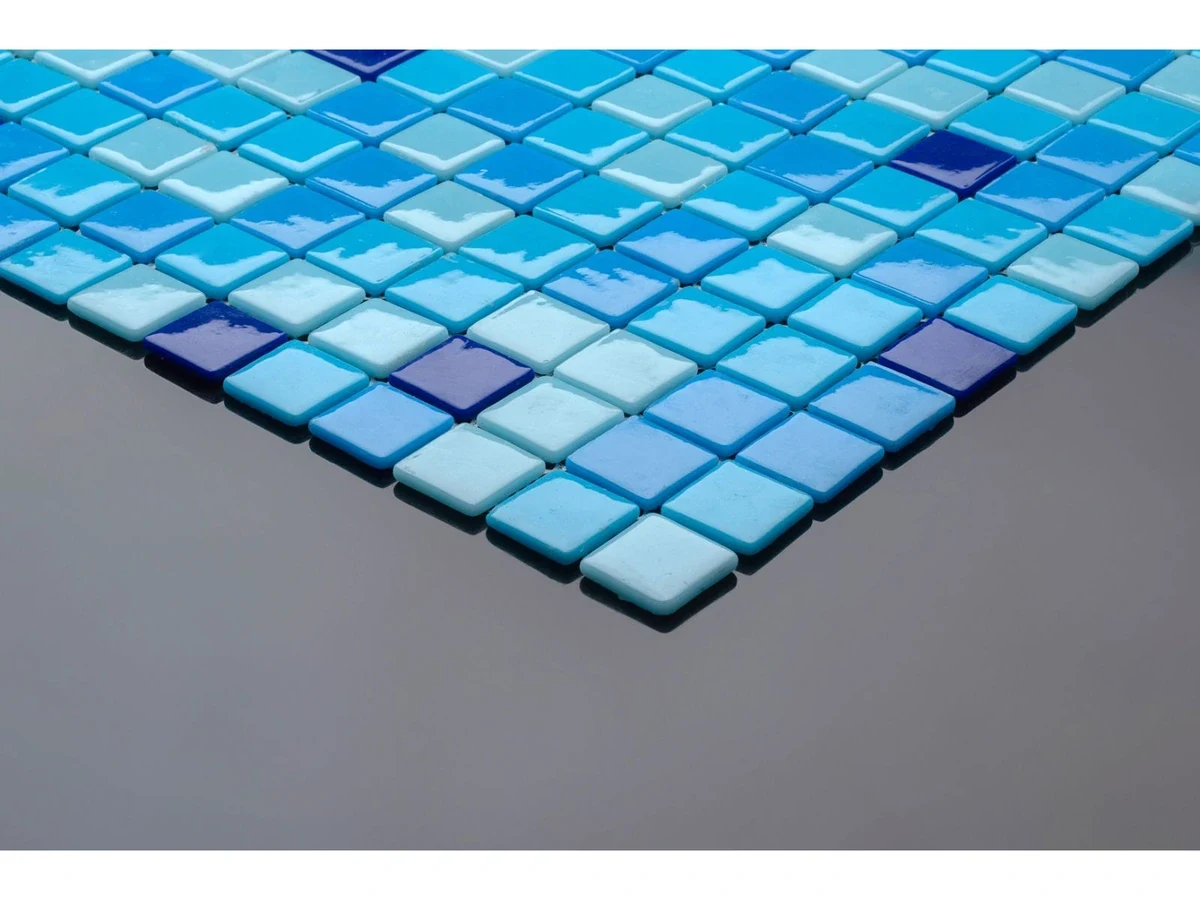
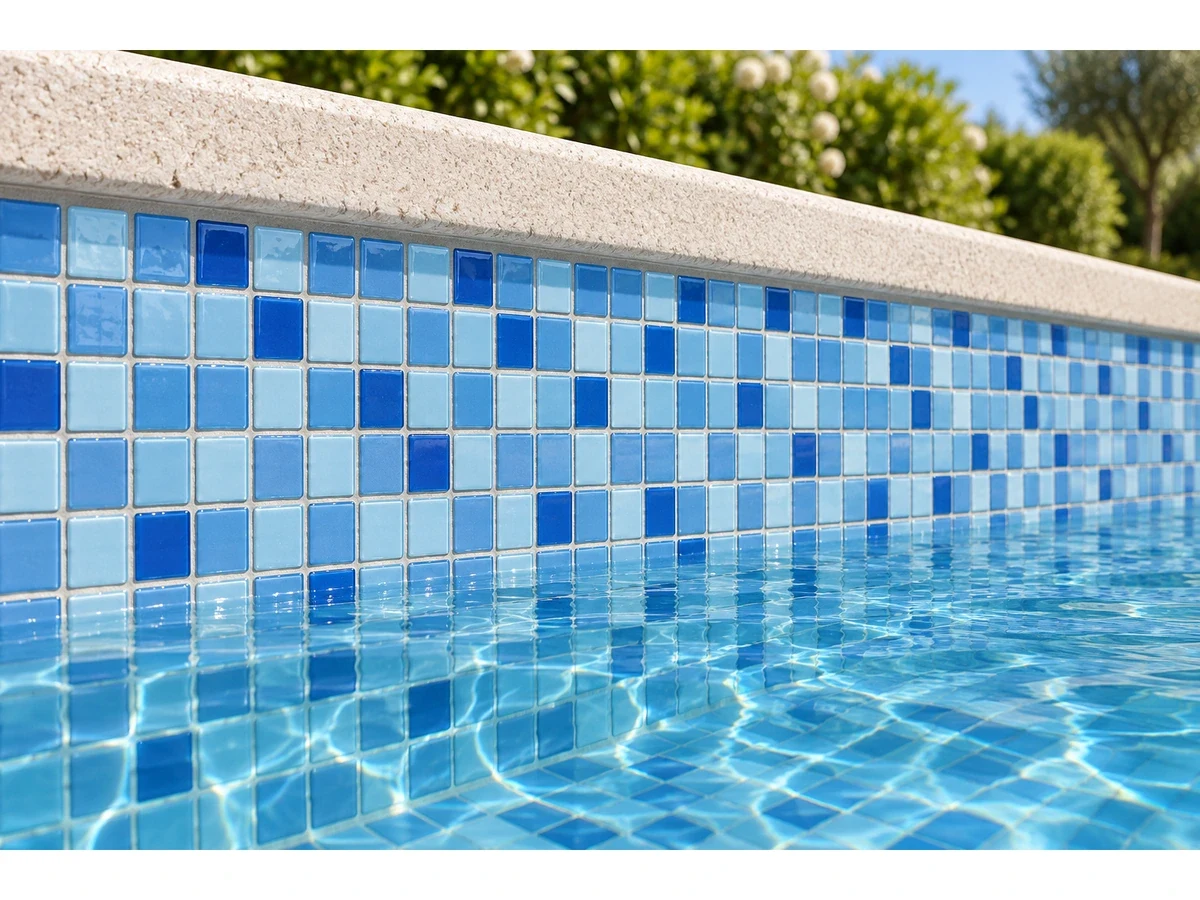
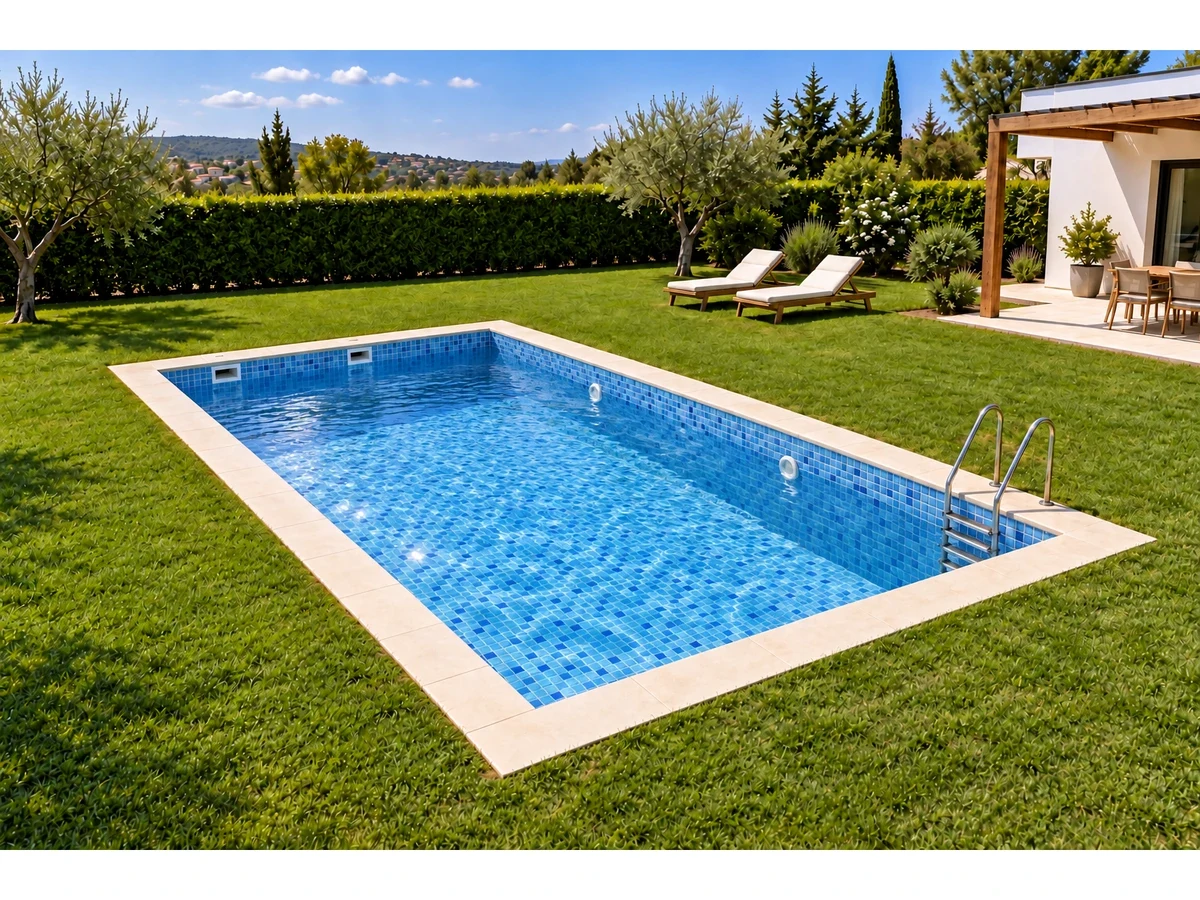
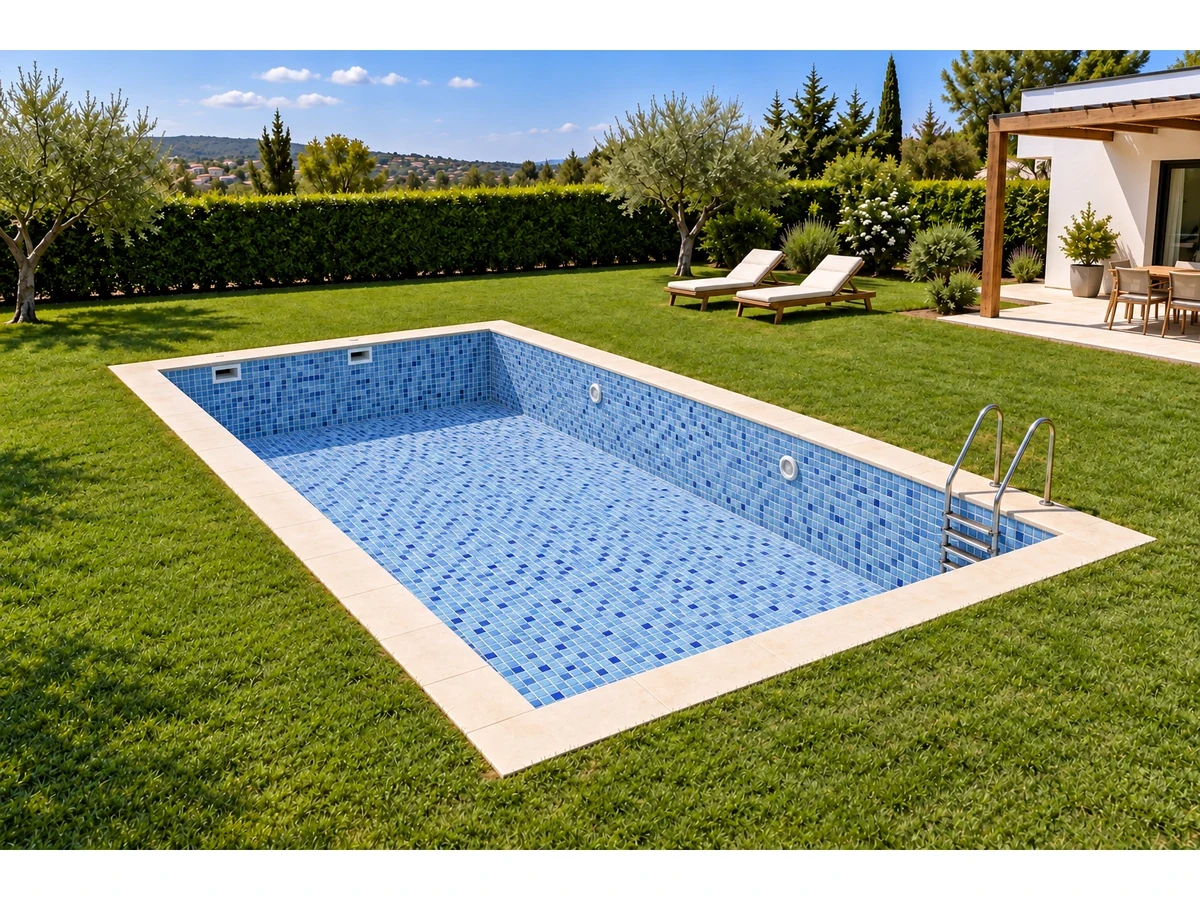
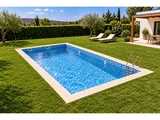
The background is bright and light, while the dark chips look like deep dots scattered across the surface. The gloss is moderate, so the overall impression is clean and playful. In the sun, the water makes the light background sparkle, while the dark pieces add depth. A great choice for family pools and holiday homes.
Bali in water
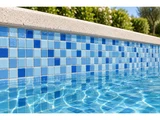
Above the waterline you see the true colours, while towards the bottom the shade deepens and plays in the sunlight. White grout makes the cladding lighter and brighter, while light grey emphasises the volume of the colours.
Key qualities
- Non-porous glass – water absorption up to 0.04 %, so the material does not grow mould and does not absorb stains or odours.
- For permanent immersion – used in pools, whirlpool tubs, fountains and overflow channels.
- Colour-stable – does not fade in sunlight (ISO 4892) or from chemicals (class A under ASTM C650).
- Frost-resistant – withstands freeze-thaw cycles (ASTM C1026) and is also suitable for outdoor use.
- Strength – flexural strength 55 N/mm² (EN ISO 10545-4) and a defect-free surface.
- Eco-friendly composition – 100 % recycled glass, with no lead, cadmium or other heavy-metal pigments.
Why a silicone dot backing
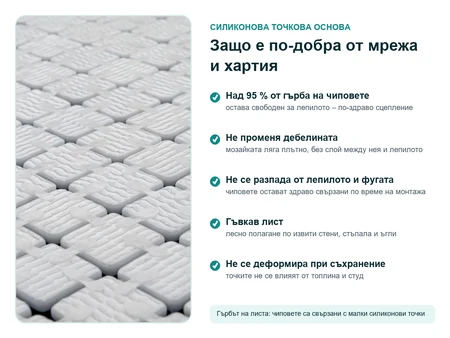
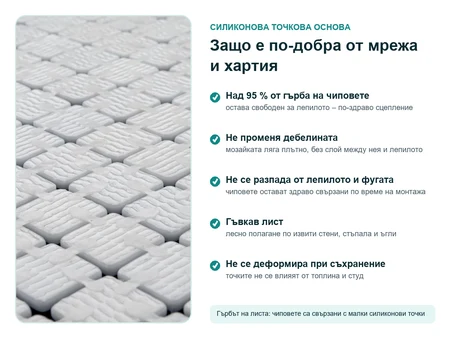
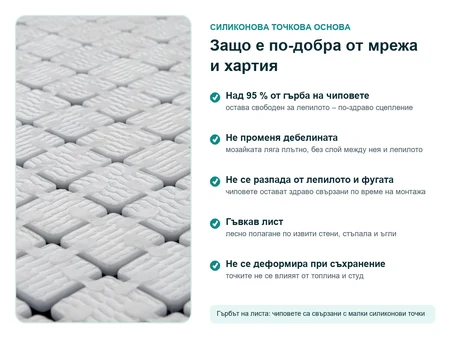
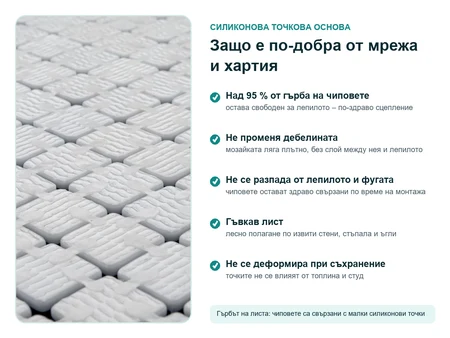
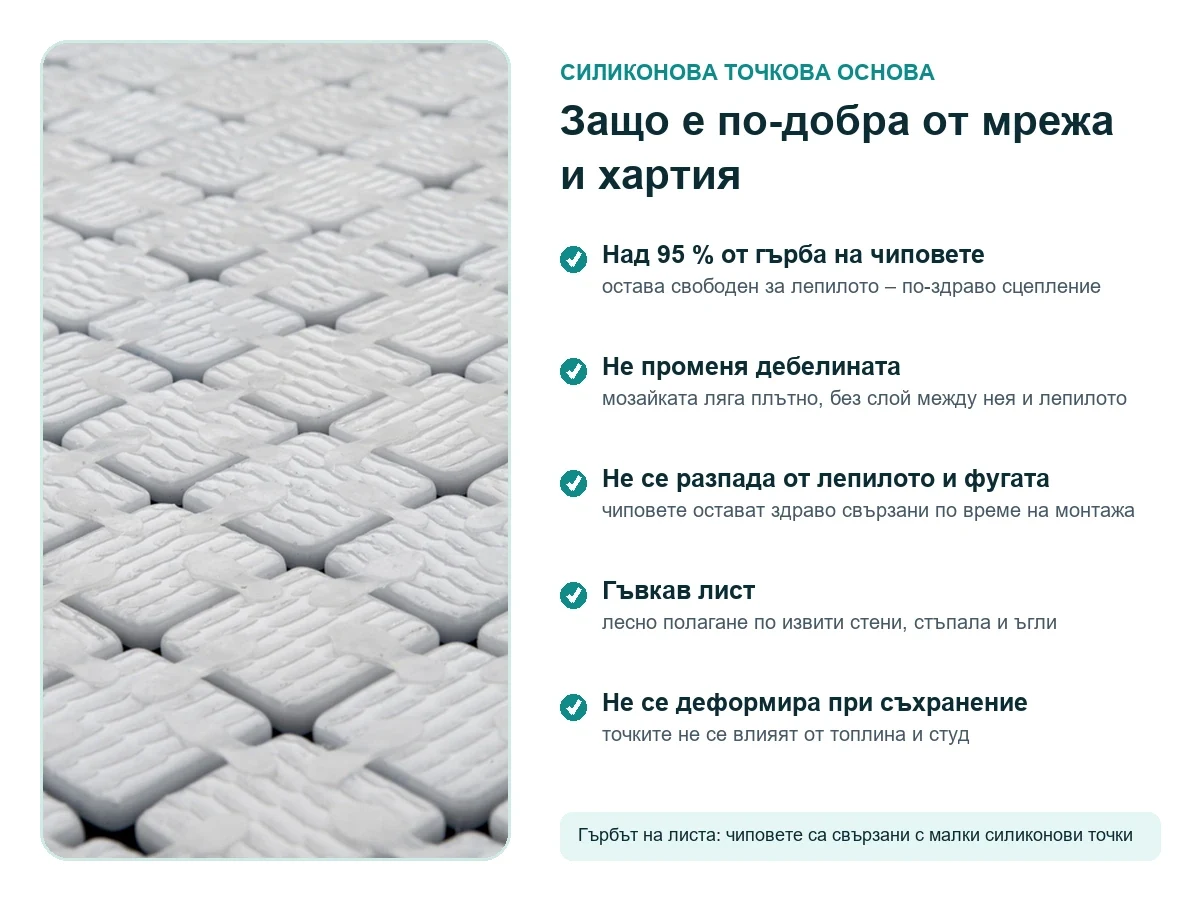
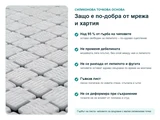
On the back, the chips are held by small silicone (polyurethane) dots that do not cover the whole back. This lets the adhesive reach more than 95 % of the back of each chip, giving very good adhesion. The backing adds no thickness, does not break down from adhesive and grout, and does not warp in storage. The sheet is flexible and bends around rounded walls, steps and corners.
| Backing | Free back surface for adhesive | Laying on curves | After installation |
|---|---|---|---|
| Silicone dots | over 95 % | very easy, the sheet is flexible | nothing to remove; chips and joints stay visible |
| Mesh | less, the mesh covers part of the back | easy | nothing to remove |
| Paper | the whole back, but the paper is on the front | difficult, the paper tears | the paper is soaked and peeled off |
Technical specifications
| Code | MOSFBZM302 |
| Colour | light blue mix with dark blue chips |
| Effect | gloss |
| Construction | glass-ceramic made entirely from recycled glass |
| Chip format | square, 25 × 25 mm, 4 mm thick |
| Sheet size | 317 × 317 mm |
| Sheets per 1 m² | 10 |
| Gap between chips | 2 mm |
| Backing | silicone (polyurethane) dots |
| Flexural strength | 55 N/mm² (EN ISO 10545-4) |
| Water absorption | not more than 0.04 % (EN ISO 10545-3) |
| Frost | resistant (ASTM C1026) |
| Chemicals | class A (ASTM C650) |
| Immersion | may be permanent |
| Intended use | pools, whirlpool tubs, spa centres, bathrooms and showers |
| Per carton | 1 m² |
Where to use it
- Pools: walls and floor, as well as steps, seats and beach areas.
- Whirlpool tubs, spa centres and steam rooms.
- Bathrooms, showers and interior accent walls.
Choosing the grout
The grout shade changes the look of the surface: white grout – the cladding looks lighter and brighter; light grey – emphasises the volume of the colours. In a pool we recommend epoxy grout – it is watertight, does not react to chlorine and does not change colour.
Installation step by step
- Preparing the substrate: level (deviation up to 2 mm over 2 m), dry, sound and dust-free. In a pool, first apply an elastic cementitious waterproofing.
- Adhesive: white elastic cementitious adhesive, class C2TE S1. The chips let a little light through, so grey adhesive would dull their colour.
- Spreading: apply the adhesive with a notched trowel (3–4 mm) over an area large enough for 2–3 sheets.
- Laying: press the sheet on evenly with a rubber float and leave the same gap between sheets as between the chips – 2 mm.
- Cutting: at corners and nozzles, cut through the silicone dots with a utility knife; single chips are trimmed with special glass-mosaic nippers.
- Grouting is done only the next day (after 24 hours). In a pool, use epoxy grout.
- Cleaning: grout left on the surface is removed with a damp sponge before it dries; epoxy residue is removed immediately with a special cleaner.
- Filling the pool: wait until the grout has cured completely – this takes about 7 days.
Also have ready: a sponge, a bucket and clean water, a utility knife, nippers for glass mosaic, two trowels (a notched 3–4 mm one and a rubber one), white C2TE S1 adhesive, epoxy or other waterproof grout and elastic waterproofing for the pool.
How much material to plan for
Calculate the area of the floor and walls and add an allowance for cutting. Adhesive consumption is approximately 2 kg per square metre for chips up to 25 mm, 2.5 kg for 40 mm and 3 kg for larger ones. For the grout, with the present chip (25 × 25 mm, 4 mm thick, 2 mm gap), the expression 1.6 × C × D × (A + B) / (A × B) applies, in kg per m². These figures are only a guide – in practice the quantity varies with the evenness and absorbency of the substrate, the adhesive and grout chosen, the size of the trowel, the width and depth of the joints, the geometry of the site and the installer’s experience. Also check the technical data sheets of the products you will use.
What the tests show
The surface is defect-free when checking 100 % of production (EN ISO 10545-2). The material withstands thermal expansion (EN ISO 10545) and does not change after UV exposure (ISO 4892). The remaining results – for water absorption, flexing, chemicals and frost – are given in the technical table above.
Caring for the cladding
For everyday care, a soft cloth or a sponge with a neutral cleaning agent is enough. Do not use abrasive cleaners, wire brushes or acidic products on the grout. Keep the water pH between 7.0 and 7.4 and at a suitable hardness so that limescale does not build up on the grout. Clean the waterline regularly with a sponge and a special cleaner.
Quantities
The mosaic is sold in cartons of 1 m². It is best to order everything at once and add a 5–10 % reserve – that way all cartons come from the same batch and have the same shade.
Questions and answers
Which adhesive is suitable?
White elastic cementitious adhesive, class C2TE S1: this way the shade of the glass is not distorted.
Which grout is best?
In a pool – epoxy. Its shade (for example white grout) affects the final look.
Can I buy less than one carton?
No, it is sold in multiples of a 1 m² carton.
Is it resistant to salt and chlorine?
Yes, glass does not react with the salt and chlorine in the water, and its colour stays unchanged.
Can it go over old tiles?
Yes, if they are sound, clean and degreased and primed with a suitable primer. In a pool we recommend new waterproofing.
Colour variations
Glass behaves differently in different surroundings, so on site the colour of the mosaic may not match the photos and visualisations. Influencing factors: the screen (settings, brightness, type), the lighting (sun, clouds, artificial light, morning or evening), the viewing angle, the water in the pool (depth, clarity, chemistry, reflection of the sky), the colour of the grout and adhesive, the size of the tiled area, the surrounding colours (coping, paving, walls, plants), and the production batch and the natural differences between individual chips in mixes. Visualisations are indicative. If the shade is decisive for you, clarify it with us before ordering.
Send us the dimensions of the pool or room and we will calculate the area and the cartons you need before you order.
See also: Wellness, Pools and Equipment, Cladding and Paving, Pools, Pool Chemicals, Pool Accessories.