
Description
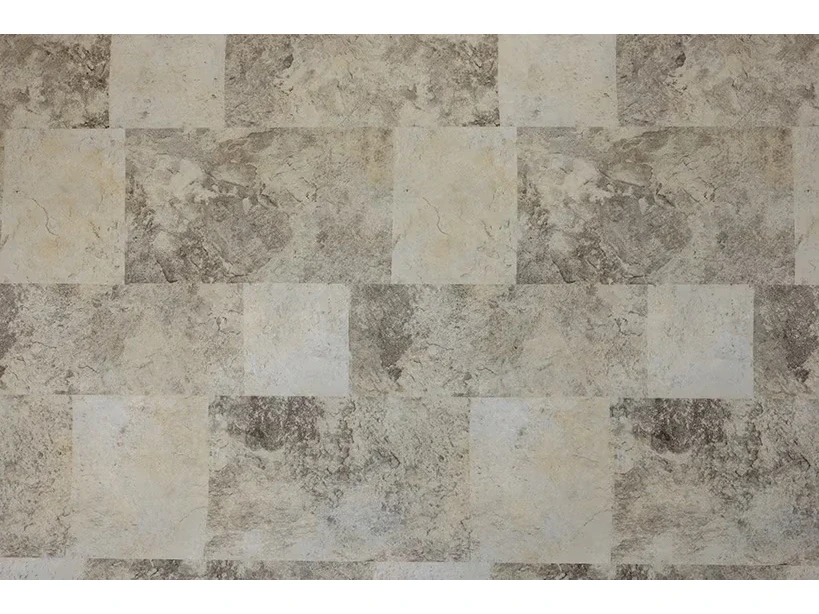
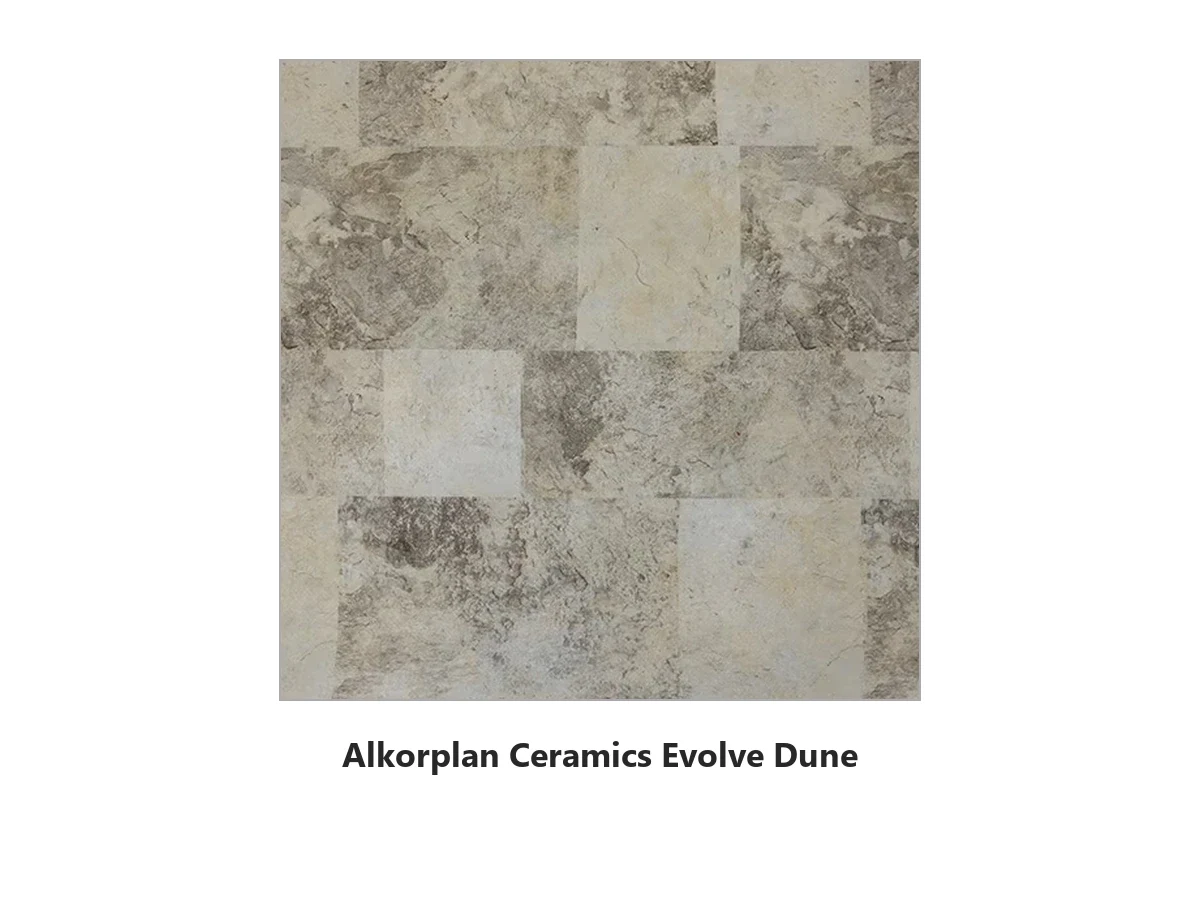
In the Alkorplan Ceramics Evolve collection, the Dune pattern is a reinforced 2.0 mm PVC membrane in which beige-grey ceramic tiles create the impression of a natural-material lining.
What the Dune Pattern Looks Like
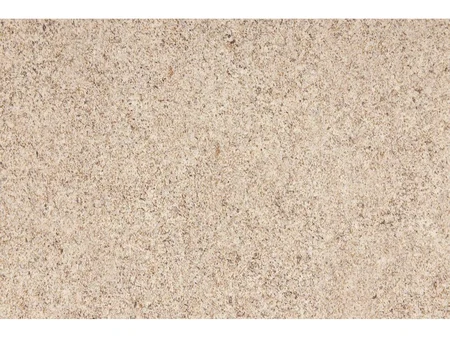
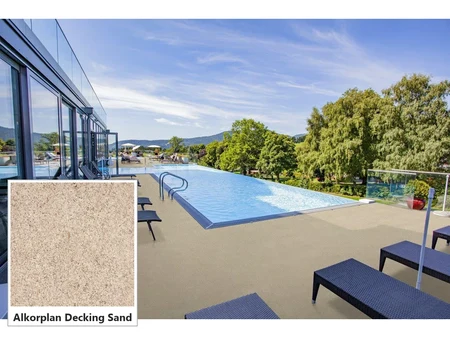
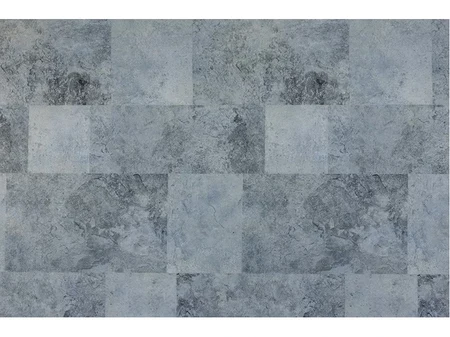
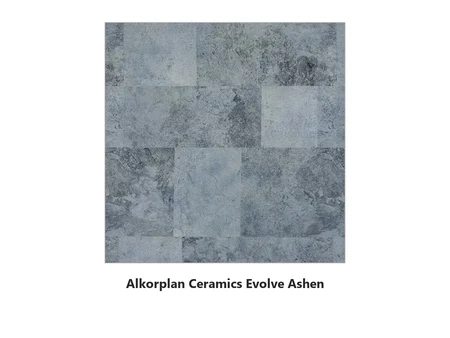
The image shows large tiles in beige, cream and grey-brown shades. The tiles differ from one another – some are light and smooth, others darker and speckled with tiny flecks. The surface is finely textured.
In the water the tone is warm and bright. Dune fits Mediterranean pools, gardens with sandy paving and homes in a warm palette – it looks like ceramic cladding, but is a single seamless membrane.
Advantages
- Reinforced PVC membrane, 2.0 mm thick, with a polyester fabric insert.
- Finely textured surface that resembles ceramic.
- Class C slip resistance, in line with swimming pool standards.
- Acrylic antibacterial layer against ageing and bacteria, with enhanced UV resistance.
Technical Specifications
| Series | Ceramics Evolve |
|---|---|
| Pattern | Dune – pattern with beige-grey ceramic tiles |
| Brand | Alkorplan |
| Article number | 97887165 |
| Roll width | 1.65 m |
| Membrane thickness | 2.0 mm |
| Inner insert | polyester fabric (reinforced) |
| Relief and texture | finely textured, ceramic look |
| Slip resistance | Class C – meets the requirements for non-slip surfaces in swimming pools |
| Sold per | square metre |
Application and Use
The membrane is installed as a lining for the pool shell and gives the look of tiles without grout lines and without laborious tiling. Class C slip resistance also makes it suitable for areas where people step.
The Colour in the Water
The shade of the pattern in the pool changes with the light, the depth of the water and the surroundings. Before you choose, look at the sample and the photos of completed projects.
Available Size and Installation
- Alkorplan Ceramics Evolve Dune: roll 1.65 m wide, 2.0 mm thick.
A specialist welds the strips together on site, fitting them to the outline of the pool shell. The material can line a concrete, metal, wooden or monolithic structure; it is best to lay a geotextile layer on the base first.
Calculating the Quantity
Calculate the area of the floor and walls, leaving an allowance for overlaps and trimming. The quantity is determined in square metres.