


Description
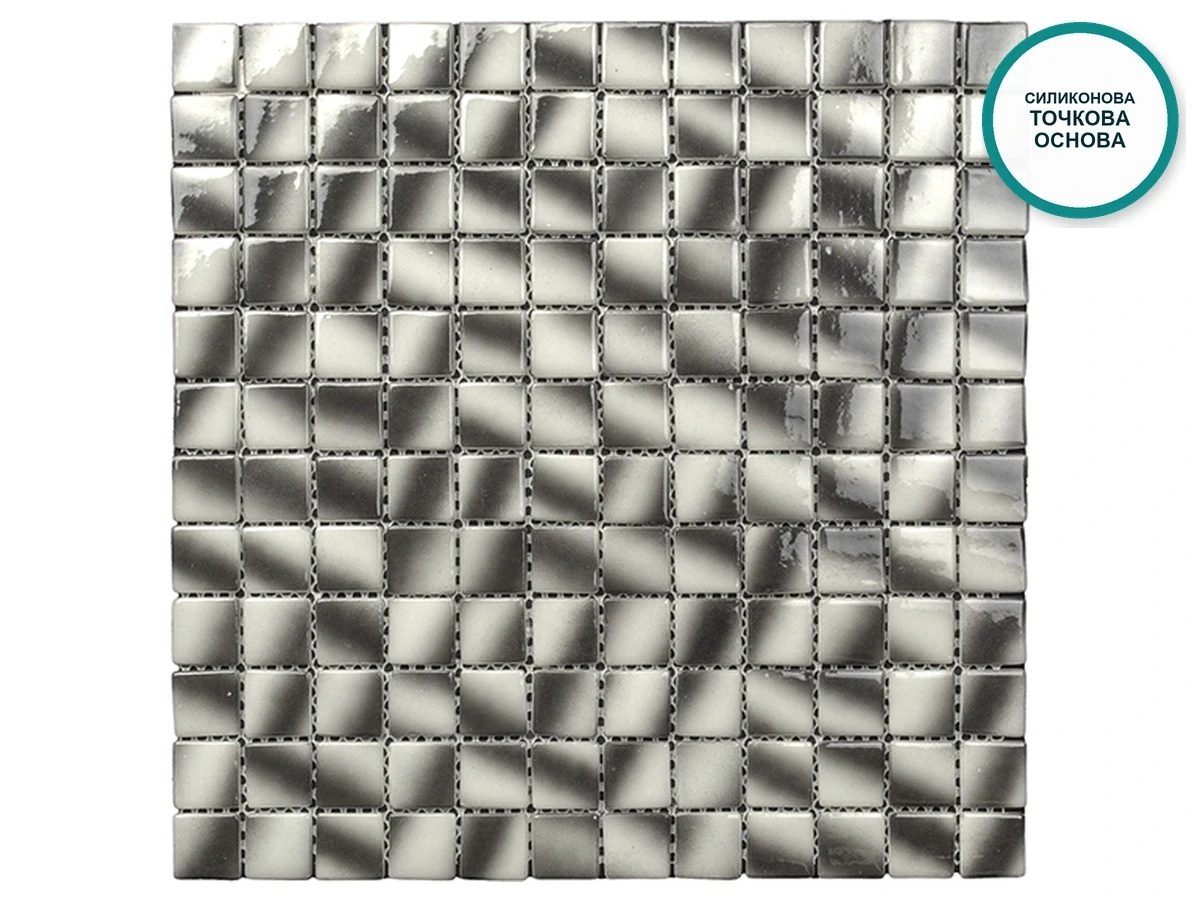
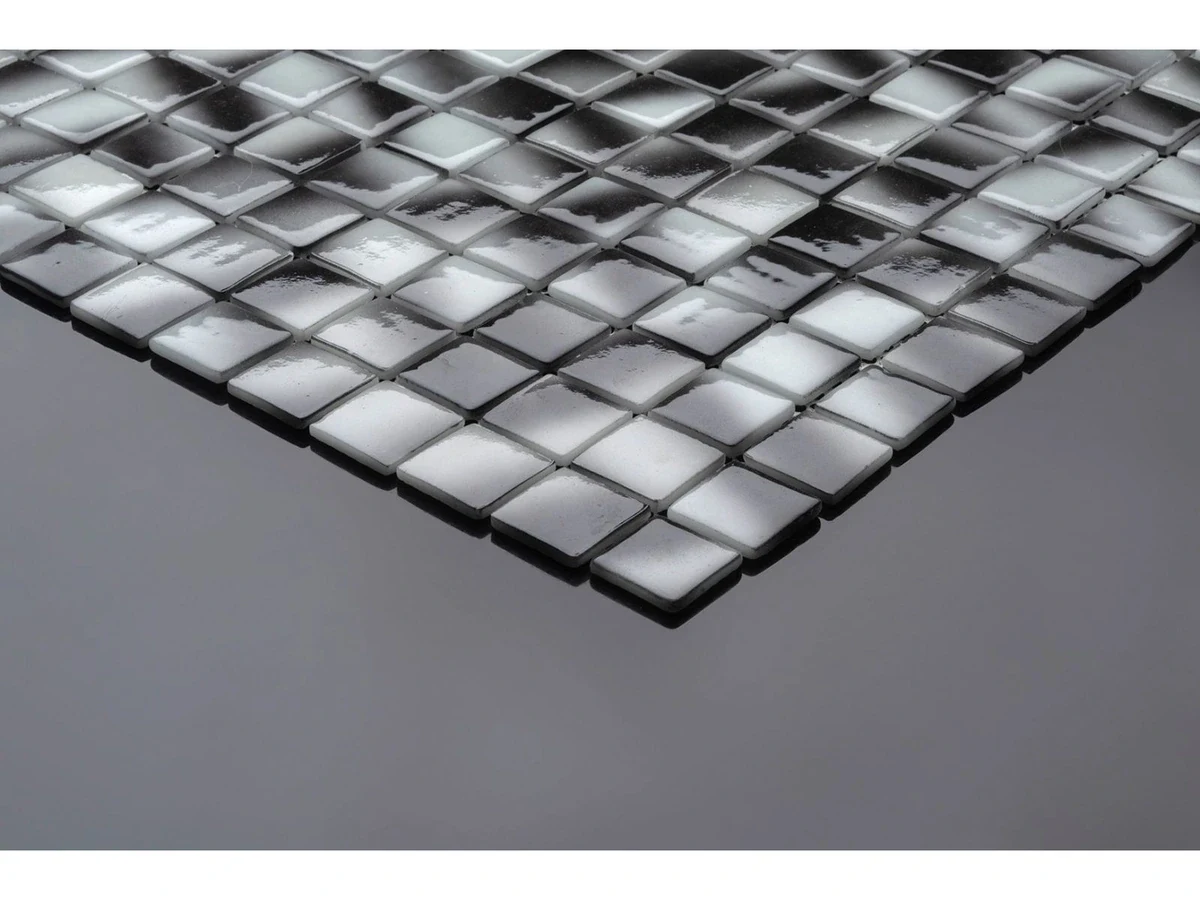
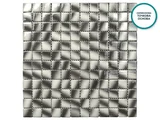
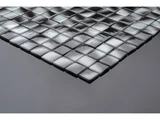
Pag is a glass-ceramic mosaic with a graphic black-and-white pattern. The square 25 × 25 mm chips are arranged in diagonal stripes and factory-bonded onto sheets for easier laying.
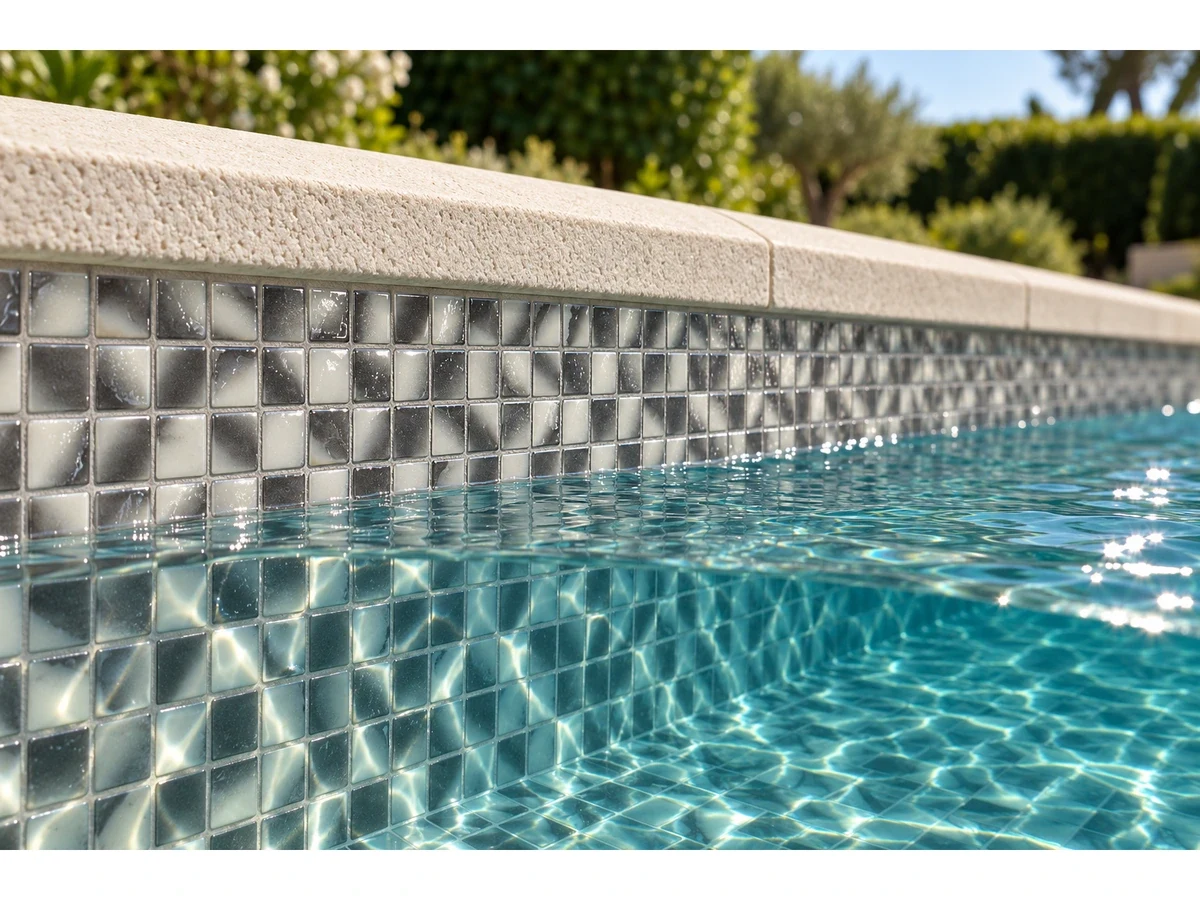
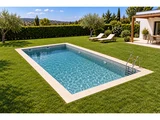
The light and dark squares create a dynamic, almost optical effect that the gloss reinforces further. In the water, in sunlight, the result is a play of light and dark stripes. It is chosen for bold pools, feature walls and bathrooms with character.
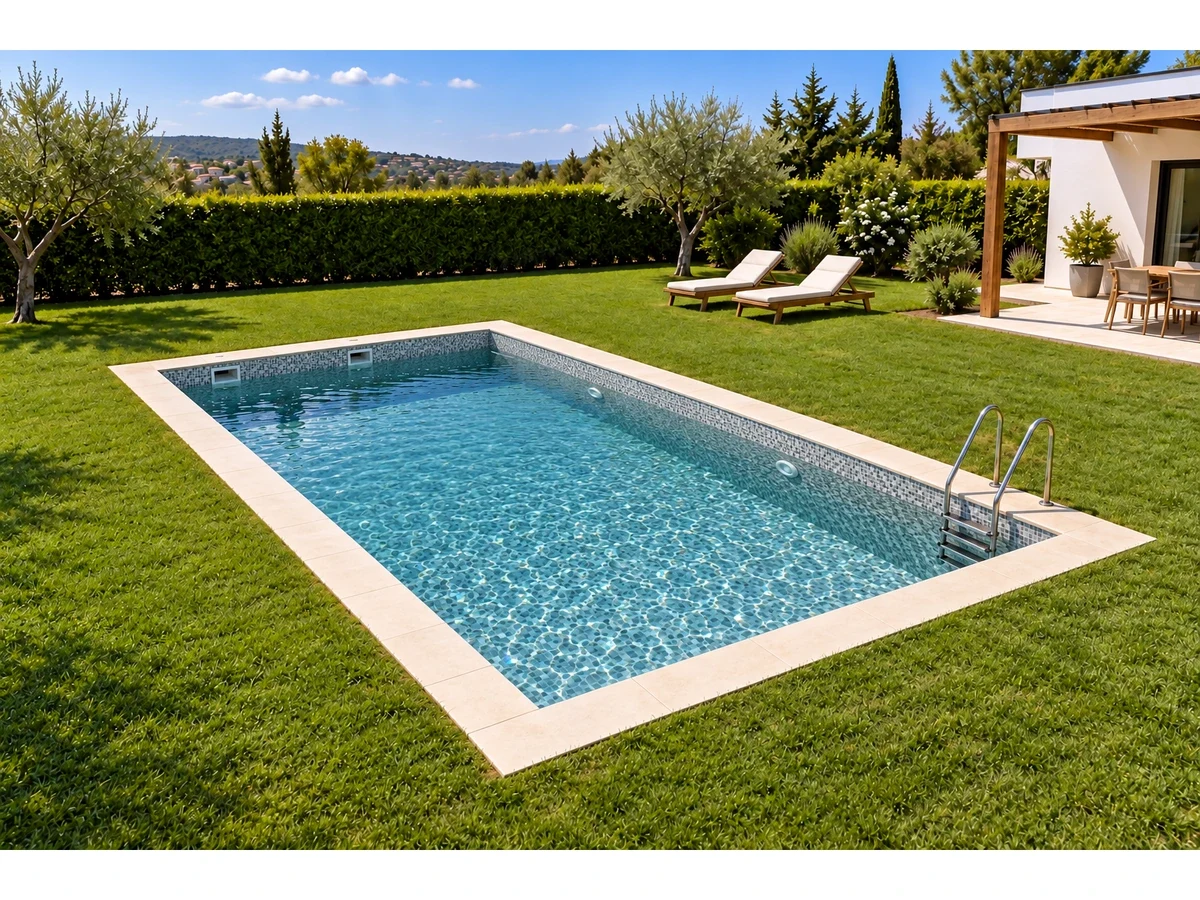
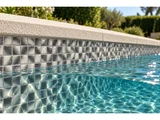
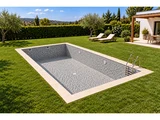
How it looks in water
Under water the colours become more saturated. The part above the water shows the true look of the sheet, while towards the bottom the tone darkens and sparkles in the sun. A grey grout softens the contrast between the black and the white, while a black one makes the pattern stricter and more graphic.
Why choose Pag
- Non-porous material. Water absorption is up to 0.04%, so the surface does not harbour mould, stains or odours.
- For permanent immersion. It can be used in pools, whirlpools, fountains and overflow channels.
- Lasting colour. Sunlight (ISO 4892) and cleaning agents (class A under ASTM C650) do not change it.
- Frost-resistant. It withstands repeated freezing and thawing (ASTM C1026), so it is also suitable for outdoor areas.
- Strong surface. Flexural strength of 55 N/mm² (EN ISO 10545-4) and a flawlessly smooth finish.
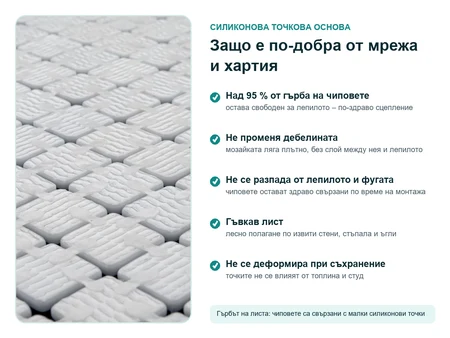
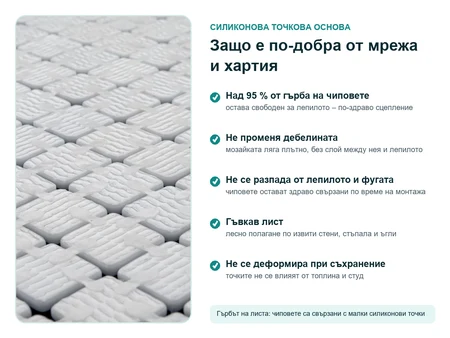
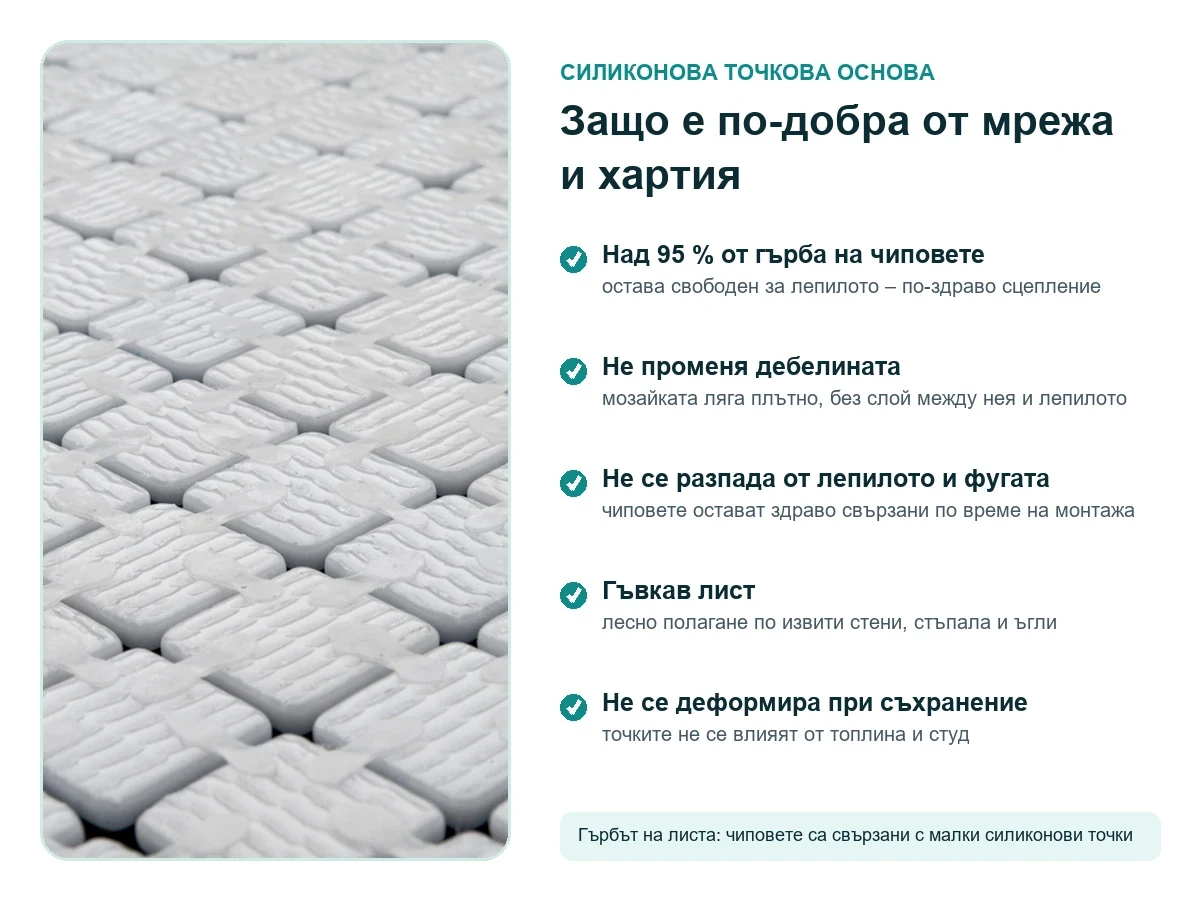
- Silicone dot backing. It grips better than mesh and paper and is easy to lay around curves and corners.
- Eco-friendly composition. Made from fully recycled glass, with no lead, cadmium or other heavy-metal pigments.
Technical specifications
| Model | Glass-ceramic mix Pag |
|---|---|
| Item code | MOSFBZM019 |
| Material | glass-ceramic, made entirely from recycled glass |
| Colour | black and white with a diagonal pattern |
| Effect | decorative pattern |
| Dimensions of one sheet | 317 × 317 mm |
| Sheets per 1 m² | 10 |
| Carton contents | 1 m² |
| Chip | square, 25 × 25 mm |
| Chip thickness | 4 mm |
| Sheet backing | silicone (polyurethane) dots |
| Joint between sheets | 2 mm |
| Chemical resistance | class A (ASTM C650) |
| Freezing and thawing | withstood (ASTM C1026) |
| Flexural strength | 55 N/mm² (EN ISO 10545-4) |
| Water absorption | no more than 0.04% (EN ISO 10545-3) |
| Continuous immersion | permitted |
| Intended use | swimming pools, whirlpools, spa areas, bathrooms and shower cubicles |
| Price is per | 1 m² |
The sheet backing
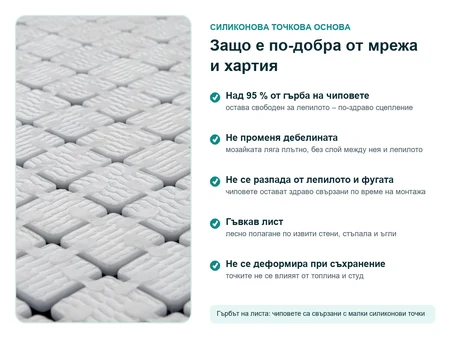
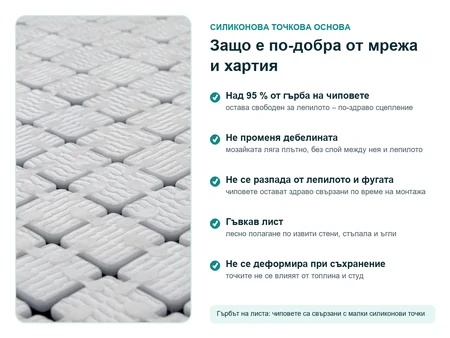
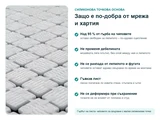
The Pag sheets sit on a silicone (polyurethane) dot backing. Small silicone dots on the back hold the chips together without covering them.
As a result, more than 95% of the back of every chip stays free for the adhesive, and the bond is very good. The backing adds no thickness, is not damaged by the adhesive and grout, and does not warp in storage. The sheet is flexible, so it is easy to install on curved walls, steps and corners.
- Silicone dots: the adhesive reaches more than 95% of the back of the chip, the order of the chips and the joints stays visible, and the sheet bends slightly around rounded surfaces and corners. Nothing has to be removed after bonding.
- Mesh: a mesh backing covers part of the back, so the adhesive has less contact area. The chips are visible, bending is easy and the backing stays in place.
- Paper: the back is fully exposed, but the paper is on the face side and the chips are laid blind. Around curves it is hard to work with, and after installation it is soaked and peeled off.
Where Pag is used
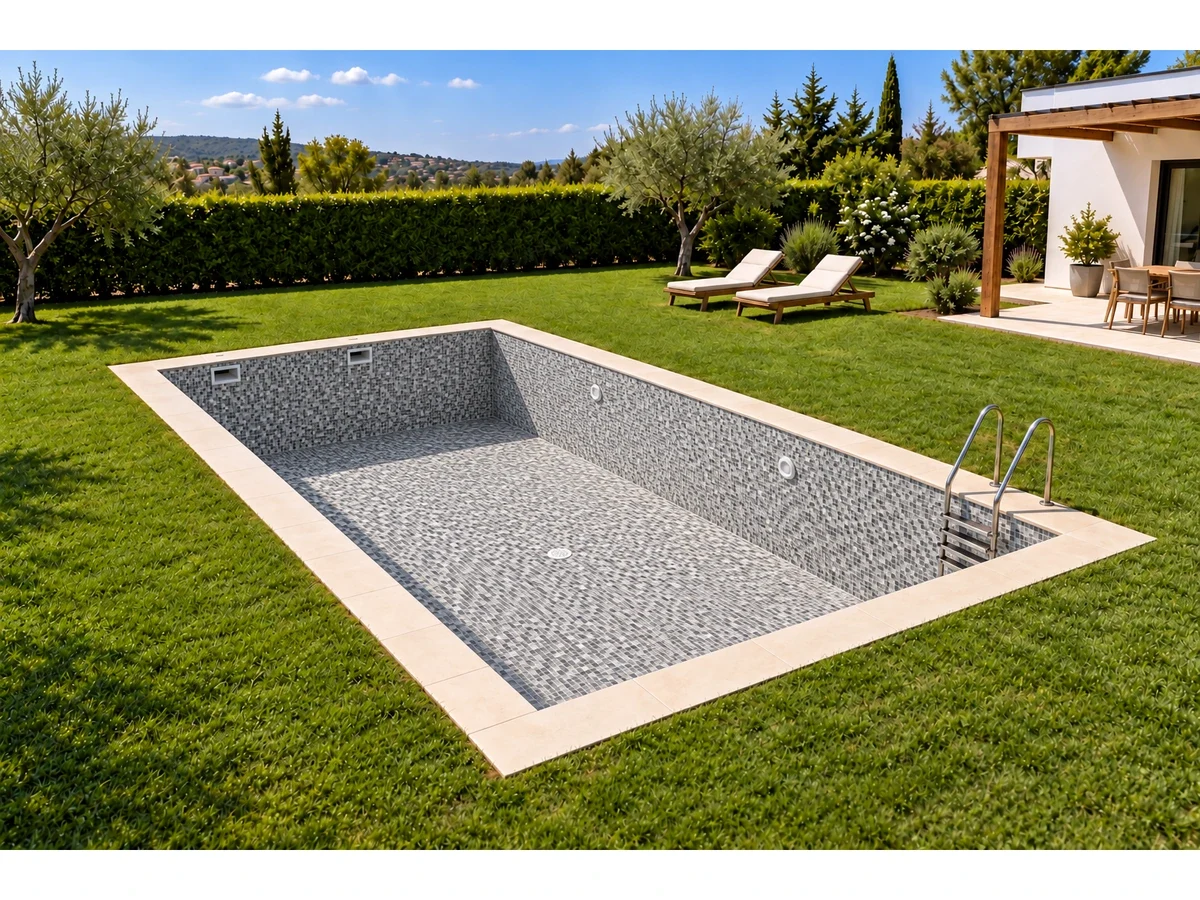
This mosaic works anywhere there is water or moisture: as a lining for the entire pool shell (walls and floor), on steps, benches and sun shelves in the pool, in whirlpools, spa complexes and steam rooms, and as an accent in a bathroom, a shower cubicle or on a feature wall.
Choosing the grout
A grey grout softens the contrast between the black and the white, while a black one makes the pattern stricter and more graphic. The recommended joint width is 2 mm. For a pool, choose an epoxy grout: it is waterproof, does not react to chlorine and keeps its colour.
How much material to order
First work out the surface area: the floor plus the walls. Add 5–10% to the total for offcuts and rejected chips. Example project: a pool of 8 × 4 m with a depth of 1.5 m.
It is best to place the whole order at once – that way all the cartons come from the same production batch and the shade is uniform. As a guide, adhesive consumption is 2 kg per m² for chips up to 25 mm; for 40 mm the rate is 2.5 kg/m², and for larger elements 3 kg/m². The actual quantities depend on the evenness and absorbency of the substrate, the adhesive and the grout, the trowel, the width and depth of the joint, the shape of the room and the experience of the installer, so check them against the technical data sheets of the materials you choose.
Installation step by step
- Substrate. Level (deviation of up to 2 mm per 2 m), dry, sound and free of dust. In a pool, apply an elastic cementitious waterproofing first.
- Adhesive. White flexible cement-based adhesive of class C2TE S1. The white colour matters: the glass is slightly translucent, and a grey adhesive would darken the tone.
- Application. Spread the adhesive with a 3–4 mm notched trowel over an area big enough for 2–3 sheets.
- Laying. Place the sheet, press it down evenly with a rubber float and keep the same 2 mm gap between sheets.
- Cutting. In corners and around fittings, cut through the silicone dots with a utility knife, and cut individual chips with special glass mosaic nippers.
- Grouting. Start grouting 24 hours after bonding, using an epoxy grout.
- Cleaning. Wipe off excess grout with a damp sponge before it dries; remove epoxy residue immediately with a special cleaning agent.
- Filling the pool. Fill the pool once the grout has fully cured – usually after 7 days.
You will also need: a notched trowel and a rubber float, a utility knife, glass mosaic nippers, a sponge with a bucket of clean water, the white adhesive, the suitable grout and an elastic waterproofing for the pool.
Laboratory tests
- ASTM C650: chemical resistance class A, no visible change.
- ASTM C1026: the material withstands freezing and thawing.
- ISO 4892: light and UV ageing with no change in colour.
- EN ISO 10545-2: the surface is free of defects (100%).
- EN ISO 10545-3: water absorption does not exceed 0.04%.
- EN ISO 10545-4: flexural strength is 55 N/mm².
- EN ISO 10545: thermal expansion is within the permitted limits.
Caring for the mosaic
- Clean with a soft cloth or sponge and a neutral cleaner.
- Do not use abrasive powders, wire brushes or acids on the grout.
- Keep the water pH between 7.0 and 7.4 and maintain correct hardness, so that limescale does not build up on the joints.
- Clean the waterline regularly with a sponge and a special cleaner.
Quantity and packaging
The mosaic is priced per 1 m², and the pack is a carton of 1 m², so quantities are taken in multiples of a carton.
Questions and answers
Which adhesive suits Pag?
White flexible cement-based adhesive C2TE S1 – it does not change the colour of the glass.
Which grout is suitable?
For a pool – epoxy. Grey grout – for a softer contrast; black – for a stricter, graphic pattern.
Can I buy less than one carton?
No, it is sold in multiples of a 1 m² carton. Take the quantity you need all at once, so that it comes from one batch.
Is it suitable for salt water and chlorine?
Yes, glass does not react with chlorine and salt, and its colour stays unchanged.
Can it be fixed over old tiles?
Yes, provided the tiles are sound, clean and degreased and have been treated with a suitable primer. In a pool we recommend a new waterproofing.
Why the colour on site may differ
Glass changes its appearance depending on the circumstances, so the mosaic in the actual installation may look slightly different from the photographs. There are several reasons: the screen you are viewing it on (brightness and type), the lighting (sunny, cloudy, artificial, morning or evening), the viewing angle, the colour of the grout and the adhesive, the size of the surface, and the surrounding materials and plants.
In a pool, the depth, clarity and chemistry of the water and the reflection of the sky add to this, making the colour more saturated.
There may be a slight difference in shade between production batches, and with mixes and effect glass the chips naturally differ from one another. That is why you should order the whole quantity at once. The visualisations shown are for illustration only.
See also: Wellness, Pools and Equipment, Cladding and Paving, Pools, Pool Chemicals, Pool Accessories.