


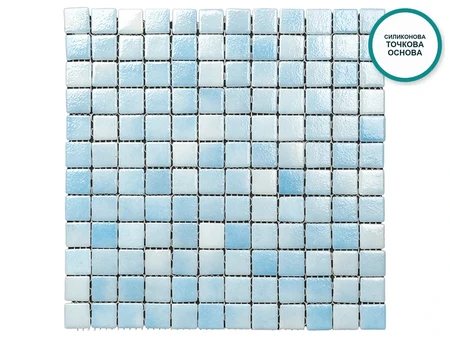
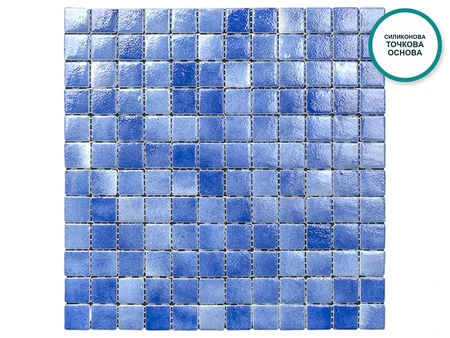
Description
Loutro – blue-brown with reddish shades
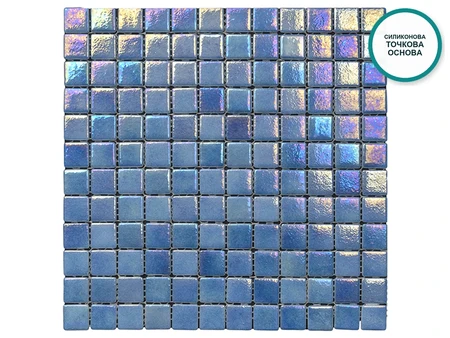
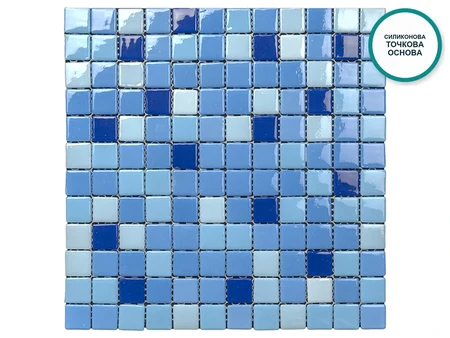
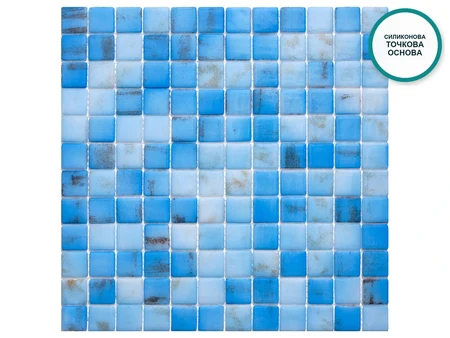
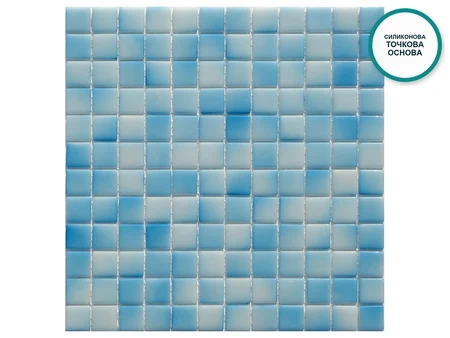
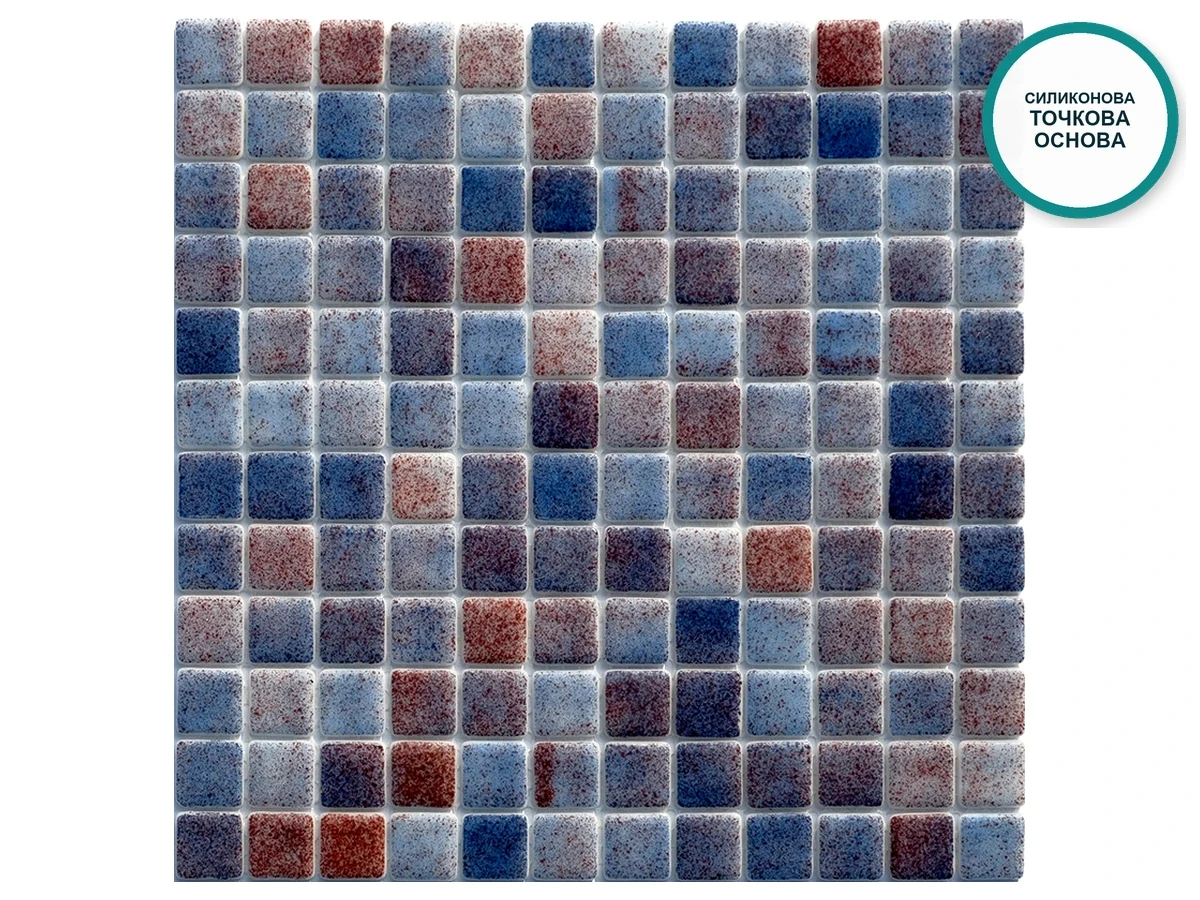
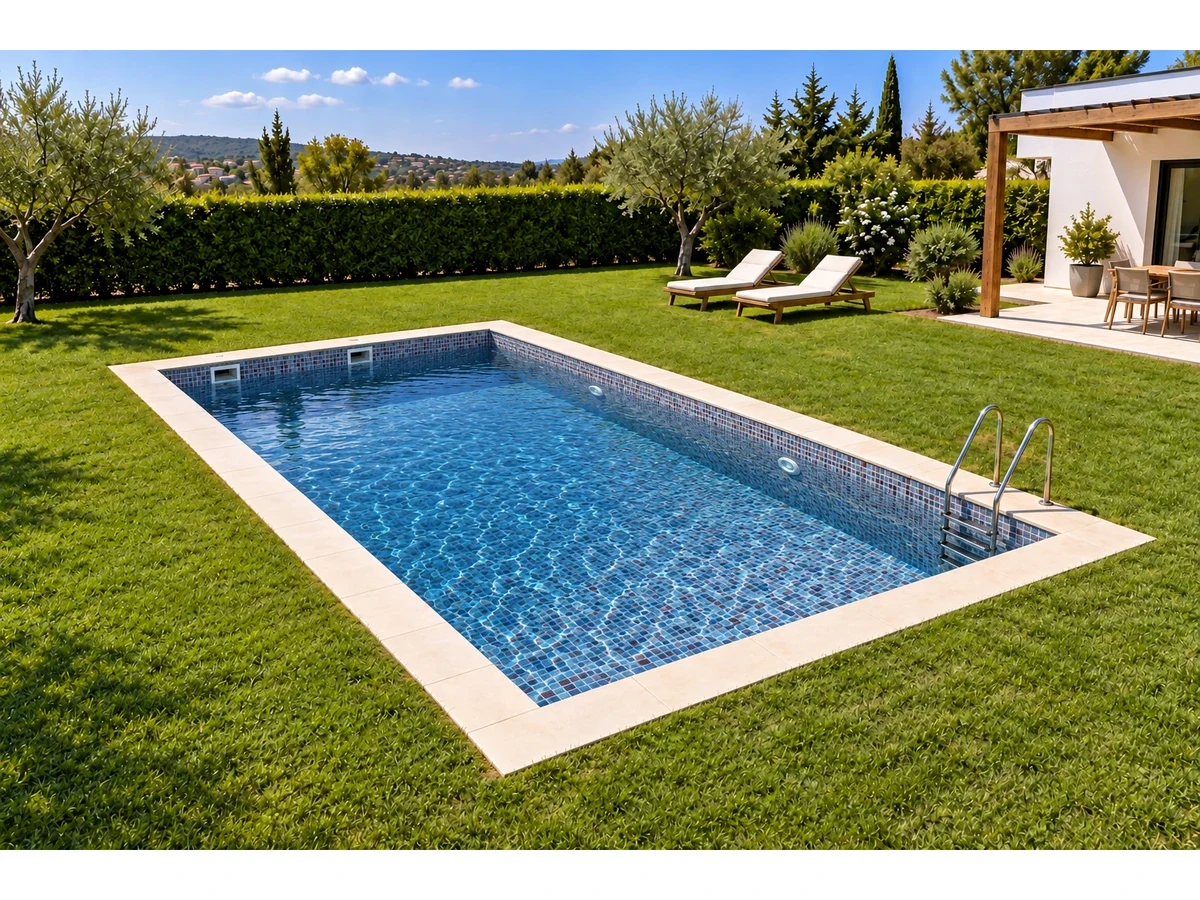
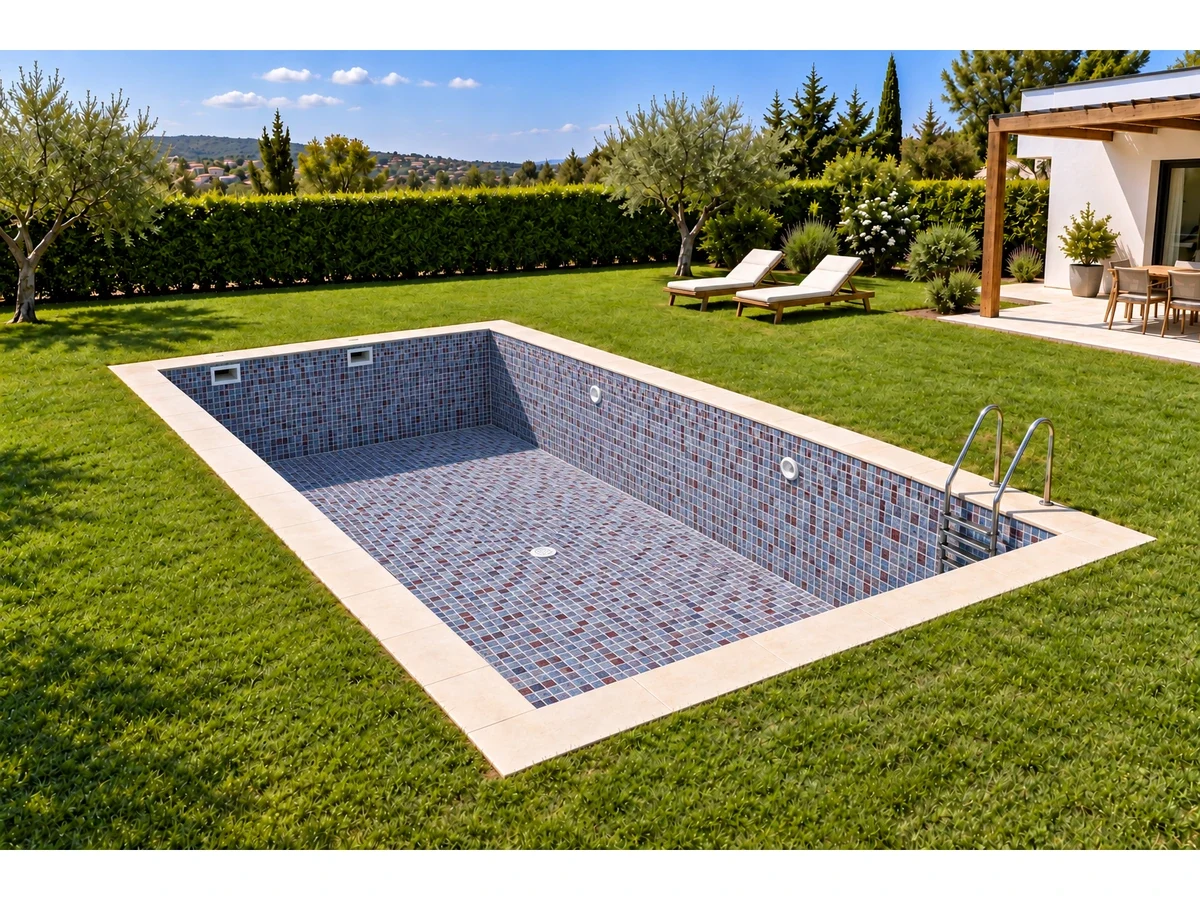
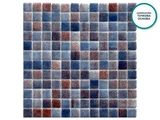
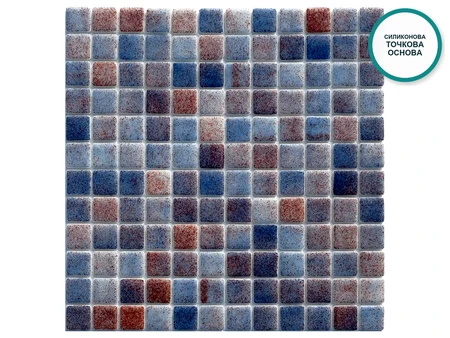
Loutro is a glass-ceramic mosaic with square 25 × 25 mm chips in which cool blue is mixed with brown and reddish tones. The surface is rich in shades and looks orderly on the flexible sheets.
What it looks like
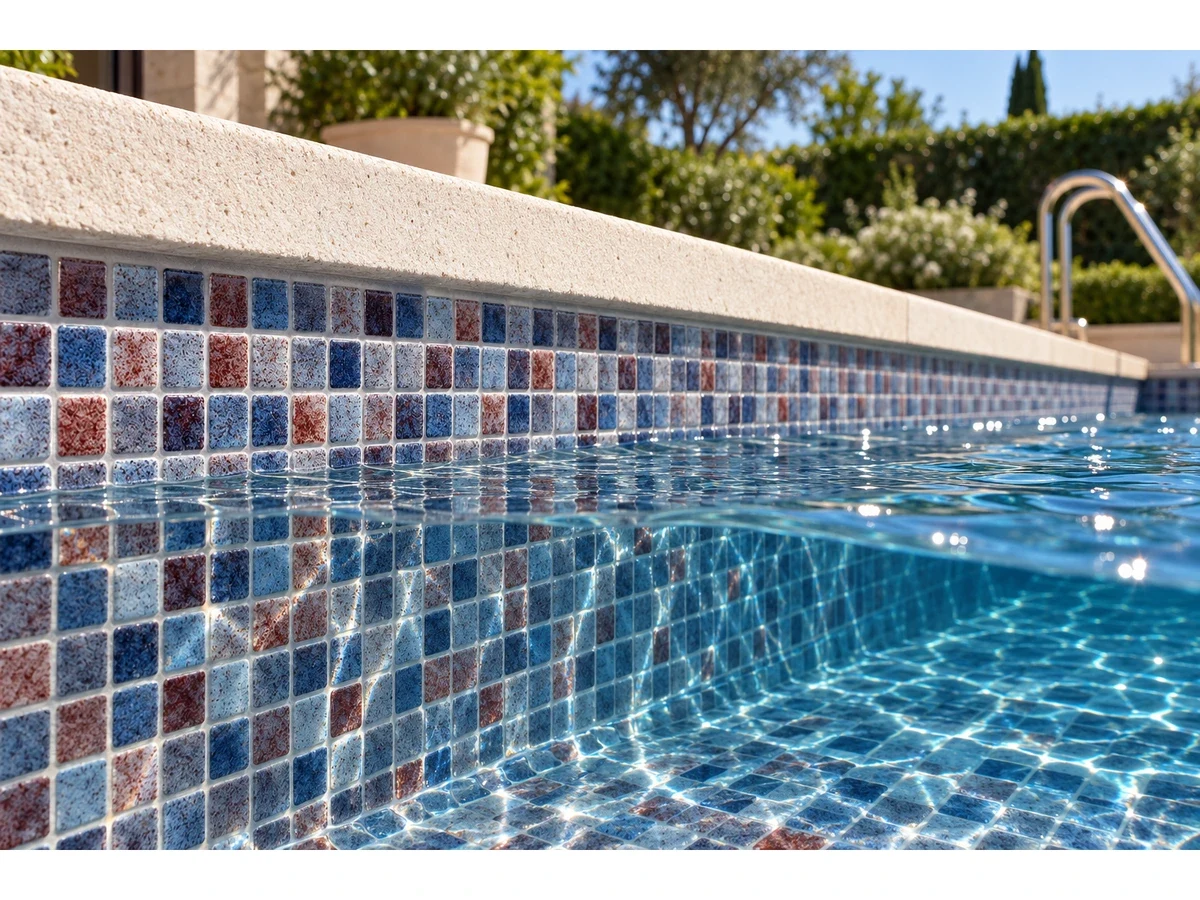
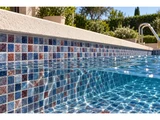
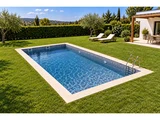
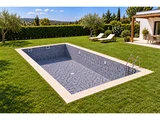
Cool blue pieces alternate with warm, ceramic-like tones, creating an unusual, interesting pattern. Under water and sun the blue sparkles, while the reddish dots add warmth. Loutro suits pools with character and terrace walls.
In the water the mosaic takes on a more saturated look. Above the waterline you see the true colours of the sheet, while towards the bottom the tone deepens and begins to sparkle. What to choose for the grout of Loutro: brown grout emphasises the earthy tones, while a light one makes the blue more distinct.
Technical specifications
| Item no. (code) | MOSFBZM106 |
|---|---|
| Type | glass-ceramic mosaic, square chips |
| Single chip size | 25 × 25 mm |
| Thickness | 4 mm |
| Material | glass ceramic made of 100 % recycled glass |
| Colour range | blue-brown with reddish shades |
| Surface | gloss |
| Chip attachment | silicone (polyurethane) dot backing |
| Sheet size | 317 × 317 mm |
| Sheets per 1 m² | 10 |
| Packaging | carton containing 1 m² of mosaic |
| Grout joint width | 2 mm |
| Water absorption | no more than 0.04 % (EN ISO 10545-3) |
| Flexural strength | 55 N/mm² |
| Frost resistance | withstands freeze-thaw cycles (ASTM C1026) |
| Chemical resistance | class A (ASTM C650) |
| Permanent immersion in water | yes |
| Intended use | pool, whirlpool, spa, bathroom and shower cubicle |
What you get with Loutro
- Non-porous glass body. The material absorbs at most 0.04 % water, so it does not go mouldy and does not retain stains and odours.
- Lasting colour. Sunlight (ISO 4892) and cleaning agents (class A per ASTM C650) do not change it.
- Frost resistance. Freeze-thaw cycles (ASTM C1026) do not damage it, so it is also suitable for outdoor areas.
- Strength. Flexural strength is 55 N/mm² (EN ISO 10545-4), and the surface is smooth and free of defects.
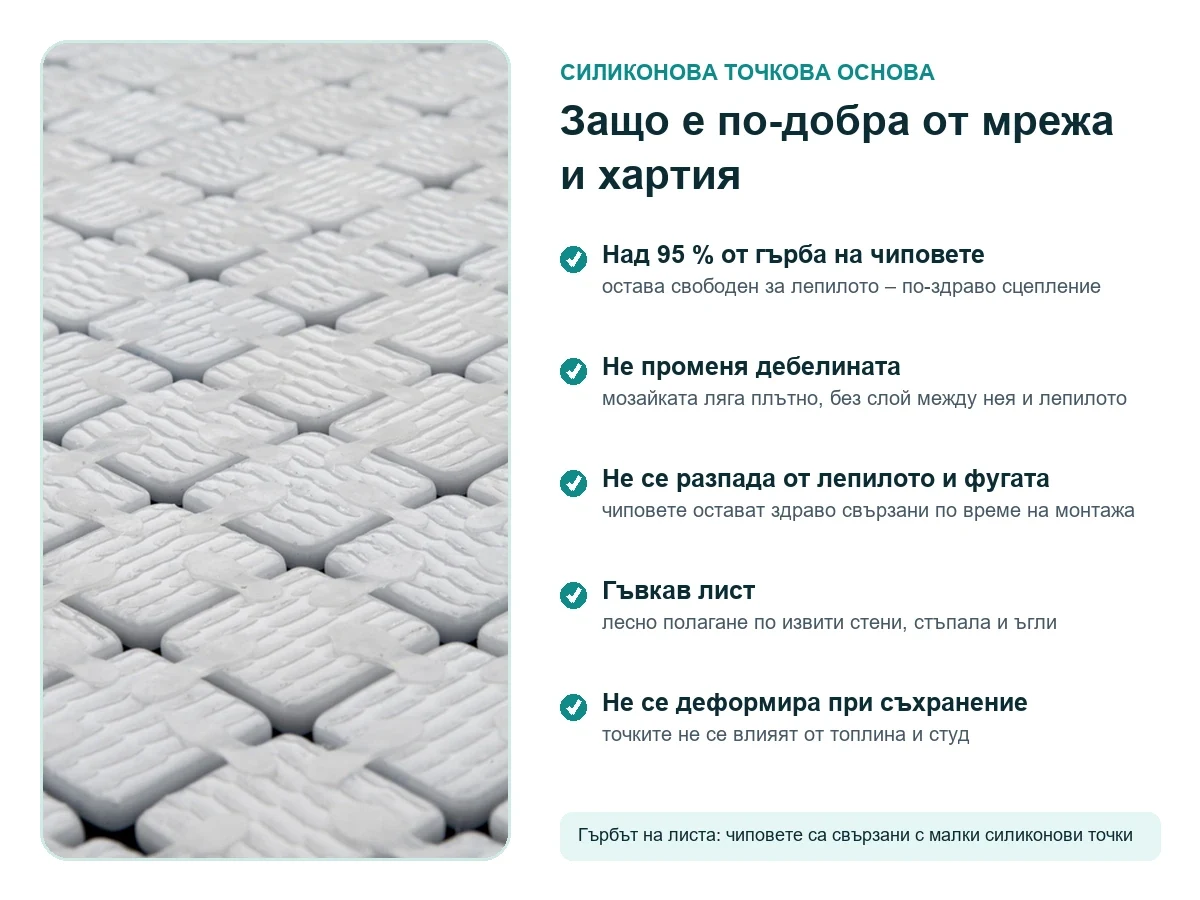
- Silicone dot backing. The sheet is flexible and adhesion is better than with mesh or paper.
- Lower environmental impact. The raw material is recycled glass (100 %), without pigments containing lead, cadmium or other heavy metals.
Why silicone dots instead of mesh or paper
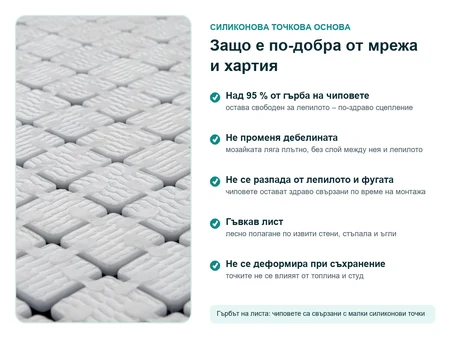
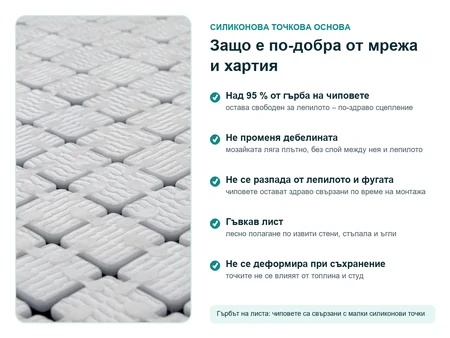
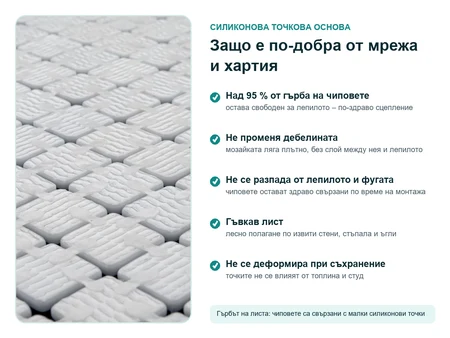
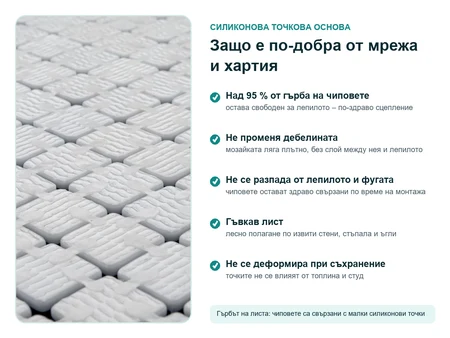
The chips of Loutro are connected at the back with small silicone (polyurethane) dots that do not cover the entire back. This way more than 95 % of the surface of each chip stays exposed to the adhesive and the bond is very strong.
Silicone does not make the mosaic thicker, is not affected by the adhesive and grout and does not warp while the sheets sit in storage. Thanks to the flexible sheet, the tiling follows rounded walls, steps and corners effortlessly.
| Backing | Adhesive access to the back | Laying on curves and corners | After installation |
|---|---|---|---|
| Silicone dots | over 95 % of the back is free | very easy, the sheet is flexible | nothing to remove; chips and joints are visible during laying |
| Mesh | part of the back is covered by the mesh | easy | nothing to remove |
| Paper | the whole back is free | difficult, the paper tears | the paper on the face hides the chips and is soaked and peeled off |
Where to use it
- complete pool liner – edges and floor
- steps, seats and shallow relaxation zones in the water
- whirlpools, spa centres and steam baths
- accent walls in bathrooms and shower cubicles
Best suited to: pools with character and terrace walls.
Installation steps
- Substrate. A flat (deviation up to 2 mm over 2 m), dry, sound and dust-free surface is required. In the pool, waterproofing with an elastic cement compound is applied first.
- Adhesive. White elastic cement adhesive of class C2TE S1 is suitable. Glass is slightly translucent and grey adhesive would darken the colour.
- Application. Spread the adhesive with a 3–4 mm notched trowel over an area for two to three sheets.
- Laying. Place the sheet and press it flat with a rubber float. Keep the same 2 mm gap between sheets.
- Cutting. At corners and around jets, cut through the silicone dots with a utility knife; individual chips are cut with special glass mosaic nippers.
- Grouting. Start grouting 24 hours after bonding. Epoxy grout is watertight and does not react to chlorine.
- Cleaning. Remove excess compound with a damp sponge while it is soft; epoxy residues are cleaned off immediately with a special cleaner.
- Filling. Fill the pool after the grout has fully cured, usually after about seven days.
Required materials and tools
- clean water, bucket and sponge
- utility knife and special nippers for glass mosaics
- two floats – rubber and notched (3–4 mm teeth)
- epoxy or waterproof grout
- C2TE S1 adhesive in white
- elastic waterproofing compound for the pool
How much material to plan for
Measure the area to be tiled and add a reserve for cutting. Order the whole quantity at once, allowing 5–10 % extra, so that the sheets come from one batch and have the same shade. The mosaic is supplied in cartons of 1 m².
The figures below are for guidance only. For adhesive, count approximately 2 kilograms per square metre for chips up to 25 mm, 2.5 kg for 40 mm and 3 kg for even larger ones. Grout is calculated as 1.6 × C × D × (A + B) / (A × B), in kg per square metre: here A and B are 25 mm (the chip sides), C is 4 mm (the thickness), D is 2 mm (the joint width).
The exact consumption varies with the evenness and absorbency of the substrate, the chosen adhesive and grout, the trowel size, the joint depth, the geometry of the site and the installer's experience. Check the quantities against the products' technical data sheets and with the contractor.
Tests to standards
| Parameter | Result | Standard |
|---|---|---|
| Water absorption | up to 0.04 % | EN ISO 10545-3 |
| Flexural strength | 55 N/mm² | EN ISO 10545-4 |
| Surface | free of defects (100 %) | EN ISO 10545-2 |
| Chemicals | class A, no change | ASTM C650 |
| Frost and thaw | withstands | ASTM C1026 |
| Light and UV | no change | ISO 4892 |
| Temperature changes | withstands | EN ISO 10545 |
Care for Loutro
- Wipe with a soft cloth or sponge and a neutral cleaning agent.
- Do not use abrasive powders, wire brushes or acids on the grout.
- Keep the water pH at 7.0–7.4 and suitable hardness so that limescale does not build up on the joints.
- Clean the waterline regularly with a sponge and a special cleaner.
Frequently asked questions about Loutro
Which adhesive is suitable?
White elastic cement adhesive of class C2TE S1 – it does not change the colour of the translucent glass.
Which grout should I take?
For a pool, epoxy grout is required. Brown grout emphasises the earthy tones, while a light one makes the blue more distinct.
Can I buy less than one carton?
No, the mosaic is sold in whole cartons of 1 m². Take everything at once so that it comes from the same batch.
Is it suitable for salt water and chlorine?
Yes. Glass does not react with chlorine and salt, and its colour does not change.
Can it be bonded onto old tiles?
Yes – if they are sound, clean, degreased and primed with a suitable primer. For a pool we recommend new waterproofing.
Colour in the photo and in real life
Glass mosaic is a living material and its colour looks different under different conditions, so on site there may be a difference from the photos. Perception is influenced by:
- the display – brightness, settings and device type;
- the lighting – sun, clouds, artificial light, time of day;
- the direction from which you look, because glass reflects and sparkles differently;
- the water in the pool: depth, clarity and the sky above it make the tone more saturated and bluer;
- the chosen grout and adhesive, as well as the size of the tiled area;
- surrounding objects – paving, walls, greenery;
- the production batch: between two batches the shade may differ slightly;
- the unevenness between individual chips, typical of mixes.
The visualisations are for guidance only.
See also: Wellness, Pools and Equipment, Cladding and Paving, Pools, Pool Chemicals, Pool Accessories.