

Description
At a glance: Seychelles
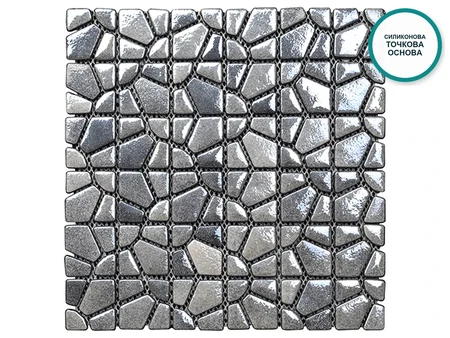
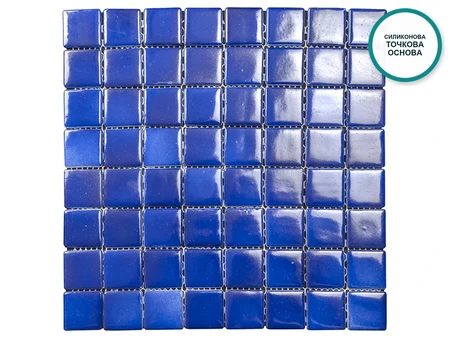
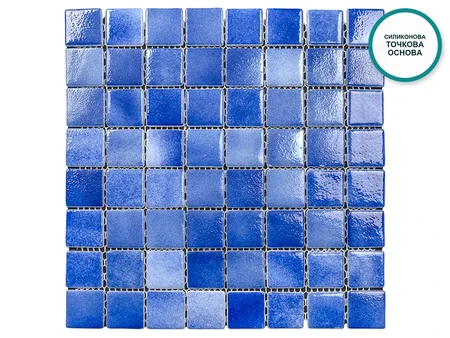
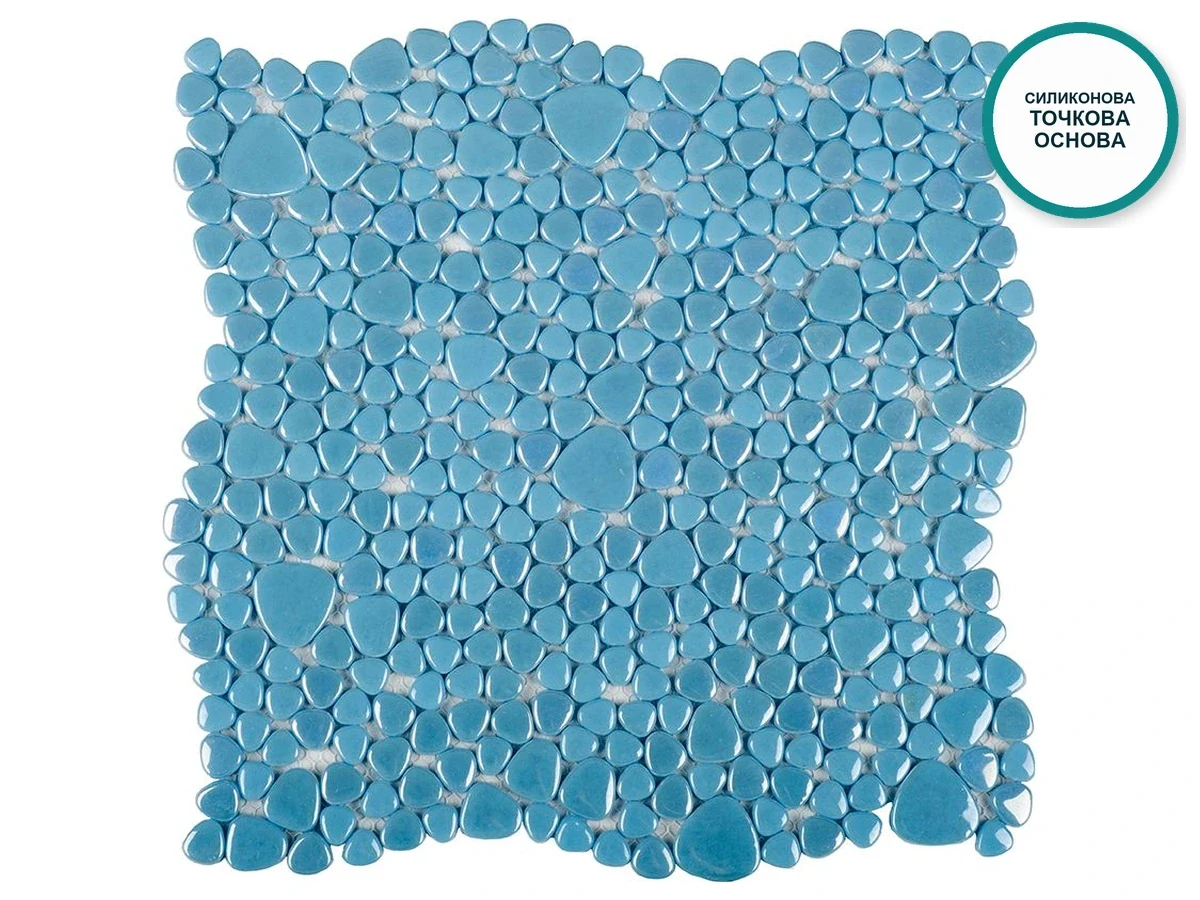
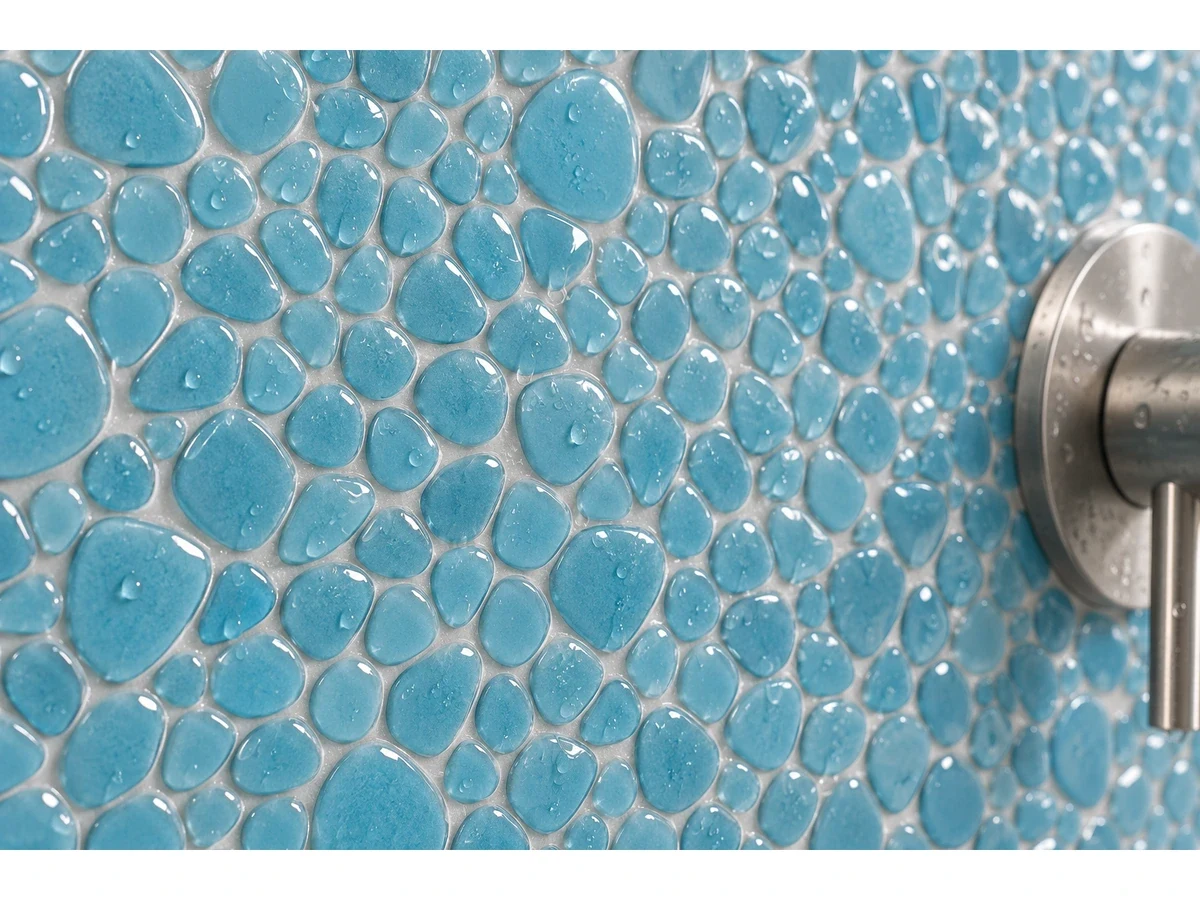
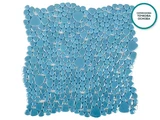
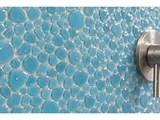
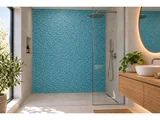
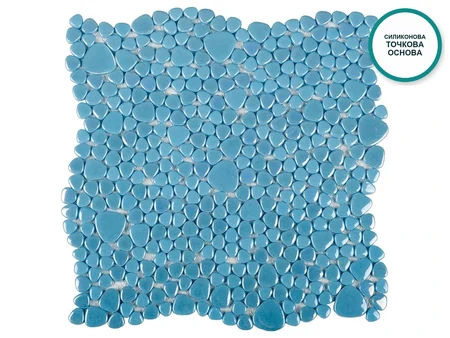
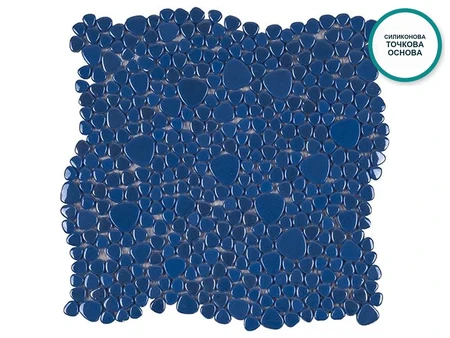
Seychelles is a light blue mosaic of smooth drop-shaped pebbles in varying sizes, scattered naturally like stones from a river bed. The gloss feels smooth to the touch, and the shades range from pale to more intense. It brings a fresh, natural rhythm and the feel of a shallow stream – suitable for showers, bathrooms and spas.
The sheets are made of glass ceramic produced from fully recycled glass. They are designed for swimming pools, yet look just as good in wet rooms at home. The article number is MOSFBY100.
What makes the mosaic practical
- Dense surface: water absorption is no more than 0.04%, so the material does not collect mould, stains or odours.
- Durable in water: it can stay permanently submerged – in pools, hot tubs, fountains and overflow channels.
- Colour-fast: tests to ISO 4892 (light) and ASTM C650 (chemicals, class A) show no change.
- For outdoor use: withstands freeze–thaw cycles according to ASTM C1026.
- Strength: 55 N/mm² bending strength and a surface free of defects (EN ISO 10545-2).
- Eco-friendly composition: no pigments containing lead, cadmium or other heavy metals.
Back with silicone dots
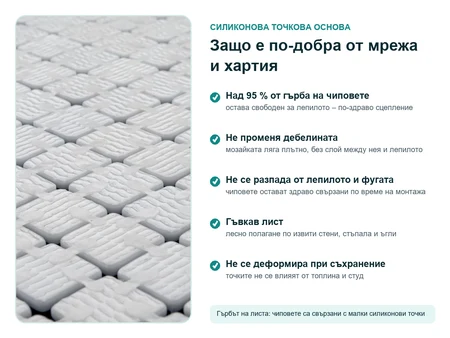
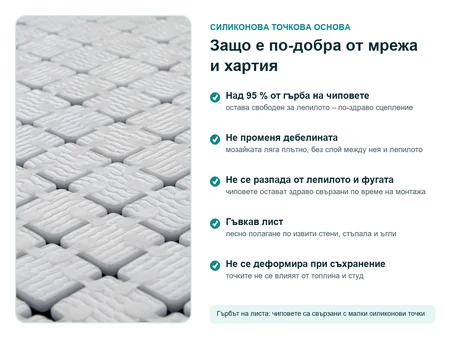
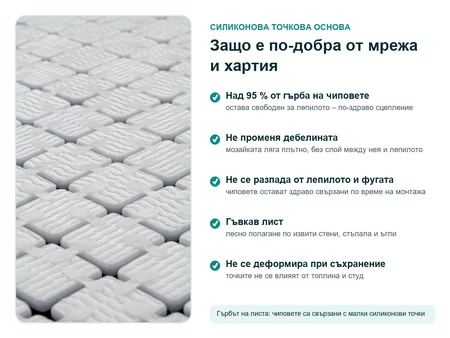
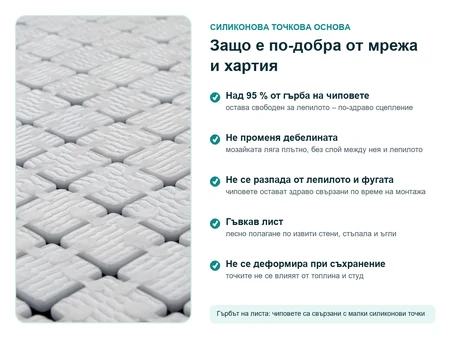
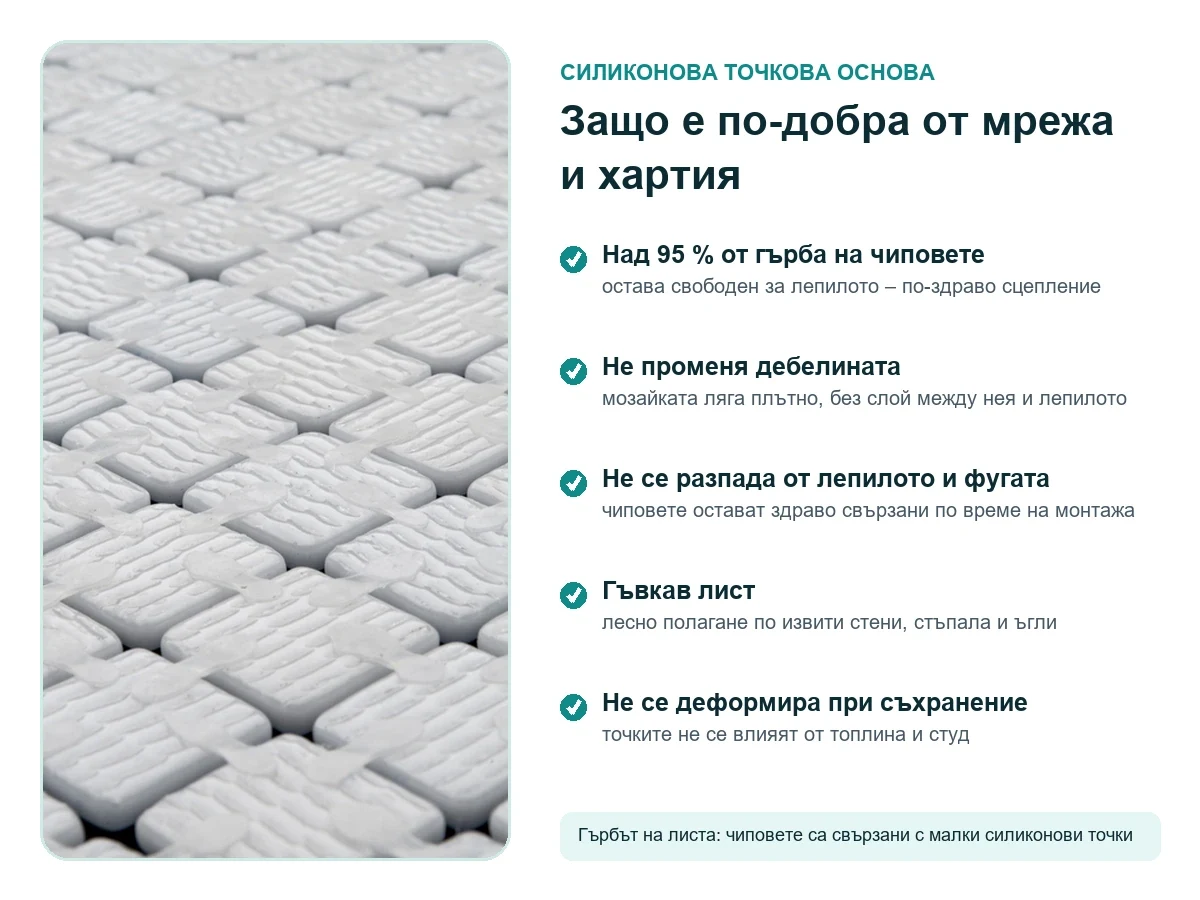
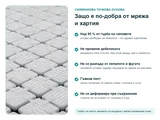
The chips in the sheet are held together by small silicone (polyurethane) dots. They do not cover the back, so over 95% of each chip stays free for the adhesive and the bond is reliable. The dots add no thickness and do not break down in contact with the adhesive or the grout.
The sheet is flexible, so it is easy to lay on curved walls, steps and corners.
| Indicator | Silicone dots | Mesh | Paper |
|---|---|---|---|
| Uncovered back for the adhesive | over 95% | less, part of the back is covered | the entire back |
| What you see while laying | chips and joints | chips | the paper hides the chips |
| Curves and corners | very easy | easy | difficult, the paper tears |
| After bonding | nothing to remove | nothing to remove | the paper is soaked and peeled off |
Technical specifications
| Model | Seychelles |
|---|---|
| Code | MOSFBY100 |
| Chip shape | rounded drop-shaped chips of different sizes |
| Material | glass ceramic made of 100% recycled glass |
| Colour | light blue pebbles |
| Sheet back | silicone (polyurethane) dots |
| Sheet | 325 × 325 mm |
| Sheets per square metre | 11 |
| Joint width | 2 mm |
| Bending strength (EN ISO 10545-4) | 55 N/mm² |
| Water absorption (EN ISO 10545-3) | no more than 0.04% |
| Freeze–thaw cycles (ASTM C1026) | yes, resistant |
| Chemical resistance (ASTM C650) | class A |
| Permanent immersion | permitted |
| Packaging | carton of 1 m² |
| Sales unit | 1 m² |
Where it is used
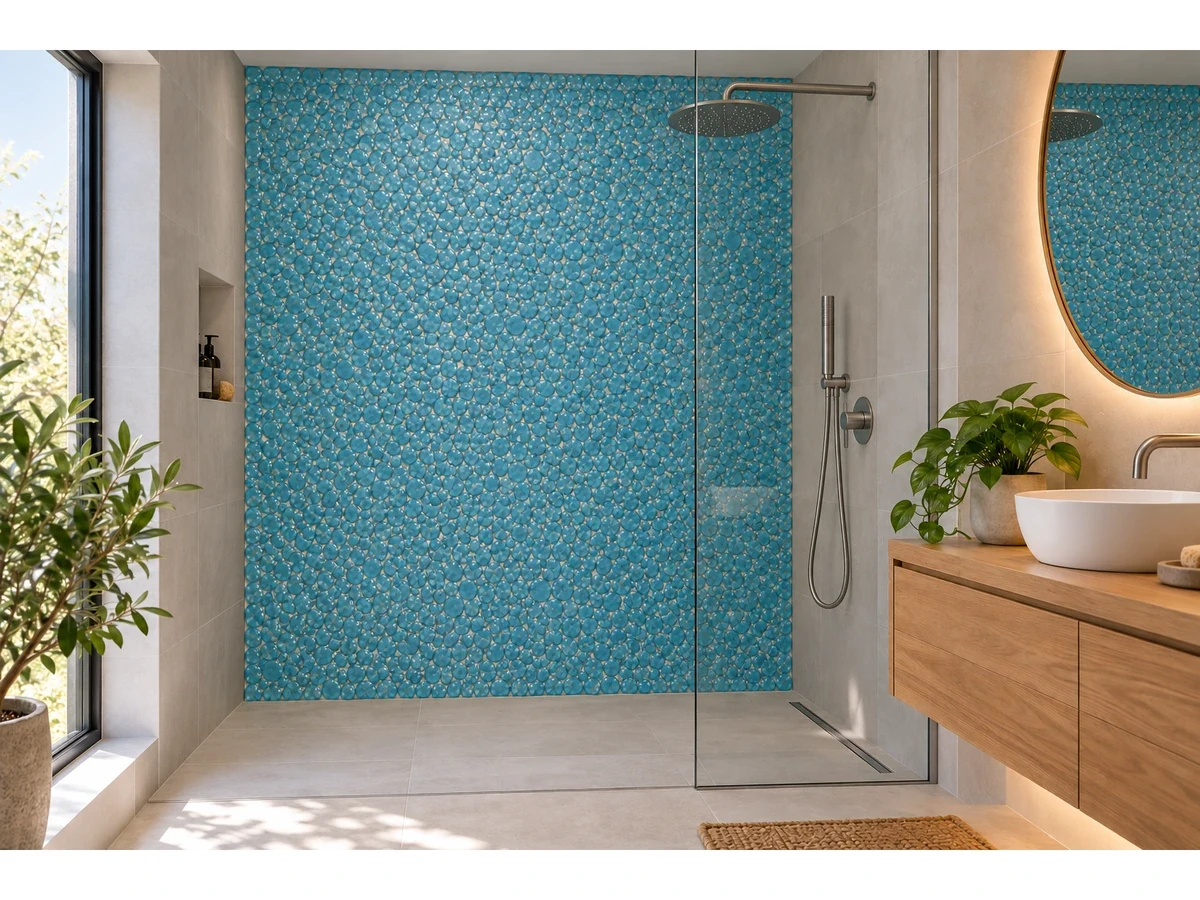
- Shower cubicles – floor and walls
- Accent areas in the bathroom and spa
- Decorative strips and panels, as well as pool liner
How it looks in water
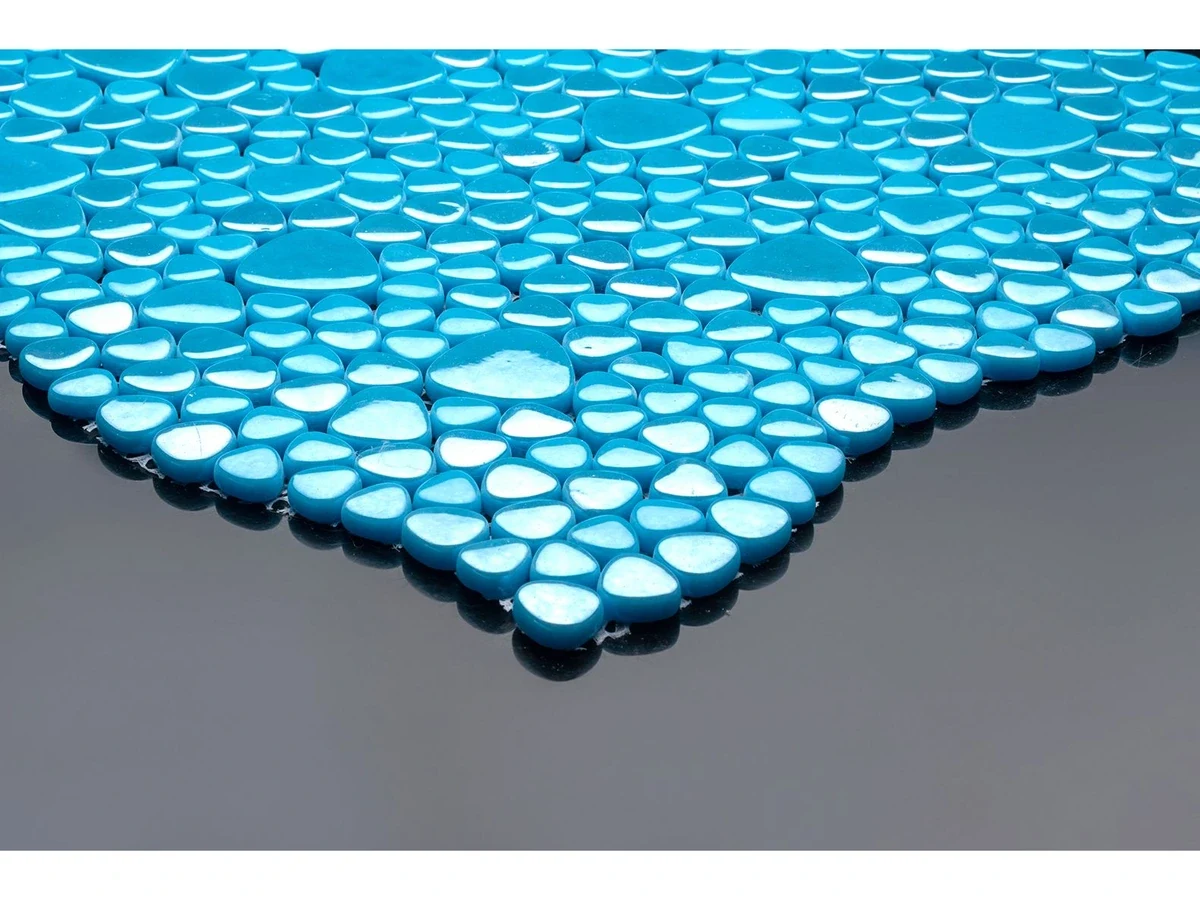
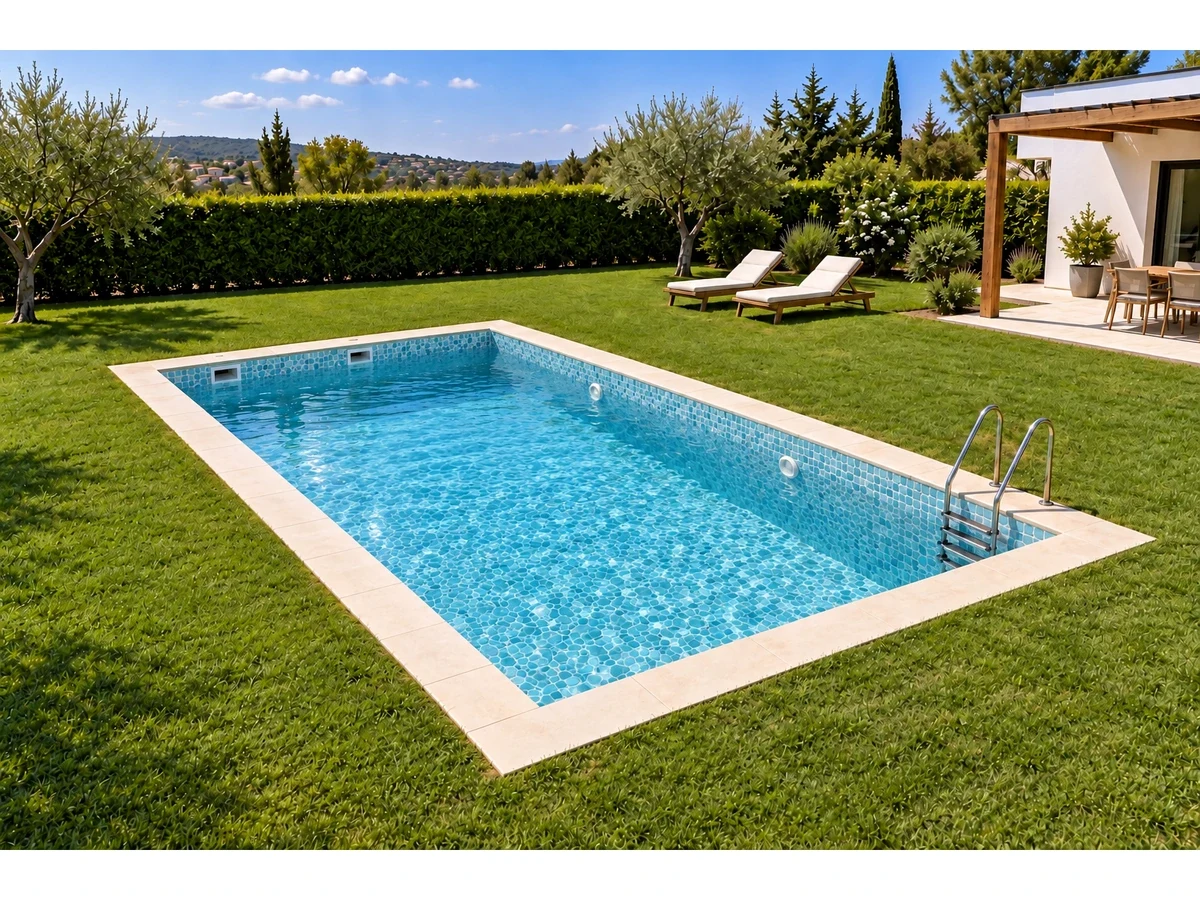
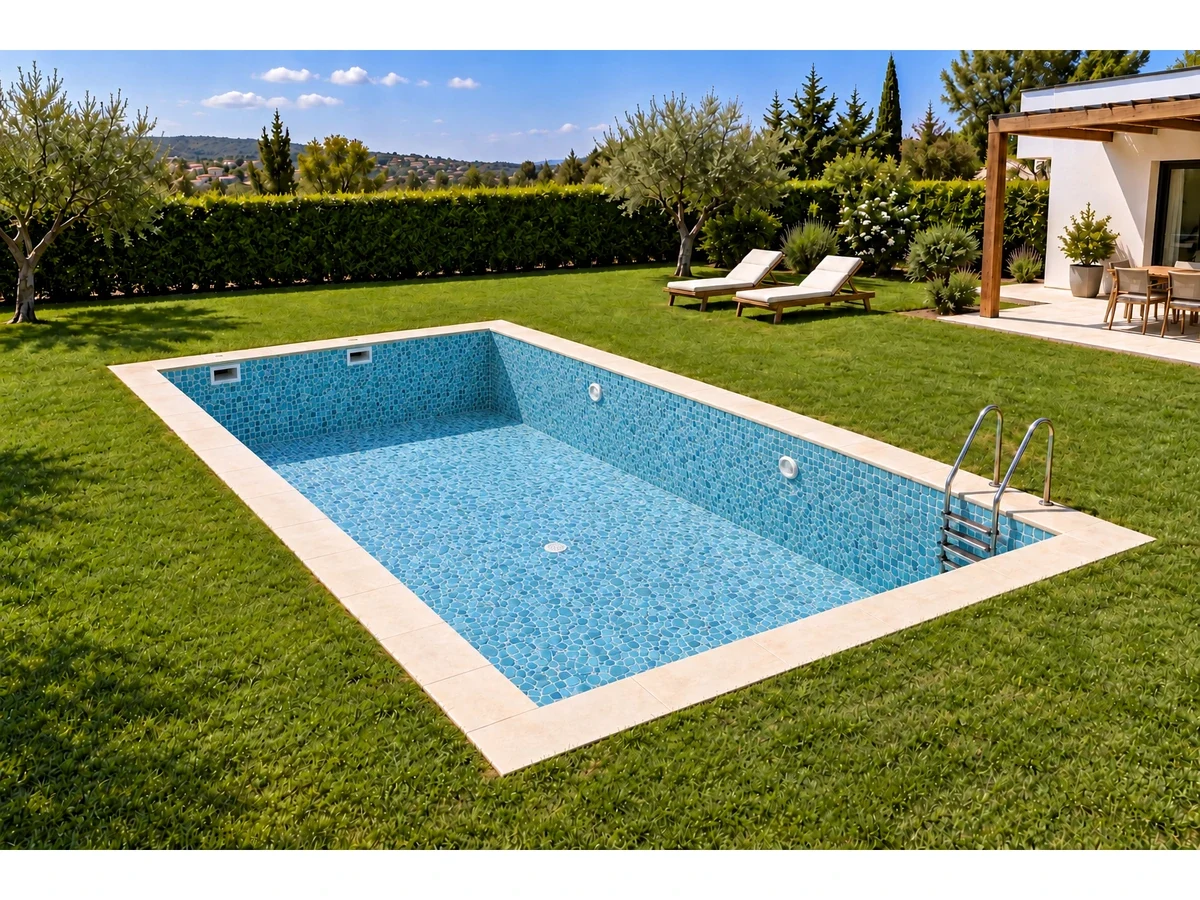
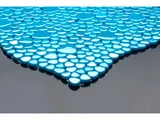
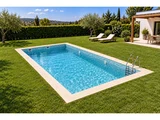
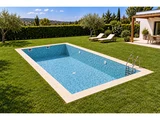
In water the colours become more intense. The strip above the water surface shows the true tone of the sheet, while further down the shade deepens and plays in the sunlight. When dry, the mosaic looks paler, so judge the colour with the water in mind.
Between the pebbles, light grey or beige grout gives a natural look, whereas white lightens the whole lining.
Choosing the grout
A pool needs epoxy grout: it is watertight, chlorine does not attack it and its colour is retained.
How much material to order
Calculate the walls and the floor and add an allowance for cutting – 5–10%. As an example: a pool of 8 × 4 m with a depth of 1.5 m. The adhesive and grout rates are indicative: for the adhesive, allow roughly 2 kg per square metre for small chips (up to 25 mm), 2.5 kg for 40 mm and 3 kg for even larger ones; the grout is calculated with the well-known formula multiplied by a factor of 1.6 (kg/m²), using the following input data: chip about 3 cm, thickness about 6 mm, joint 2 mm. The actual quantity varies with the condition of the substrate (whether it is level and how absorbent it is), the products you have chosen, the trowel, the depth of the joints, the geometry of the site and the skill of the installer. So rely on the technical data sheets and on your tiler.
Installation step by step
- Preparation: the substrate must be dry, clean, sound and level (deviation of up to 2 mm over 2 m). In a pool, an elastic cement-based waterproofing is applied first.
- Adhesive: white flexible cement adhesive C2TE S1. Glass is slightly translucent and a grey adhesive would darken the colour.
- Application: spread it with a 3–4 mm notched trowel over an area for 2–3 sheets.
- Placing: press the sheet in with a rubber float and keep the same 2 mm joint between the sheets.
- Trimming: at corners and nozzles the dots are cut with a utility knife, and single chips are snapped off with special nippers.
- Grouting: wait a day and apply epoxy grout for pools.
- Cleaning: wipe the grout with a damp sponge before it dries; epoxy residues are removed immediately with a special cleaner.
- Filling with water: after the grout has fully cured, usually about 7 days.
For the job you will need: elastic waterproofing, light-coloured adhesive C2TE S1, grouting compound (epoxy or moisture-resistant), a notched trowel and a rubber float, a knife, special nippers, a sponge and a bucket of water.
Test results
| Test | Result | Standard |
|---|---|---|
| Surface | 100% free of defects | EN ISO 10545-2 |
| Light and UV | colour does not change | ISO 4892 |
| Bending | 55 N/mm² | EN ISO 10545-4 |
| Water absorption | up to 0.04% | EN ISO 10545-3 |
| Freeze and thaw | no damage | ASTM C1026 |
| Chemical exposure | class A | ASTM C650 |
| Thermal expansion | resistant | EN ISO 10545 |
Caring for the mosaic
- Clean with a soft cloth or sponge and a neutral cleaning agent.
- Do not use abrasive powders, wire brushes or acids on the grout.
- Keep the water at pH 7.0–7.4 with suitable hardness to prevent limescale on the joints.
- Clean the waterline regularly with a sponge and a special cleaner.
Packaging and batches
The mosaic is sold by the full carton of 1 m². Take the whole quantity at once, with a 5–10% allowance, so that it comes from a single batch: the shade can differ slightly between batches.
Frequently asked questions
Which adhesive is suitable for Seychelles?
White flexible cement adhesive of class C2TE S1 – it does not alter the colour of the glass.
Can I buy less than a carton?
No, it is sold in cartons of 1 m². It is best to have the whole quantity from one batch.
Does it withstand chlorine and salt?
Yes. Glass does not react with the chlorine and salt in the water and does not change colour.
Can it be laid over old tiles?
Yes, provided the tiles are sound, clean and degreased and a suitable primer is used. For a pool, new waterproofing is recommended.
Colour on screen and in real life
Glass mosaic is a “living” material and its colour looks different in different surroundings, so there may be a difference between the photos and the real appearance. The influences include:
- the calibration and brightness of the display;
- daylight or artificial light and the time of day;
- the angle at which the rays fall, because glass reflects differently;
- the state of the water – how deep and clear it is, what chemicals it contains and how the sky is reflected;
- the tone of the grout and the adhesive, and how large the covered area is;
- the neighbouring surfaces and the greenery around;
- the particular factory batch;
- the unavoidable differences between individual chips in the mixes.
Visualisations of pools and interiors are for guidance only. If the exact colour is important, clarify it before ordering.
See also: Wellness, Pools and Equipment, Cladding and Paving, Pools, Pool Chemicals, Pool Accessories.