

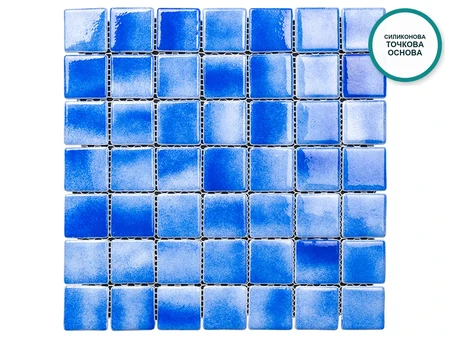
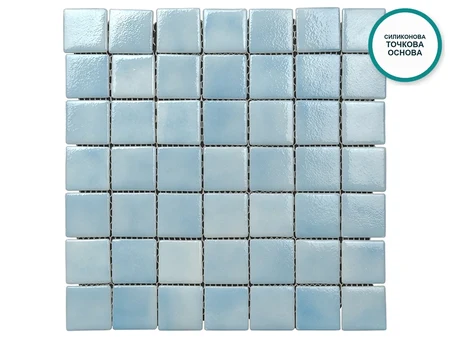
Description
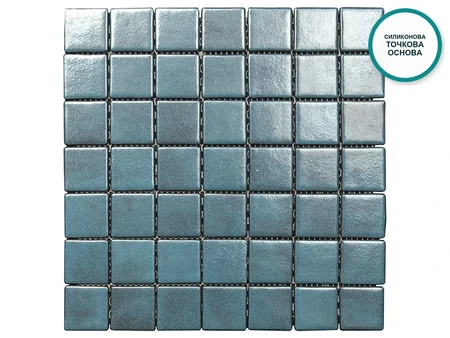
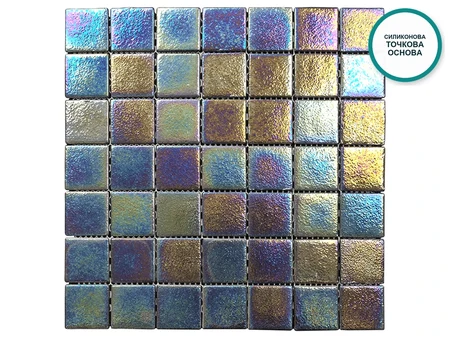
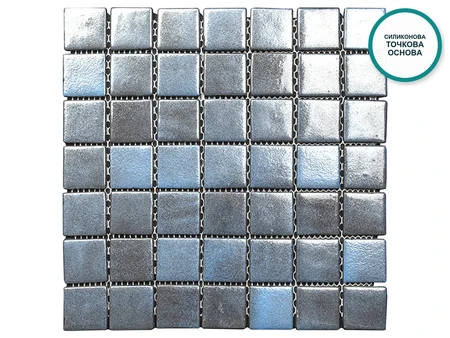
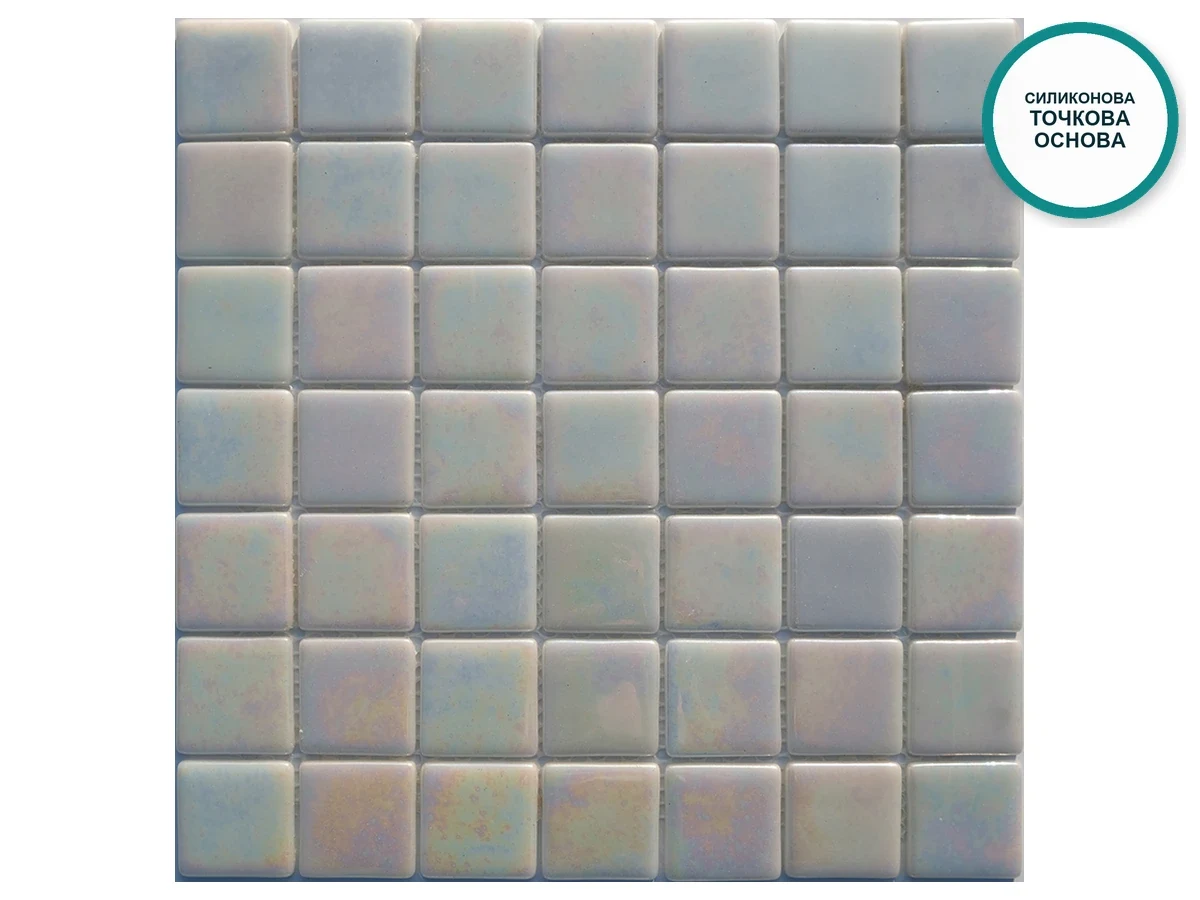
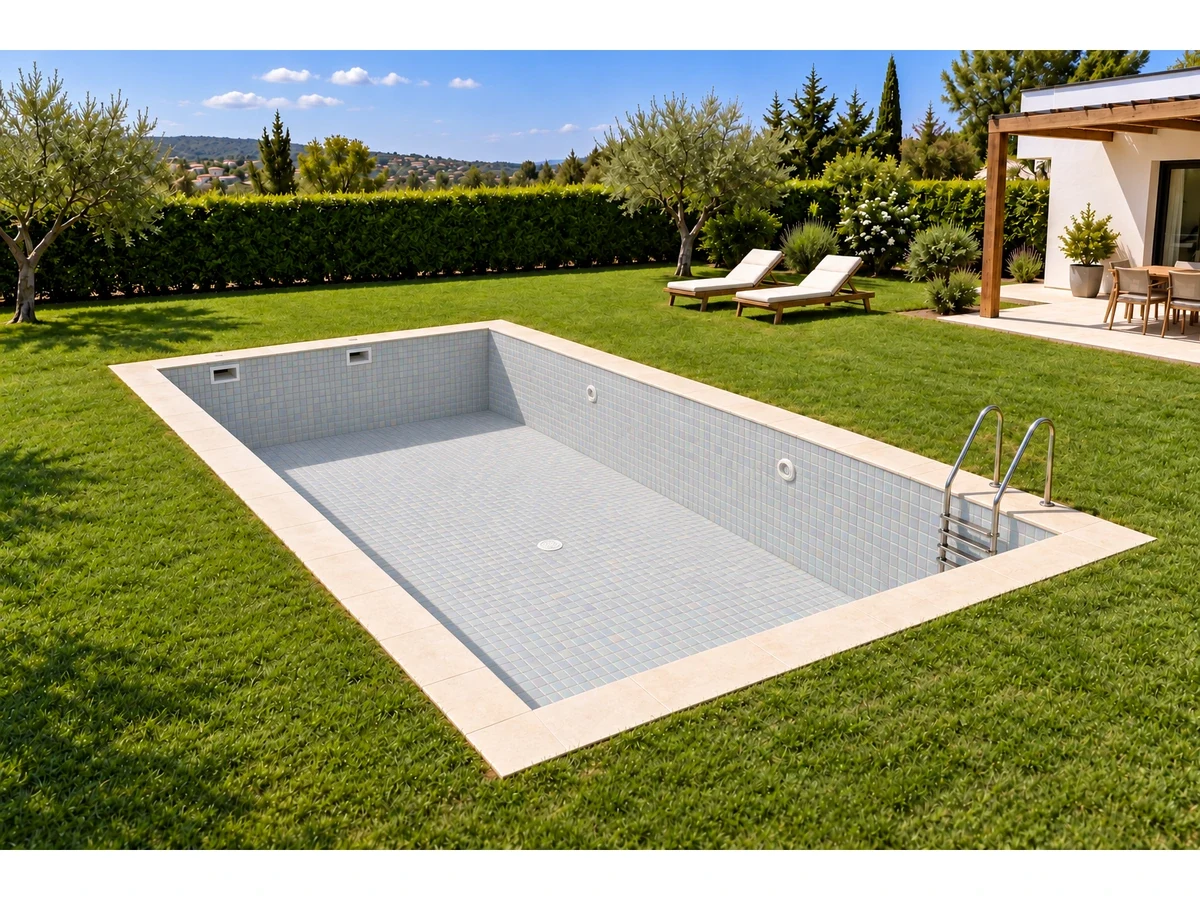
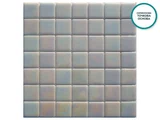
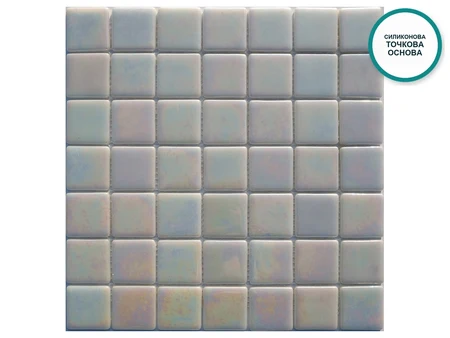
Polignano is a glass-ceramic mosaic with square 50 × 50 mm chips in a light grey-beige range with a pearl gleam. The surface looks rich and orderly, and water and light give it depth.
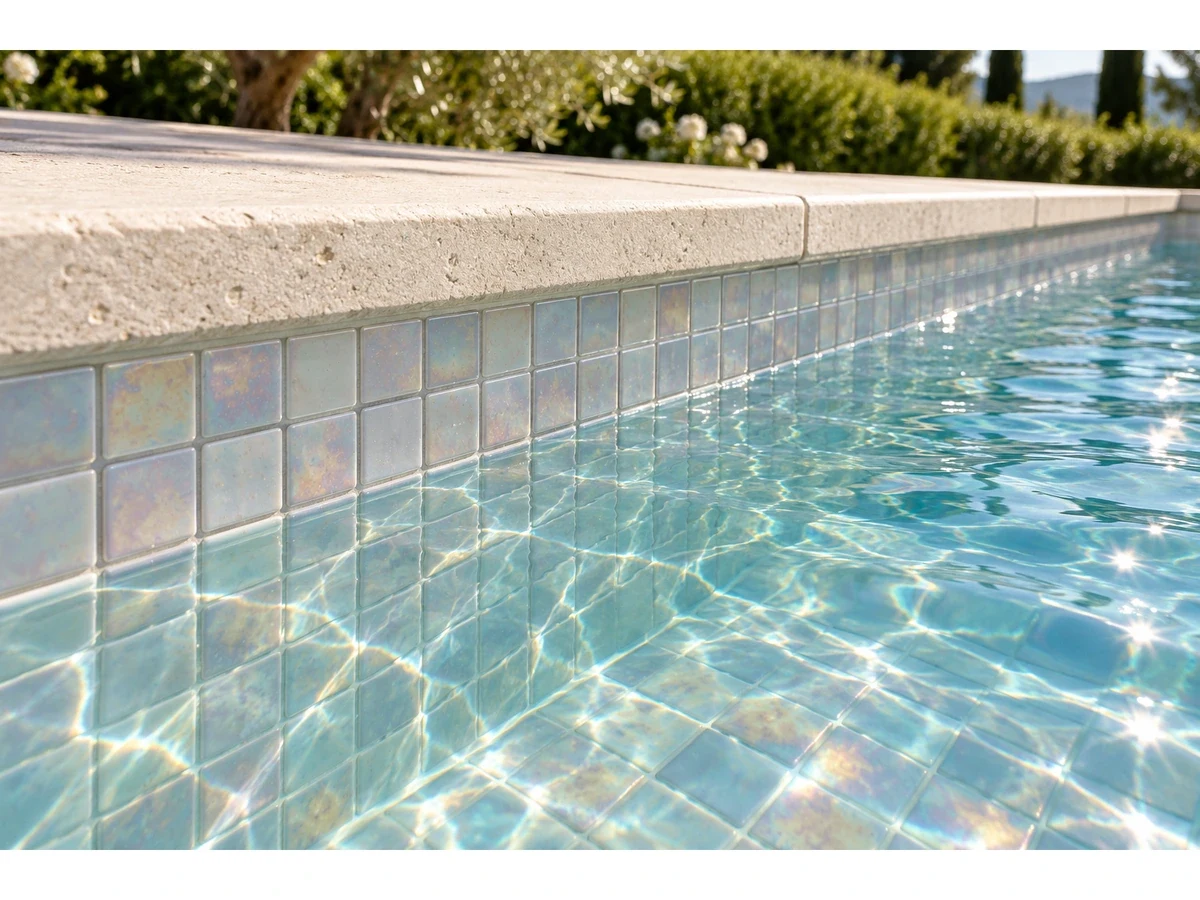
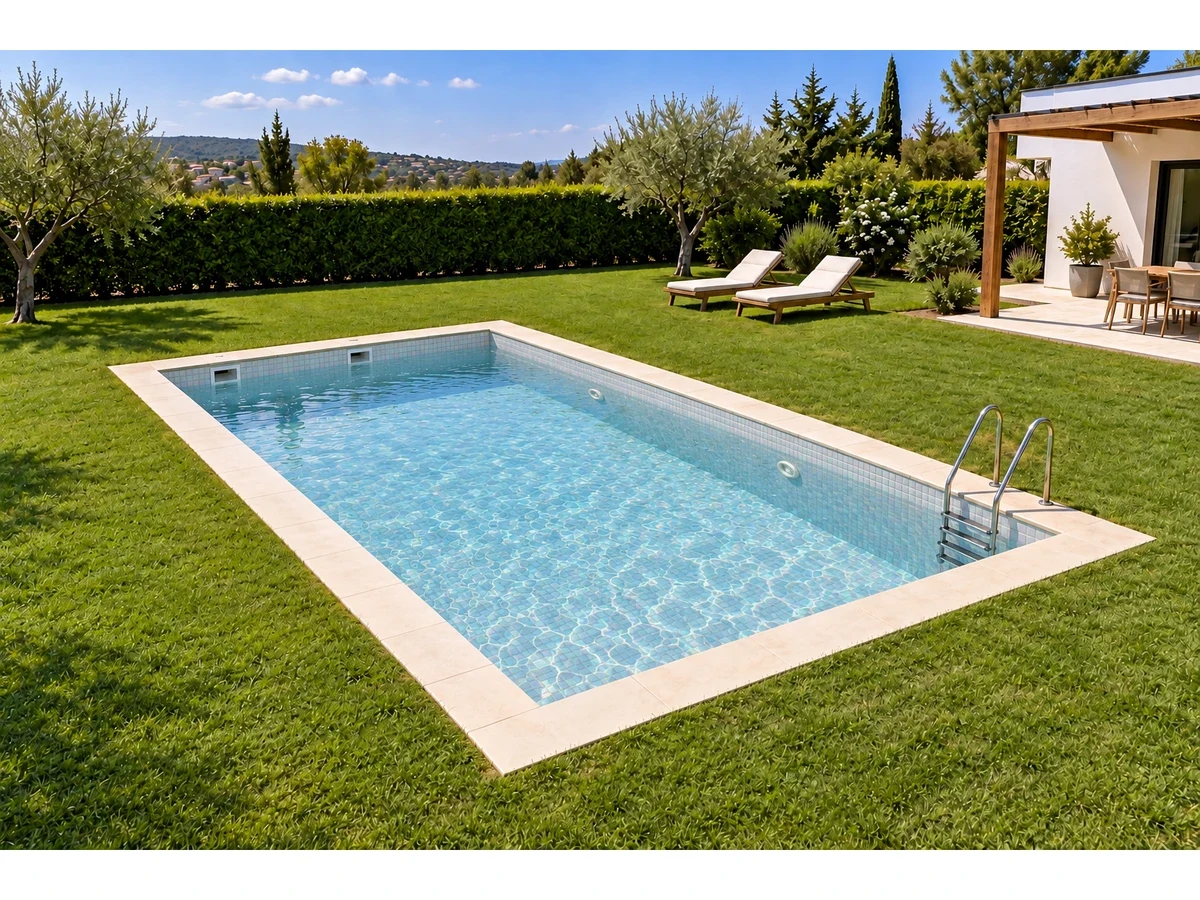
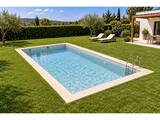
The delicate, warm colour recalls the inside of a shell. The large chips radiate softness and elegance, and under water in the sun the tone brightens and takes on a golden tint. It suits pools and spa areas in a sandy, Mediterranean palette.
Key benefits
- Non-porous: glass does not absorb water – no mould, stains or odours (water absorption up to 0.04 %).
- Permanently in water: suitable for lining pools, hot tubs, fountains and overflow channels.
- Lasting colour: the colour does not fade in the sun (ISO 4892) or from chemical agents (class A under ASTM C650).
- Frost: withstands alternating cold and heat (ASTM C1026), so it is also suitable for outdoor areas.
- Strength: has a flexural strength of 55 N/mm² per EN ISO 10545-4, and the surface is free of defects.
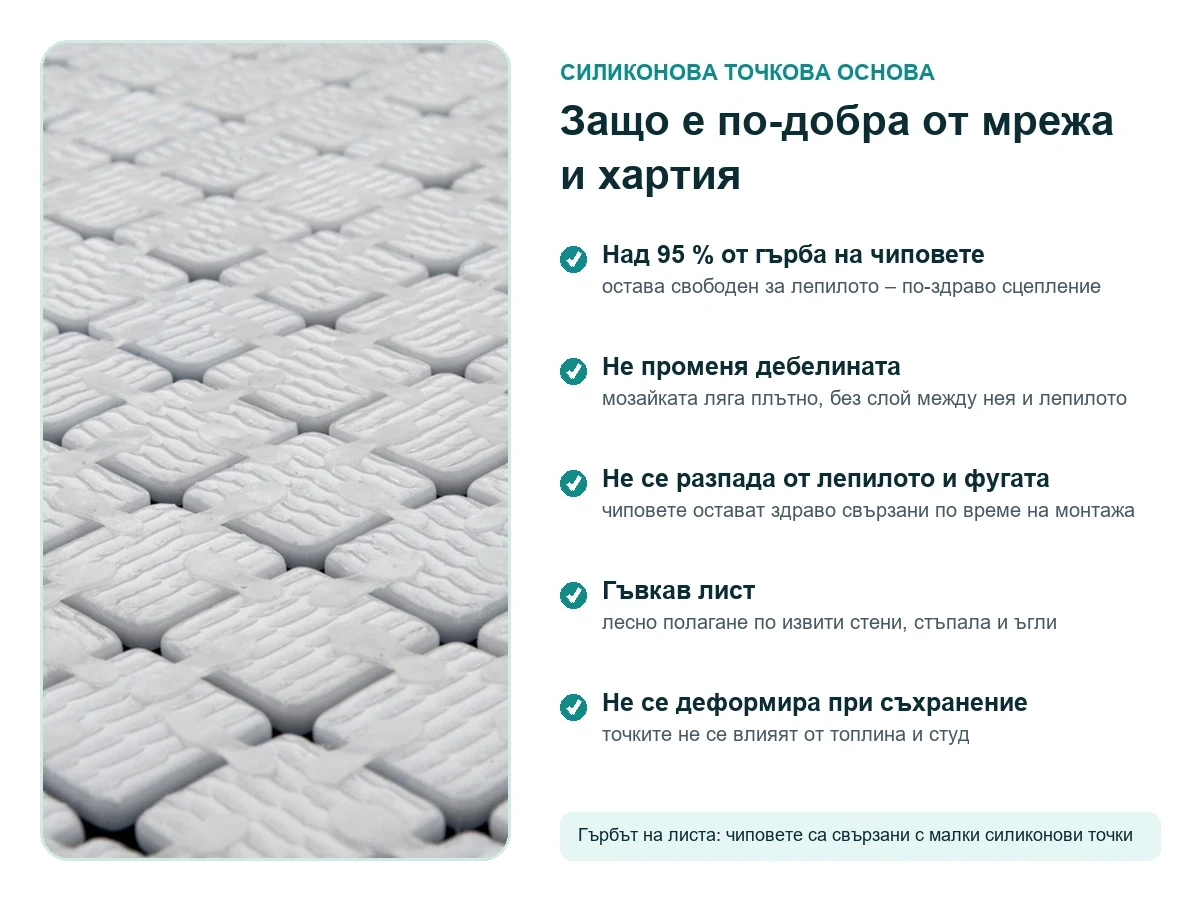
- Flexible sheet: the silicone dot backing follows curves, steps and corners.
- Eco-friendly origin: made entirely from recycled glass, and the pigments contain no lead, cadmium or other heavy metals.
How it looks in water
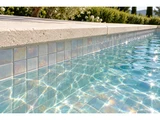
In water the colour intensifies: the strip above the waterline shows the sheet's true tones, while further down the shade darkens and sparkles in the sun.
Product specifications
| Model | Polignano |
|---|---|
| Item code | MOSFBZB203 |
| Material | glass ceramic (100 % recycled glass) |
| Chip shape | square, 50 × 50 mm |
| Colour range | light grey-beige with a pearl gleam |
| Surface effect | Mother-of-pearl sheen |
| Sheet size | 340 × 340 mm |
| Chip thickness | 6 mm |
| Gap between chips | 2 mm |
| Backing | silicone (polyurethane) dots |
| Water absorption | at most 0.04 % |
| Flexural strength | 55 N/mm² |
| Freeze–thaw cycles | yes (ASTM C1026) |
| Chemical resistance | class A (ASTM C650) |
| Permanent immersion in water | yes |
| Applications | pool, hot tub, spa centre, bathroom, shower cubicle |
| Packaging | 1 m² per carton, sold by the full carton |
| Unit of measure | 1 m² |
Where it is used
- Walls and floor of an entire pool
- Entry steps, benches and shallow beach areas
- Hot tubs, spa centres and hammams
- Bathrooms, showers and accent walls
Choosing the grout
A beige grout preserves the delicate look, while a white one brings out the pearl sheen. For a pool, epoxy grout is recommended: it is watertight, does not react to chlorine and keeps its colour.
Silicone dot backing instead of mesh or paper
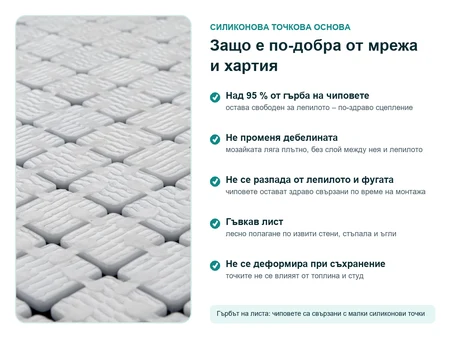
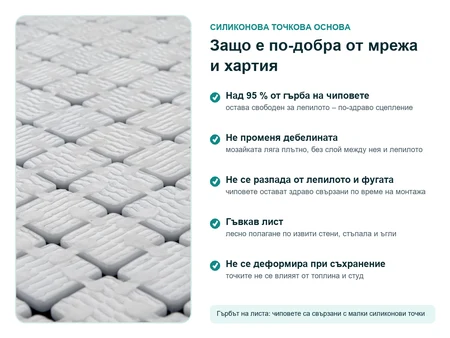
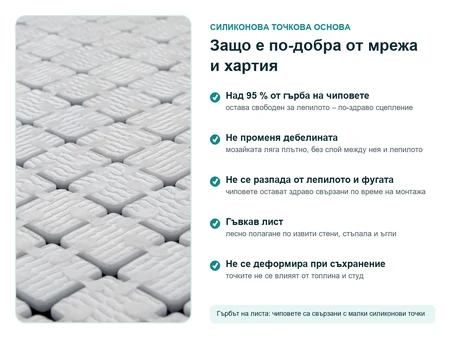
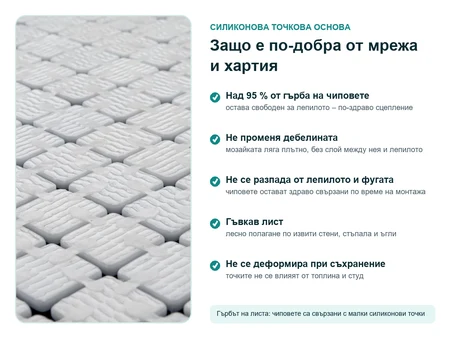
With Polignano, the chips are held by tiny polyurethane (silicone) dots on the back, which do not cover the back of the chips. As a result, more than 95 % of each chip is in direct contact with the adhesive, and the bond is strong. This backing adds no thickness, the adhesive and grout do not break it down, and the sheets do not warp in storage. The sheet is flexible – it follows rounded walls, steps and corners.
| Criterion | Silicone dots | Mesh | Paper |
|---|---|---|---|
| Back exposed to the adhesive | over 95 % | less, because the mesh covers part of it | the whole back (the paper is on the front) |
| What you see during installation | chips and gaps | chips | the chips are hidden by the paper |
| Curves and corners | very easy | fairly easy | difficult, the paper tears |
| After installation | nothing to remove | no extra steps | the paper is soaked and peeled off |
Installation steps
- Substrate. The base must be dry, sound, dust-free and level – with a permitted deviation of 2 mm per 2 m. In a pool, an elastic cement waterproofing is applied first.
- Adhesive. A flexible cement adhesive C2TE S1 in white is needed – glass is somewhat translucent and grey adhesive would dull the shade.
- Application. Using a notched trowel (3–4 mm teeth), spread the adhesive over an area of two to three sheets.
- Placing. Set the sheet in place and press it down with a rubber float using even strokes; the gap between sheets must be the same 2 mm.
- Cutting. Around corners and openings, cut the dots with a utility knife; individual chips are nipped off with glass mosaic nippers.
- Grouting. Grout after 24 hours. For a pool, use epoxy grout.
- Cleaning. Remove grout residue with a damp sponge before it dries; with epoxy grout, use a special cleaning solvent right away.
- Finishing. The pool is filled after the grout has fully cured – usually about 7 days.
Materials and tools needed
- Rubber float and a notched trowel with 3–4 mm teeth
- Utility knife and glass mosaic nippers
- Bucket, sponge and clean water
- Elastic cement waterproofing (for a pool)
- White adhesive, class C2TE S1
- Grout – epoxy or water-repellent
Laboratory tests
| Standard | What is tested | Result |
|---|---|---|
| ASTM C1026 | freeze–thaw cycles | resistant |
| ISO 4892 | UV light exposure | the colour does not change |
| EN ISO 10545-2 | surface inspection | all chips defect-free |
| ASTM C650 | chemical exposure | class A, no change |
| EN ISO 10545-4 | flexural tensile strength | value 55 N/mm² |
| EN ISO 10545-3 | water absorption | at most 0.04 % |
| EN ISO 10545 | heating and cooling | no damage |
Caring for the mosaic
- A soft cloth or a sponge with a neutral cleaner is enough for cleaning.
- Do not use abrasive powders, wire brushes or acids – they damage the grout.
- Keep the water pH between 7.0 and 7.4 and monitor its hardness so that limescale does not form on the grout lines.
- The waterline should be cleaned regularly with a sponge and a special cleaner.
Quantity and colour
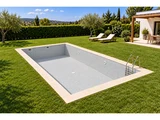
Sold only by the full carton of 1 m². Buy the quantity you need at once, adding 5–10 % for offcuts, so that you get sheets from the same batch with a uniform shade. The colour in the photos may differ from the real one – it depends on the screen, lighting, viewing angle, grout and adhesive colour, surrounding surfaces and, in a pool, on the depth and clarity of the water. In mixes and effect glass, the chips naturally differ from one another.
See also: Wellness, Pools and Equipment, Cladding and Paving, Pools, Pool Chemicals, Pool Accessories.