


Description
Isla Mujeres at a Glance
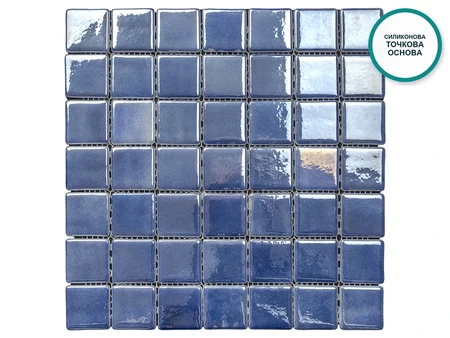
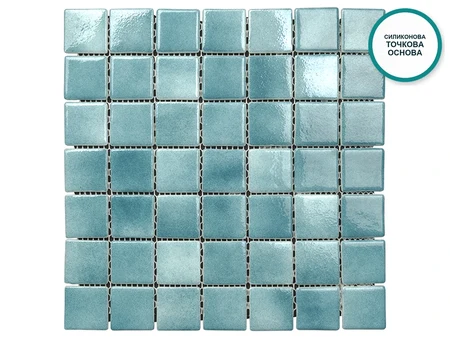
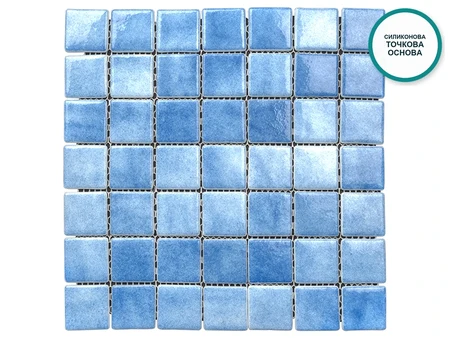
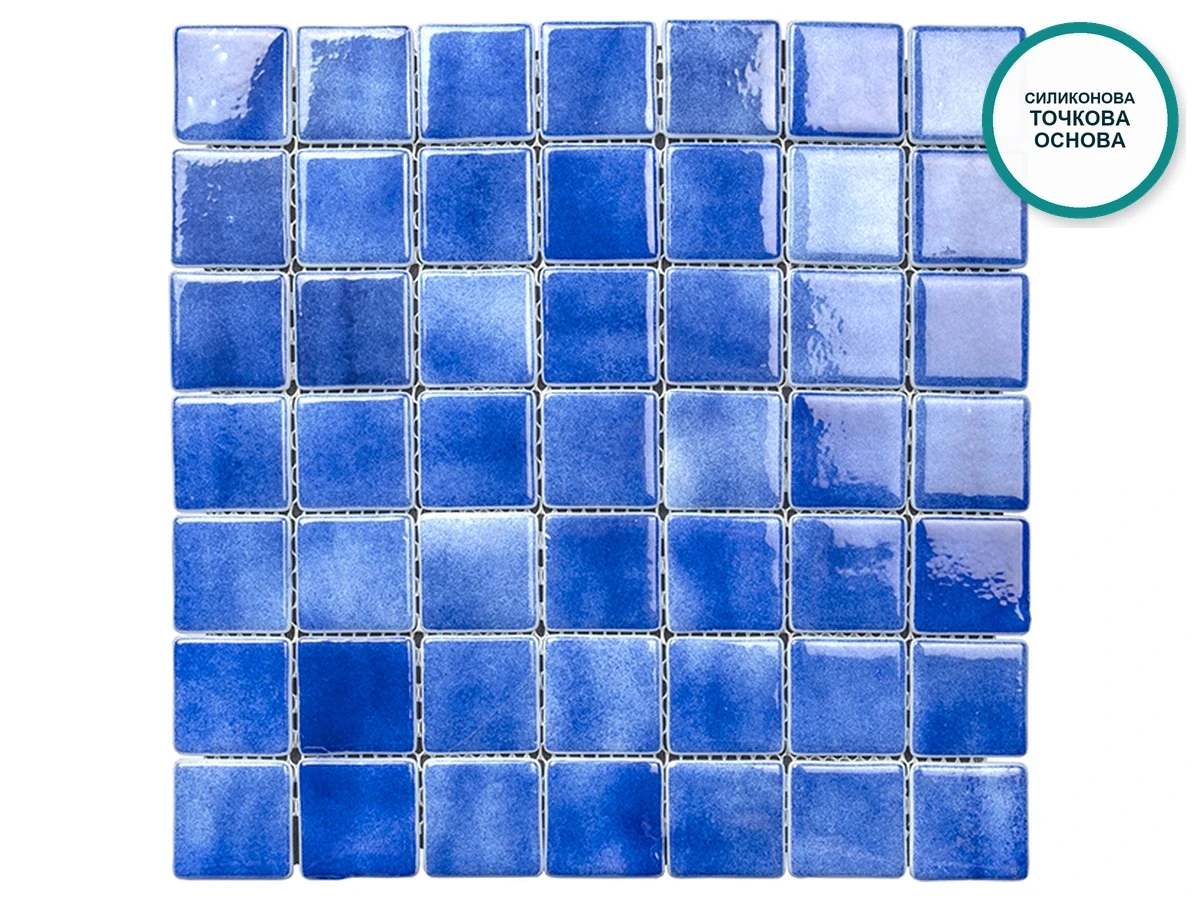
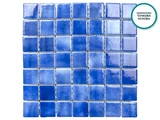
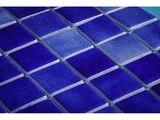
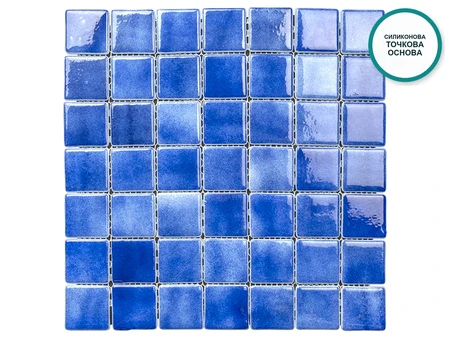
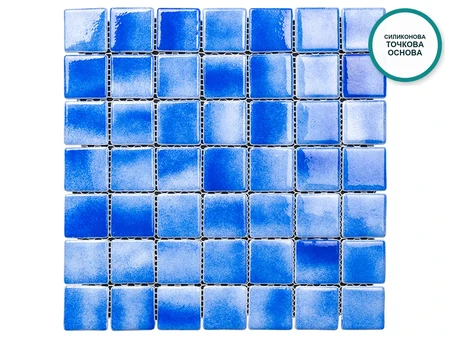
Isla Mujeres is a blue glass ceramic lining with square 50 × 50 mm chips in a deep royal blue mix. The sheets are ready to install.
What It Looks Like
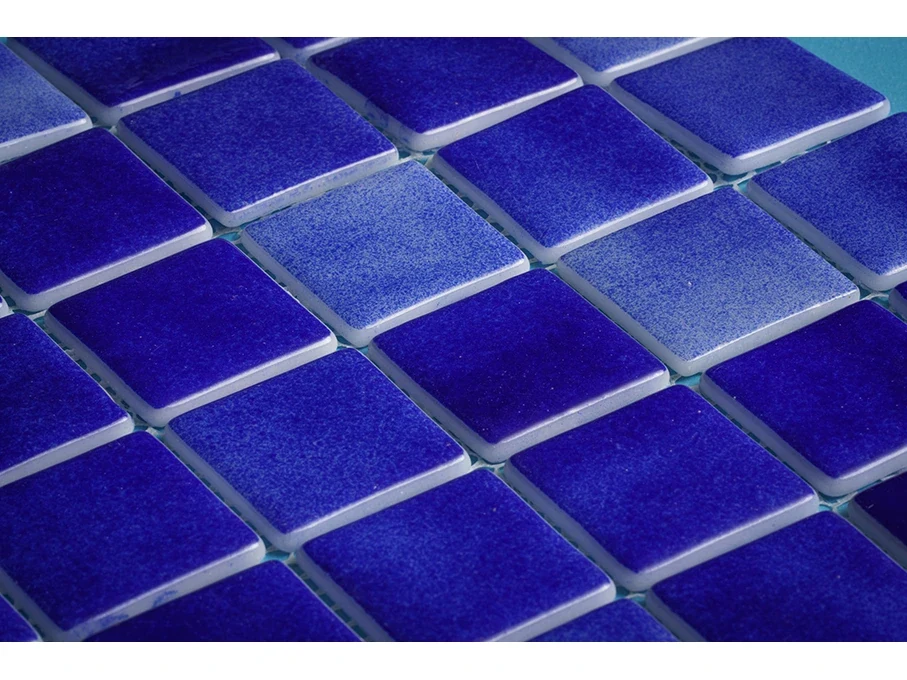
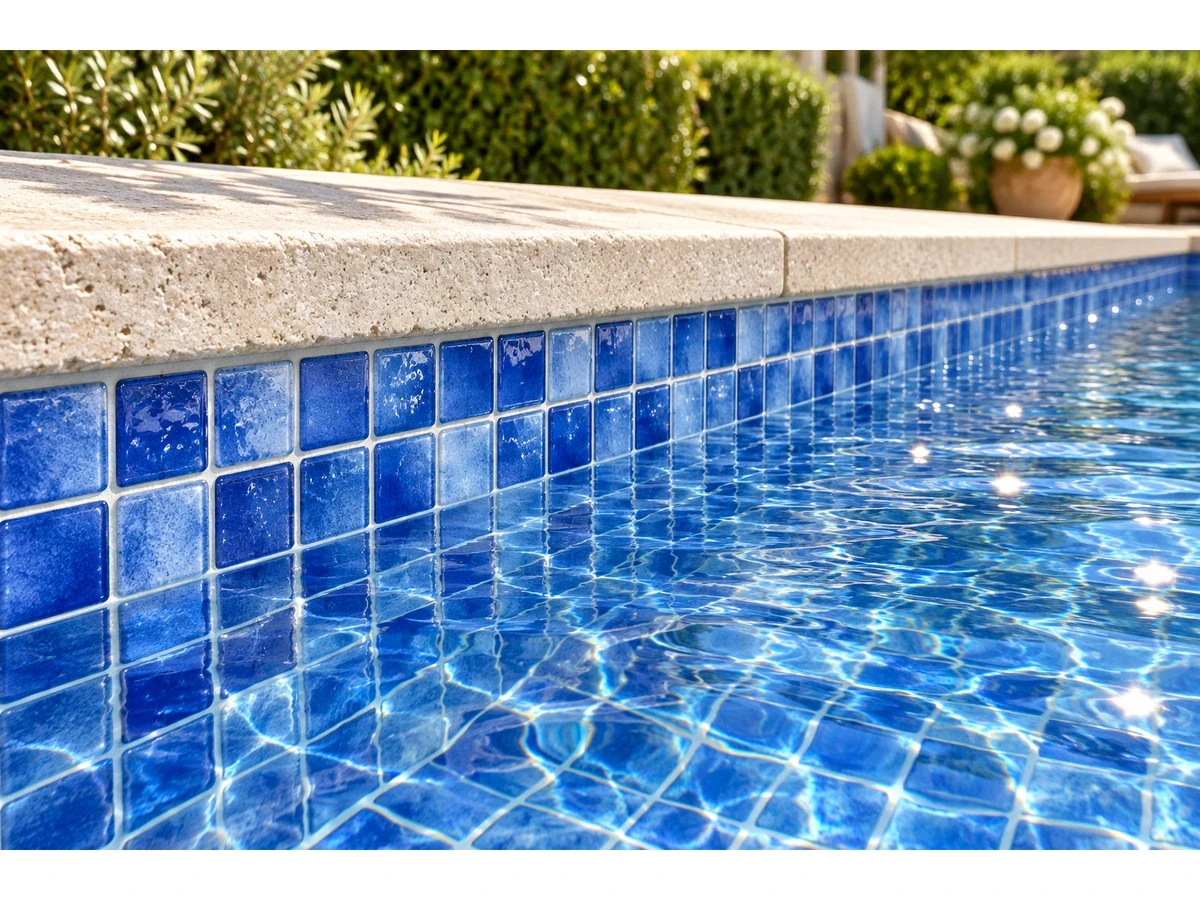
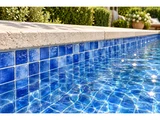
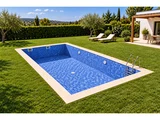
The large glossy pieces are in a rich, regal blue with fine lighter gradations. In the sun, under water, the colour becomes dense, and clear radiant glints rise from the surface.
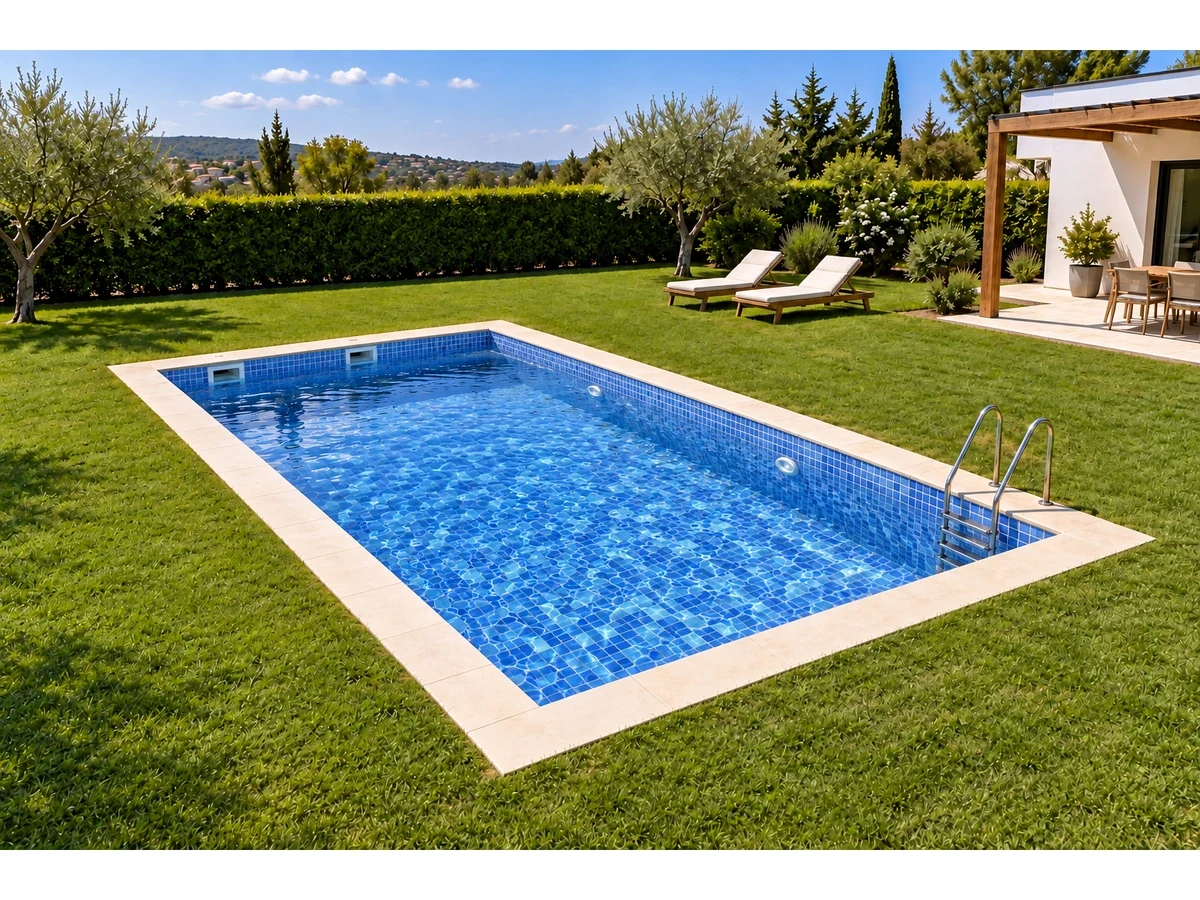
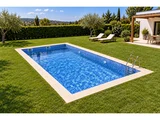
This solution suits prestigious pools and accent borders where a strong, classic blue is wanted.
The Colour in the Water
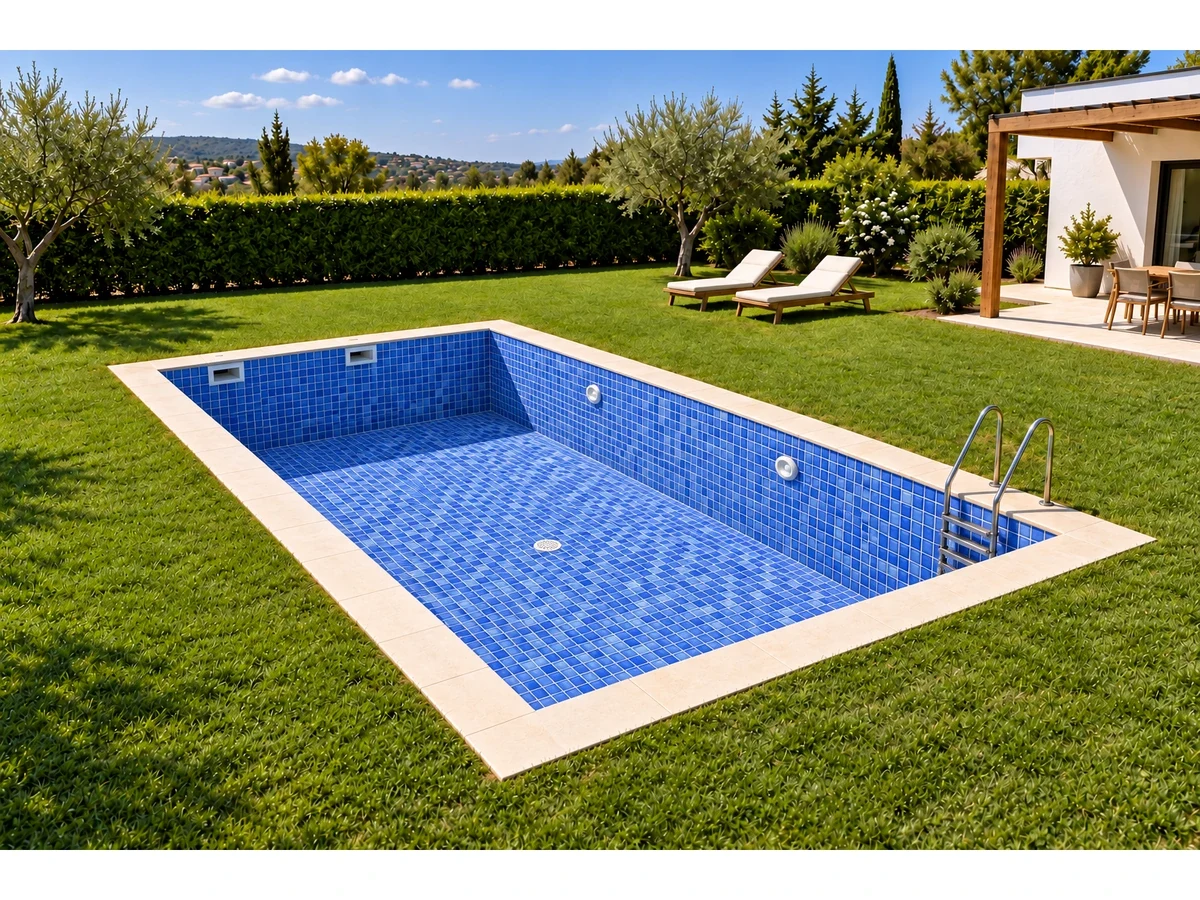
Above the water you see the true colour of the sheet, while further down the tone becomes richer and shines in the sun. Grout choice: dark grey grout deepens the colour, while white outlines the borders between the pieces.
Product Parameters
| Collection | Isla Mujeres |
|---|---|
| Item code | MOSFBZB008 |
| Intended use | pools, hot tubs, spa areas, bathrooms and shower cubicles |
| Packaging | carton with 1 m² of mosaic |
| Shade | deep royal blue mix |
| Chip | square, 50 × 50 mm, 6 mm thick |
| Sheet | 340 × 340 mm |
| Gap between chips | 2 mm |
| Composition | 100 % recycled glass (glass ceramic) |
| Backing | silicone (polyurethane) dots |
| Face | glossy |
| Water absorption | up to 0.04 % (EN ISO 10545-3) |
| Bending | 55 N/mm² |
| Frost | withstands freezing and thawing (ASTM C1026) |
| Chemicals | class A (ASTM C650) |
| Immersion | can be permanently submerged |
Why This Mosaic
- Non-porous surface. Water absorption is up to 0.04 %, so there is no mould, staining or odour.
- Permanent contact with water. It can be used in pools, hot tubs, fountains and overflow channels.
- Lasting colour. It is resistant to solar radiation (ISO 4892) and to cleaning agents (class A under ASTM C650).
- Frost resistance. It survives alternating freezing and thawing (ASTM C1026), so it is also good for outdoor pools.
- Strength. The flexural strength is 55 N/mm² (EN ISO 10545-4), and the face is free of defects.
- Clean material. It is made of 100 % recycled glass, with no lead, cadmium or other heavy-metal pigments.
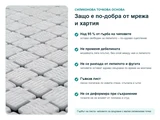
Silicone Dot Backing
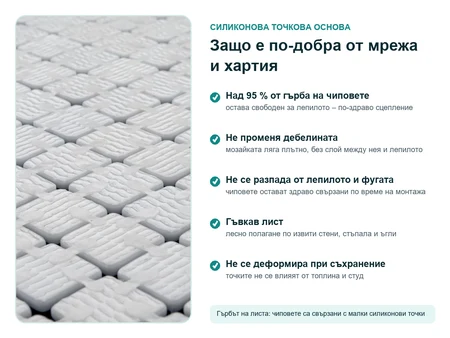
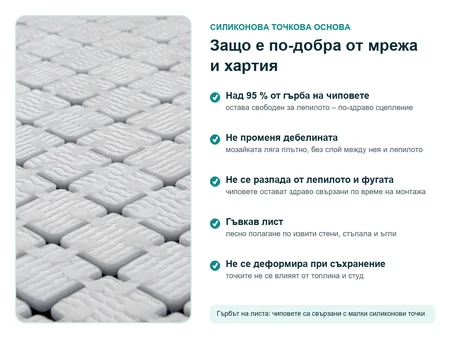
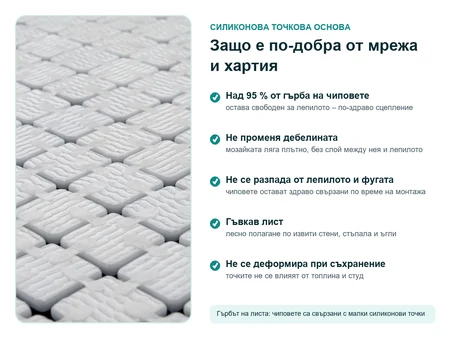
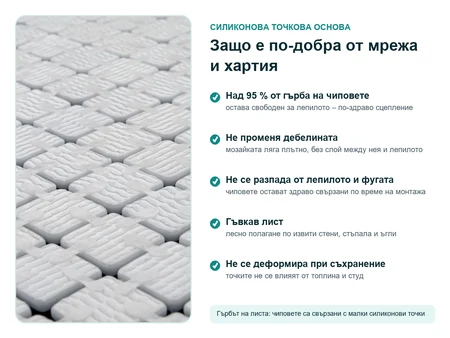
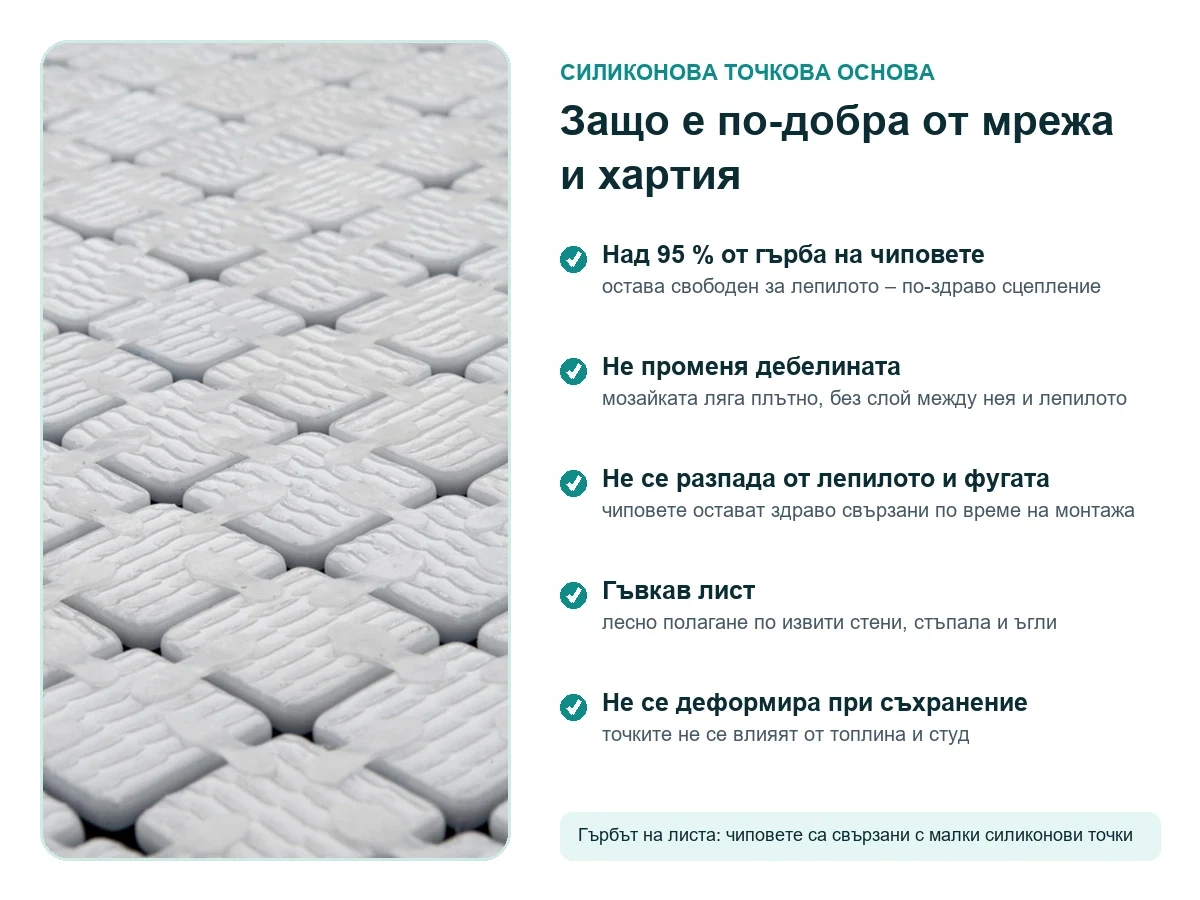
Instead of mesh or paper, the sheet is built on small silicone (polyurethane) dots. They hold the chips together but leave their backs almost free – more than 95 % of each chip comes into contact with the adhesive, so the bond is firm. The thickness of the mosaic does not increase, and the adhesive and grout do not damage the backing; it does not warp in storage. The flexible sheet bends around rounded walls, steps and corners.
| Backing | Contact with the adhesive | Installation |
|---|---|---|
| Silicone dots | over 95 % of the back is free | the chips are visible; the sheet follows curves and corners; there is nothing to remove after bonding |
| Mesh | the mesh covers part of the back | the chips are visible, easy to work with; nothing to remove after bonding |
| Paper | the back is completely free | the paper is on the front and hides the chips, difficult on curves, later soaked and peeled off |
Where It Is Used
- full pool liner – on walls and floor;
- steps, seats and shallow areas in the water;
- hot tubs, spa centres and steam rooms;
- bathrooms, showers and accent walls.
Installation Step by Step
- Preparing the substrate. It must be level (deviation of up to 2 mm over 2 m), dry, sound and dust-free. In a pool, waterproofing with an elastic cement-based mix is done first.
- Adhesive. Use a white flexible cement-based adhesive C2TE S1. Glass is slightly translucent and a darker adhesive would change the colour.
- Application. The adhesive is spread with a 3–4 mm notched trowel over an area for 2–3 sheets.
- Laying. The sheet is pressed evenly with a rubber float, keeping the same 2 mm joint between the sheets.
- Cutting. At corners and around pool jets, the silicone dots are cut with a utility knife, and single chips are snapped off with nippers designed for glass mosaic.
- Grouting. Start after 24 hours. In a pool an epoxy grout is required – it is waterproof and is not affected by chlorine.
- Cleaning. The grout is washed off with a damp sponge before it dries, and epoxy residues immediately with a special cleaner.
- Filling. The pool is filled with water only when the grout has fully hardened – usually after about a week.
What to Prepare
Because the work is done in a wet environment, provide elastic waterproofing, white adhesive C2TE S1 and an epoxy (or at least waterproof) grout. You will also need a notched trowel and a rubber float, a trimming knife, special pliers for glass mosaic, a sponge, a bucket and water.
How Much Material to Plan For
For the adhesive, plan on about 2 kg per m² for chips up to 25 mm, 2.5 kg for 40 mm and 3 kg for larger chips. For the grout, for this size (chip 50 × 50 mm, thickness 6 mm, joint 2 mm) the formula (A + B) / (A × B) × C × D × 1.6 kg per m² is used. These values are indicative: in practice the quantity varies with the condition of the substrate, the products chosen, the trowel, the shape of the site and the experience of the installer, so check it in the technical data sheets and with your tiler.
Test Results
| Standard | What was measured | Result |
|---|---|---|
| ISO 4892 | solar ageing | the colour does not change |
| EN ISO 10545-3 | water absorption | up to 0.04 % |
| EN ISO 10545-4 | flexural strength | 55 N/mm² |
| EN ISO 10545-2 | surface defects | none (100 %) |
| ASTM C650 | chemicals | class A, no change |
| ASTM C1026 | freeze-thaw cycles | withstands |
| EN ISO 10545 | thermal expansion | withstands |
Caring for the Mosaic
- Clean with a soft cloth or sponge and a neutral cleaning agent.
- Avoid abrasive powders, wire brushes and acidic cleaners on the grout joints.
- The water should have a pH of 7.0–7.4 and moderate hardness – this way limescale does not build up on the joints.
- The waterline is cleaned regularly with a sponge and a special cleaner.
Good to Know
It is sold in whole cartons of 1 m². It is best to buy the quantity in one go, adding a 5–10 % reserve, so that it all comes from one production batch with the same shade.
Glass mosaic is perceived differently depending on the conditions, so the colour on a screen may differ from the one on site. The influencing factors are the brightness and type of the screen, daylight or artificial light, the viewing angle, the depth and clarity of the water, the colour of the grout and adhesive, the surrounding surfaces, and the slight difference between batches and between individual chips. The visualisations are indicative.
Short Answers
Which adhesive is suitable? White flexible cement-based C2TE S1 – it preserves the colour of the glass.
Salt water and chlorine? Not a problem – the glass does not react with them and its colour stays unchanged.
Over existing tiles? It is possible when they are stable, clean, degreased and treated with a suitable primer. In a pool it is advisable to apply waterproofing again.
See also: Wellness, Pools and Equipment, Cladding and Paving, Pools, Pool Chemicals, Pool Accessories.