

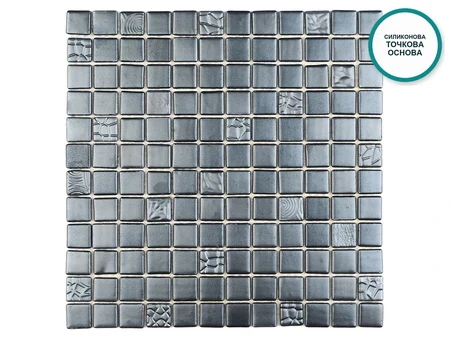
Description
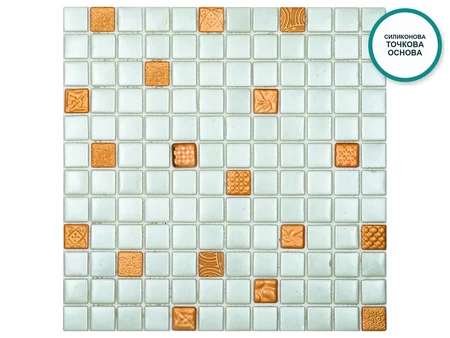
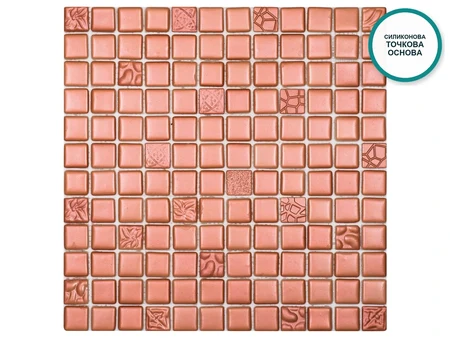
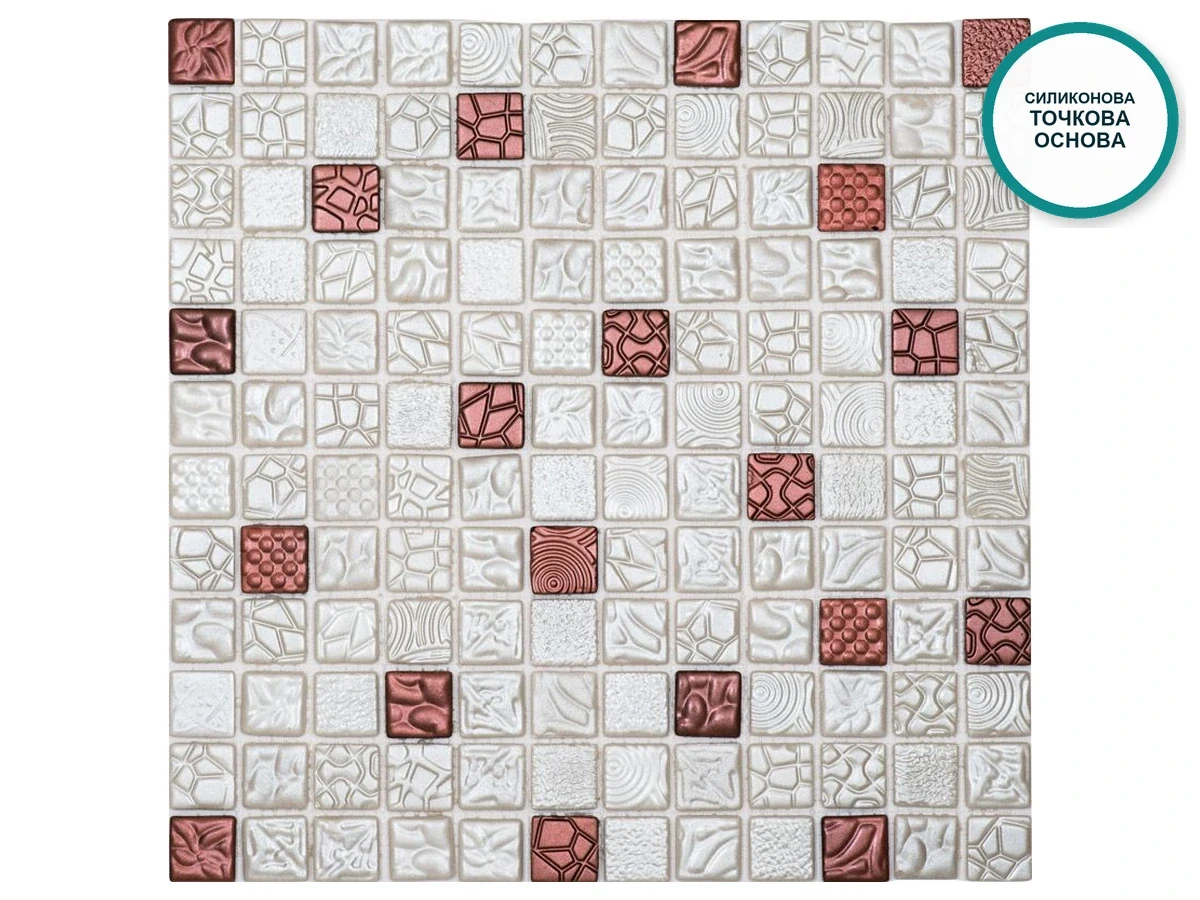
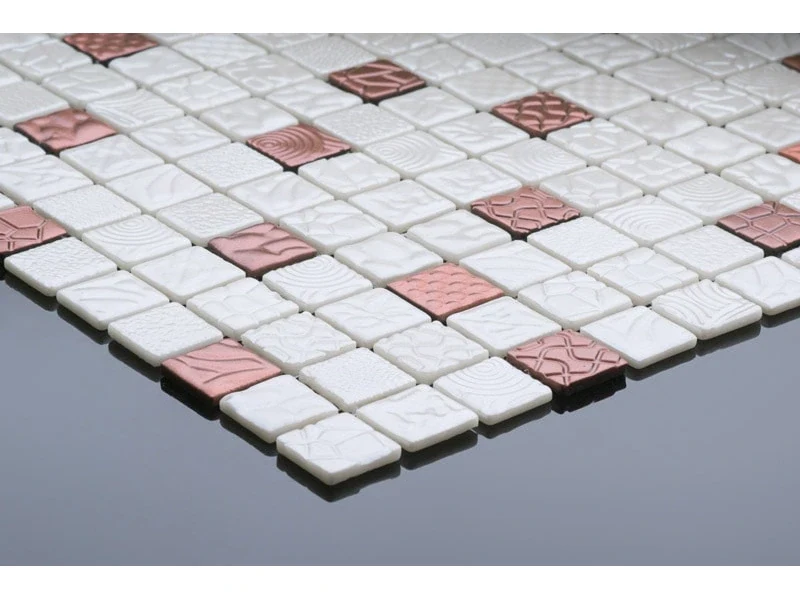
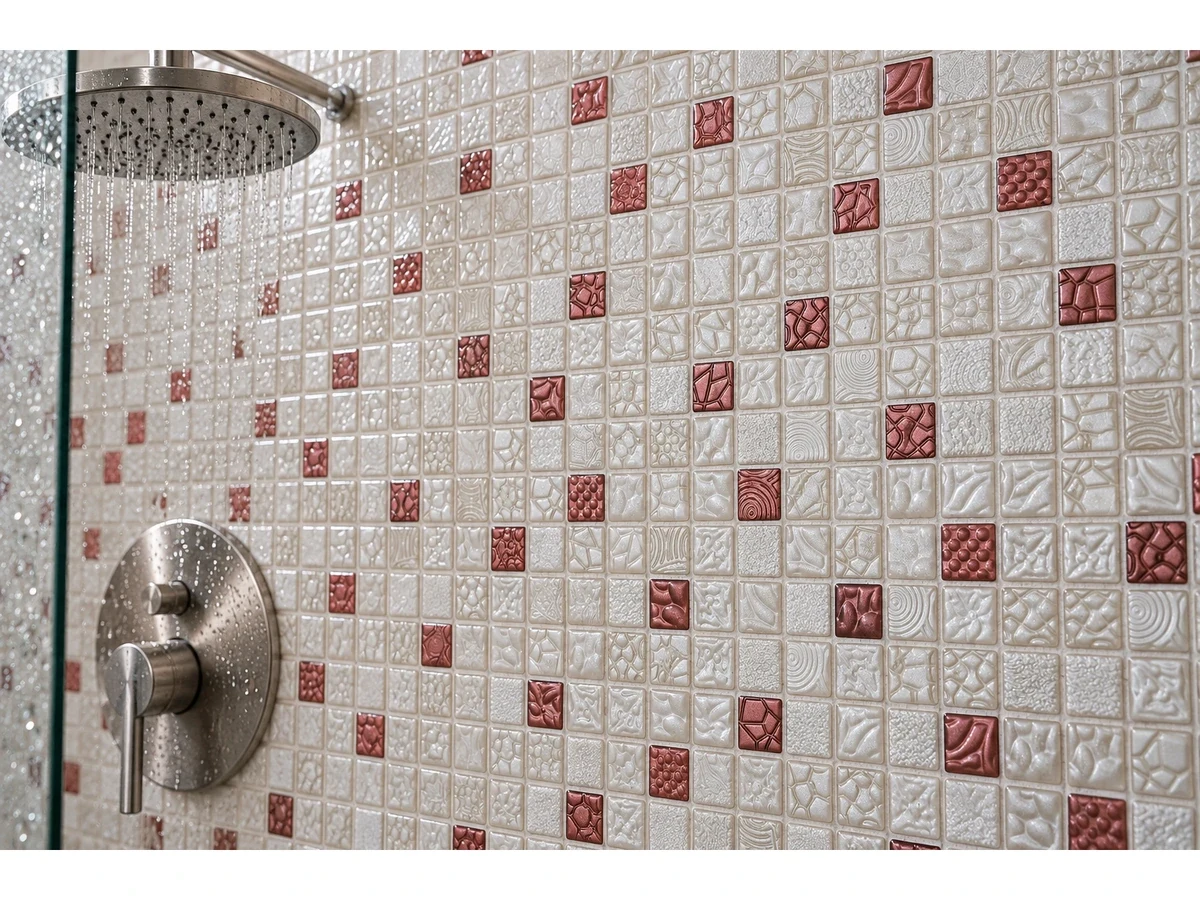
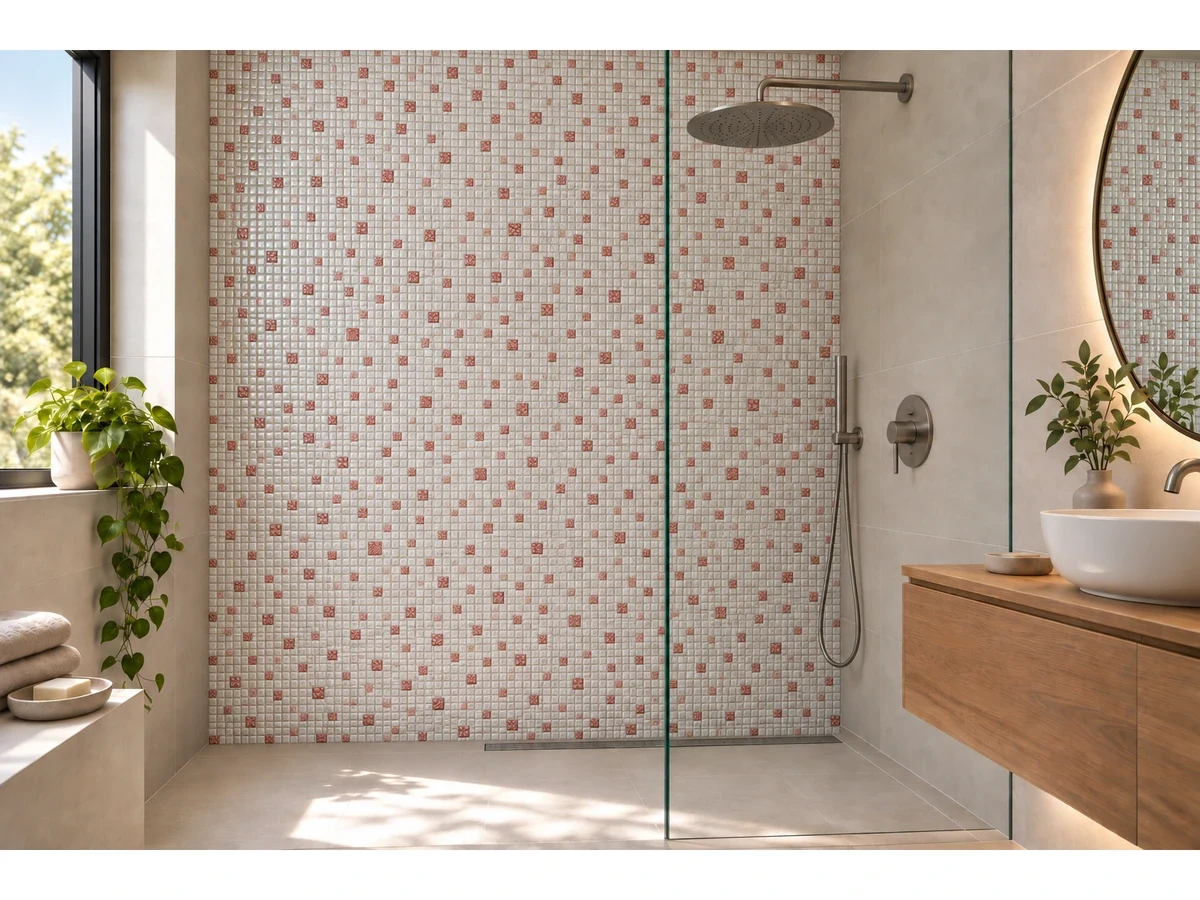
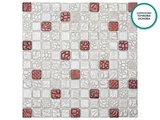
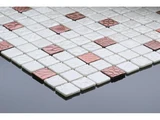
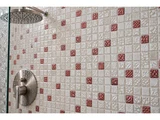
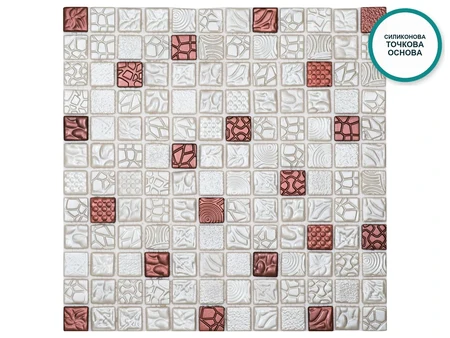
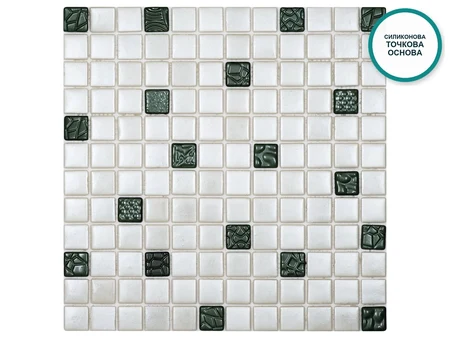
Ciliegio is a white embossed cladding with red-brown accents, whose colour does not fade. The sheets measure 317 × 317 mm and the chips 25 × 25 mm at 4 mm thick. The white background is dotted at regular intervals with red-brown embossed chips that sparkle like rubies. The contrast is gentle and warm, and under water in sunlight the chips resemble autumn leaves. It is suitable for a pool and a bathroom in light, warm tones.
The light surface and the reddish chips reflect the light differently through the day and give the wall depth. Grout recommendation: white grout preserves the light look, while red grout makes the chips stand out.
Why Ciliegio mosaic
- Non-porous surface. Water absorption is up to 0.04%, so there is no mould, staining or odour.
- Lasting colour. It does not fade in the sun (ISO 4892) and resists cleaning agents (class A under ASTM C650).
- Frost. It passes the repeated freeze–thaw test (ASTM C1026), so it is also suitable outdoors.
- Strength. Flexural strength is 55 N/mm² (EN ISO 10545-4), and the face is smooth and free of defects.
- Care for nature. The composition is 100% recycled glass, with no lead or cadmium pigments and no heavy metals.
Technical specifications
| Parameter | Value |
|---|---|
| Model | Ciliegio |
| Code | MOSFBN036 |
| Shape | square with an embossed (pressed) surface |
| Colour | white with red-brown relief chips |
| Chip size | 25 × 25 mm |
| Thickness | 4 mm |
| Sheet size | 317 × 317 mm |
| Sheets per m² | 10 |
| Packaging | 1 m² carton; sold by the whole carton |
| Material | glass-ceramic made of 100% recycled glass |
| Backing | silicone (polyurethane) dot backing |
| Recommended grout joint | 2 mm |
| Water absorption | no more than 0.04% (EN ISO 10545-3) |
| Flexural strength | 55 N/mm² (EN ISO 10545-4) |
| Frost resistance | yes, ASTM C1026 test |
| Chemical resistance | class A under ASTM C650 |
| Areas of use | bathrooms, showers, kitchens, spa areas, hammams, decorative walls |
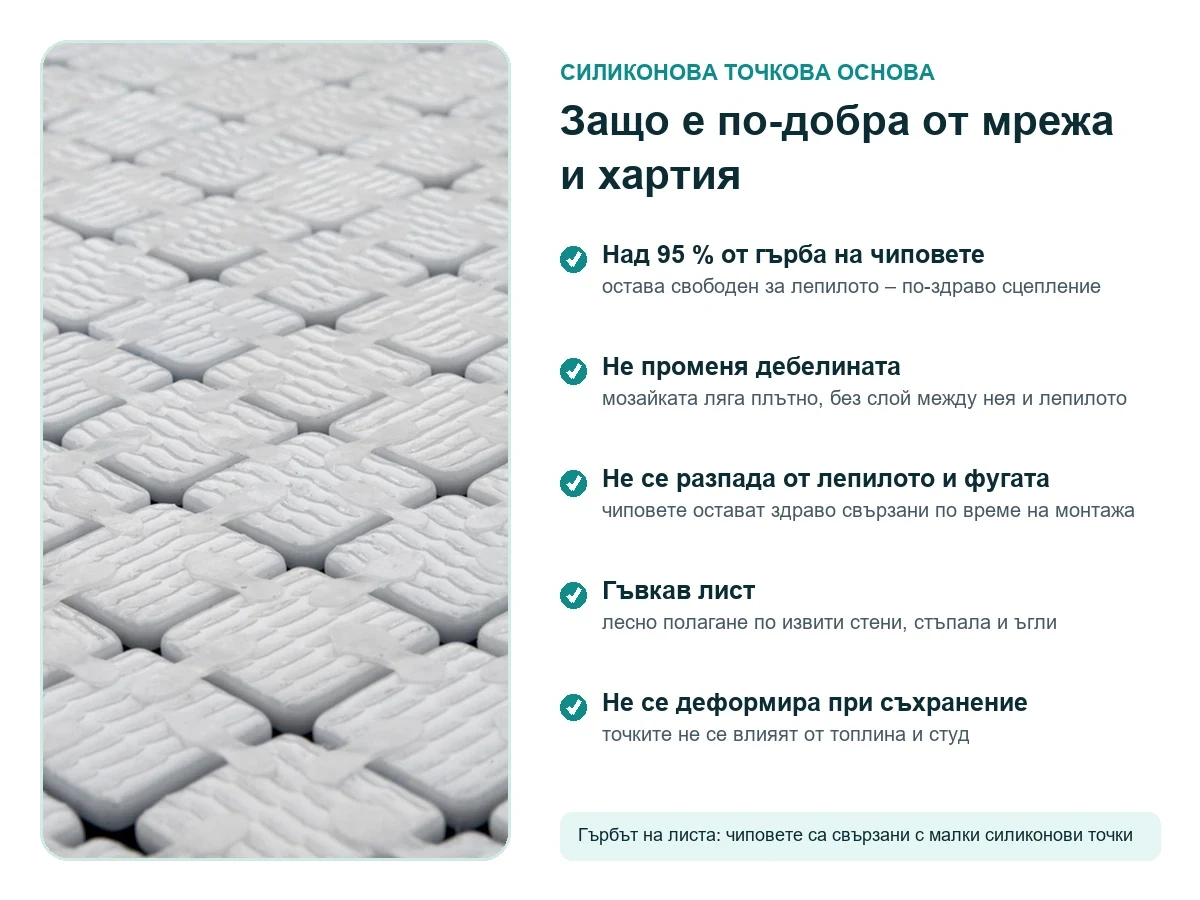
The silicone backing
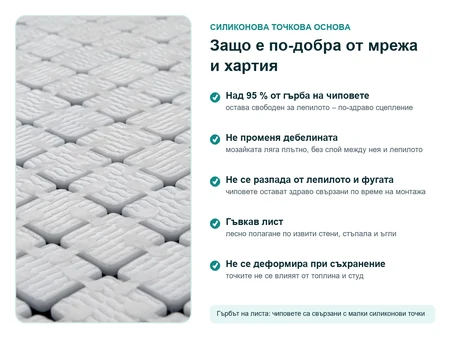
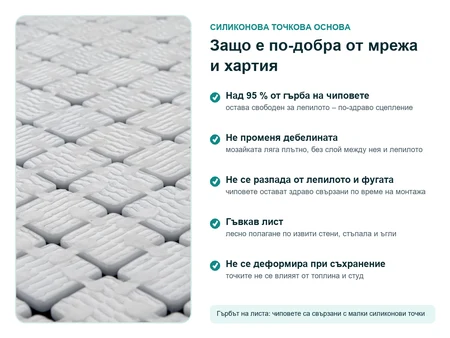
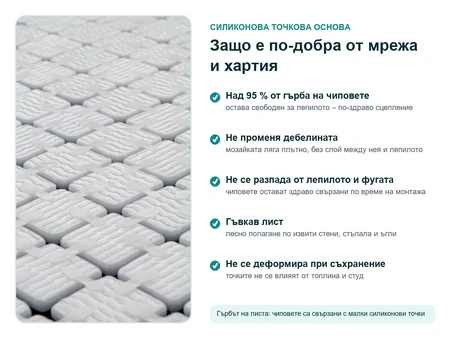
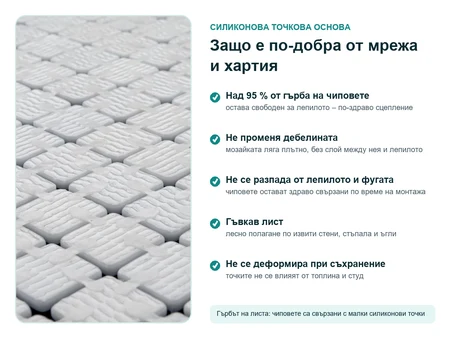
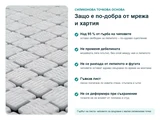
The chips are fixed to a sheet with silicone (polyurethane) dots that hold them together without covering their backs. Over 95% of the rear side of every chip stays exposed for the adhesive, which gives very good adhesion. The backing adds no thickness, does not break down in adhesive and grout and does not warp in storage. The sheet is flexible and follows curved walls, steps and corners.
| Feature | Silicone dots | Mesh | Paper |
|---|---|---|---|
| Back exposed for the adhesive | over 95% | less, because the mesh covers part of the back | entire back, but the paper sits on the face |
| View during installation | chips and joints are visible | chips are visible | chips are under the paper |
| Curves and corners | very easy | easy | difficult, the paper tears |
| After bonding | nothing to remove | nothing to remove | the paper is soaked and peeled off |
Where it is used
- Cladding for bathrooms and shower cubicles
- Decorative kitchen splashback with relief
- Spa centres, hotel and restaurant areas
Which grout colour to choose
For Ciliegio: white grout preserves the light look, while red grout makes the chips stand out. In showers and other wet areas use an epoxy or waterproof C2 grout – it does not absorb moisture and does not darken.
How to calculate the quantity
Measure the height and width of every wall to be covered, add up the areas and add 5–10% for cutting waste. The consumption figures are indicative: for adhesive – about 2 kg/m² for chips up to 25 mm, 2.5 kg/m² for 40 mm and 3 kg/m² for even larger ones. Grout is calculated by (A + B) / (A × B) × C × D × 1.6 kg/m²; here the chip is 25 × 25 mm, the thickness is 4 mm and the joint is 2 mm. In practice the amount used varies with the smoothness and absorbency of the substrate, the brands of adhesive and grout, the trowel teeth, the joint profile, the shape of the site and the installer's skill. So check the figures in the technical data sheets of the adhesive and grout and discuss them with your contractor.
Installation step by step
- Substrate preparation. The surface must be dry, sound, dust-free and have unevenness of no more than 2 mm over 2 metres. In the shower area, waterproofing is done first.
- Adhesive. Choose a flexible C2TE S1 cement-based adhesive in white. White matters because the glass is slightly translucent and a grey adhesive would darken the colour.
- Application. Work in small sections: with a notched trowel (3–4 mm), spread the adhesive for only 2–3 sheets at a time.
- Placing. Press the sheet down evenly with a rubber float and leave the same 2 mm joint between the sheets.
- Cutting. In corners and around fittings, cut through the silicone dots with a utility knife and cut individual chips with glass mosaic nippers.
- Grouting. Wait a day, then fill the joints; in the shower choose an epoxy or waterproof C2 mix.
- Cleaning. A damp sponge removes excess grout while it is fresh; epoxy grout is cleaned off immediately with a special cleaner.
- Use. The shower can be used after the grout has fully cured.
What to prepare
You will need white C2TE S1 adhesive and epoxy or waterproof grout, two trowels (notched 3–4 mm and rubber), a knife and glass mosaic nippers, as well as a sponge, a bucket and clean water.
Test results
| Standard | What was tested | Result |
|---|---|---|
| EN ISO 10545-3 | water absorption | maximum 0.04% |
| EN ISO 10545-4 | flexural strength | 55 N/mm² |
| EN ISO 10545-2 | surface quality | completely flawless surface |
| ASTM C650 | chemicals | class A, no traces |
| ASTM C1026 | freeze–thaw cycles | withstands |
| ISO 4892 | ultraviolet exposure | colour does not change |
| EN ISO 10545 | thermal expansion | withstands |
How to care for it
- A soft cloth and a mild cleaning solution are enough for cleaning.
- Do not use abrasive powders, metal sponges or acidic products on the grout.
- After a shower, go over the surface with a rubber squeegee – no water marks are left on the glass.
Before you order
The cartons are 1 m² each and cannot be split. Order the area you need plus a 5–10% reserve all at once – that way all the sheets come from one production run and have the same shade.
Questions and answers about Ciliegio
What adhesive is needed?
White flexible C2TE S1 cement-based adhesive – it does not change the colour of the glass.
Which grout should I choose?
In wet rooms – epoxy or waterproof. By colour: white grout preserves the light look, while red grout makes the chips stand out.
Can I buy less than a carton?
No – it is sold only by the whole 1 m² carton. Take the full quantity in one order and everything will come from the same batch.
Is it suitable for salt water and chlorine?
It is intended for walls and wet areas; the glass does not react with cleaning products.
Can it go over old tiles?
It is possible when the existing cladding is stable, degreased and treated with a suitable primer.
Colour in the real project
Glass changes its appearance depending on its surroundings, so the shade on site may differ from the one in the photos and visualisations. The following influence perception:
- the screen you are viewing on – brightness, settings and type of device;
- the lighting – daylight, overcast weather, lamps of different colour temperature, the time of day;
- the viewing angle, since the glass surface reflects variably;
- the water in the pool – with greater depth, clarity and reflection of the sky, the tone becomes richer and bluer;
- the chosen grout and adhesive, and the size of the clad surface;
- the surroundings – coping, paving, walls and greenery;
- the production batch, because the shade can differ slightly between two batches; that is why you should take the full quantity at once;
- the natural range of shades between chips in mixes and effect glass.
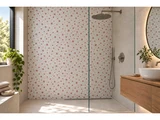
The pools and interiors shown are illustrations and give only a general impression. When the exact colour is decisive for you, write to us before ordering.
Calculating the quantity
Send us the dimensions of the pool or room and we will calculate the area in square metres and the cartons you need before you order.
See also: Wellness, Pools and Equipment, Cladding and Paving, Pools, Pool Chemicals, Pool Accessories.